Supreme Court takes up AR-15 bans Wednesday, with laws in 11 states on the line
The Supreme Court AR-15 ban case reaches oral argument Dec. 2, testing Connecticut and Cook County laws and the 'common use' idea gun rights groups rely on.
What happened
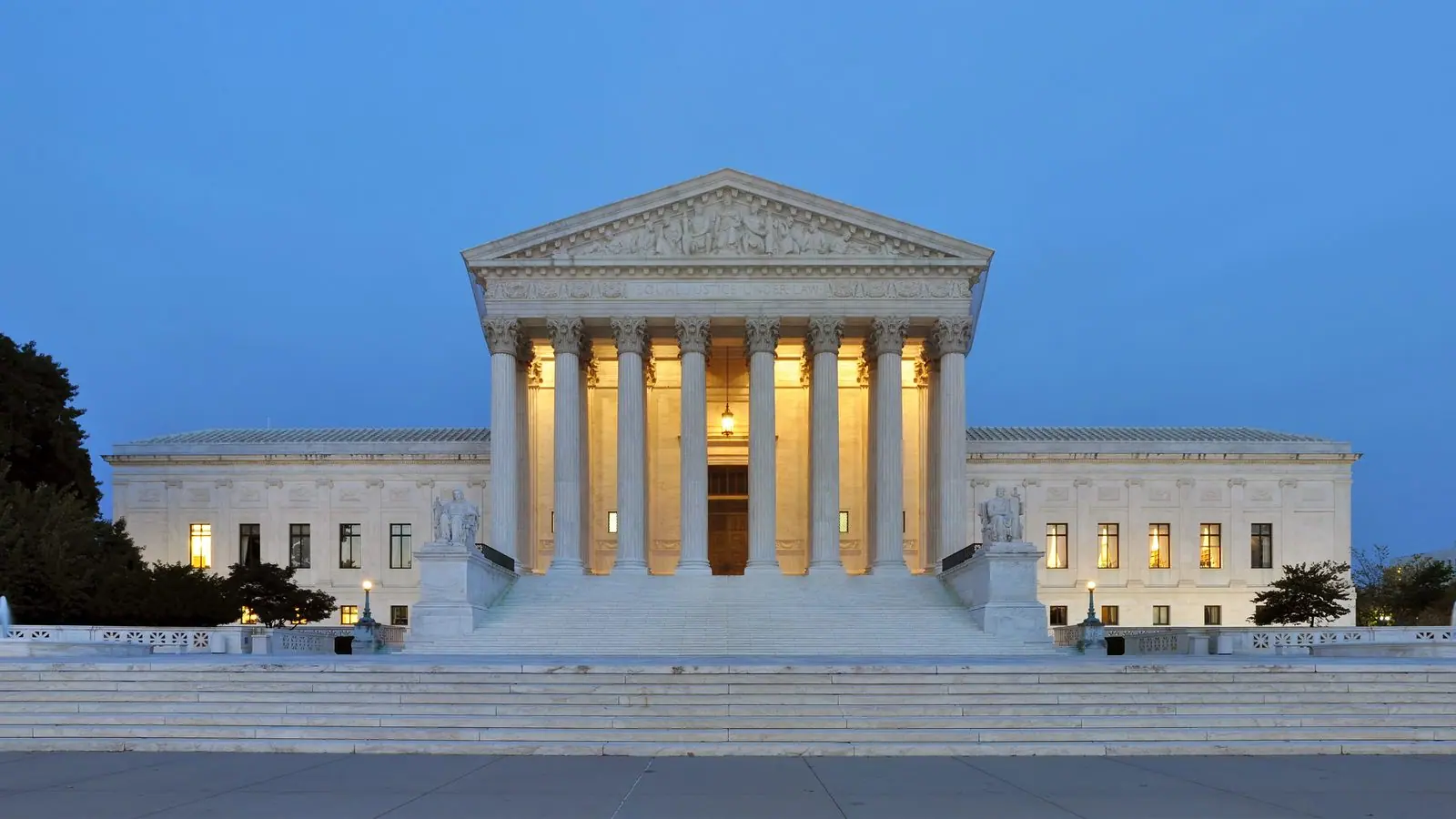
The Supreme Court will hear arguments Wednesday, Dec. 2, 2026, in the AR-15 ban case, two consolidated challenges to Connecticut's statewide ban and Cook County, Illinois' local ban on AR-15-style rifles. The justices are deciding whether the Second Amendment protects owning those semiautomatic rifles. A ruling against the bans could undo similar laws in 11 states and the District of Columbia.
Key takeaways
- The cases are Grant v. Higgins (No. 25-566) and Khaya v. Cook County (No. 25-238). The court has set aside one hour of argument starting at 10 a.m. ET.
- The Trump administration filed a brief in September backing the gun rights challengers.
- One original plaintiff, Cutberto Viramontes, dropped out on Nov. 23. The justices put off Cook County's request to dismiss its half of the case as moot until after arguments.
- Federal appeals courts are split: the 7th and 2nd Circuits upheld these two bans, while the 3rd Circuit ruled against New Jersey's restrictions in July 2026.
In this article
The Supreme Court will hear arguments next Wednesday in the most consequential gun case to reach the justices in years: whether governments can ban AR-15-style rifles at all.
Two challenges are being heard together. One targets Connecticut's statewide ban, the other a Cook County, Illinois, ordinance that covers Chicago and its suburbs. Both laws survived in federal appeals courts. Now a 6-3 conservative court that has steadily widened gun rights since 2008 gets to decide whether they survive the Second Amendment, and the answer will reach well past those two places.
Arguments begin when the court convenes at 10 a.m. ET on Dec. 2, according to the court's December argument calendar. The justices gave the consolidated cases one hour in total.
Read also: Judge blocks Trump's second birthright citizenship order in a classwide ruling · Judge blocks FCC's early ABC license review, citing likely Trump retaliation · Lindsay Clancy will face a murder retrial in March after her first jury deadlocked
What the Supreme Court AR-15 ban case is about
The question the court agreed to answer is short. It asks whether the Second and 14th Amendments guarantee a right to possess AR-15 platform rifles and similar semiautomatic rifles, according to SCOTUSblog's case file. The justices took the cases on June 30.
Cook County's ban goes back to the years after a 1989 shooting at an elementary school in Stockton, California, where a gunman with a semiautomatic rifle killed five children and wounded dozens of other people, Stateline reported. Connecticut tightened its law after the 2012 Sandy Hook Elementary School shooting in Newtown, where 20 first graders and six educators were killed.
The stakes go beyond Illinois and Connecticut. Eleven states and the District of Columbia ban what they call assault weapons, according to Everytown for Gun Safety, as cited by Stateline: California, Connecticut, Delaware, Illinois, Maryland, Massachusetts, New Jersey, New York, Rhode Island, Virginia and Washington. Denver, Indianapolis, New York City and Philadelphia also restrict them.
A broad ruling for the challengers could also block Congress from passing a new nationwide ban. The last federal assault weapons ban expired in 2004.
Why the case almost lost a plaintiff
The Cook County half of the case used to be called Viramontes v. Cook County. Cutberto Viramontes, one of the two county residents who sued in 2021 with backing from the Firearms Policy Coalition, asked on Oct. 29 to be dropped from the case without giving a reason. The court granted that on Nov. 23, and the case now carries the name of the remaining plaintiff, Christopher Khaya.
Cook County then asked the justices to throw out its part of the case as moot. On Nov. 24 the court deferred that request until after oral argument, the SCOTUSblog docket shows. Even if the county's case falls away, the Connecticut case gives the court a clean way to rule on the central question, Vox noted.
The 'common use' argument against the bans
Gun rights groups lean hard on one line from District of Columbia v. Heller, the 2008 ruling written by Justice Antonin Scalia that suggested the Second Amendment protects weapons in "common use." The challengers use that phrase 56 times in their main brief, CNN counted. The Trump administration, which sides with them, used it 49 times in a brief filed in September.
Their numbers are big. As many as 26 million people own an AR-15, according to one estimate cited by CNN. A national online survey of more than 51,000 adults this summer found 25% of gun owners have an AR-15-type rifle, Georgetown University political economist William English found in an analysis reported by Stateline.
The court itself has said as much. In a unanimous opinion last year, the justices described the AR-15 as "the most popular rifle in the country," CNN noted.
"This is one of the most important Second Amendment cases in American history," Brandon Combs, president of the Firearms Policy Coalition, said in a statement quoted by Stateline. "The question is simple: Can the government ban some of the most popular firearms in America?"
The challengers' brief also argues that AR-15s are more accurate than handguns and lighter, with less recoil, than many other rifles and shotguns. Since the court struck down Washington's handgun ban in Heller, they say, these rifles deserve the same protection.
How Connecticut and Cook County defend the laws
The governments defending the bans are working inside the test the court set in 2022 in New York State Rifle & Pistol Association v. Bruen. That decision said a modern gun law must fit the nation's "historical tradition of firearm regulation."
So their briefs reach far back, to English laws as old as the medieval period that banned especially dangerous weapons. Cook County describes the AR-15 as the civilian version of the military's M-16 and points to gun makers who once marketed these rifles as "assault weapons," according to Stateline. The county says they are offensive weapons of war rather than typical self-defense guns.
"These guns are so incredibly dangerous in a densely populated area like Chicago," Cook County State's Attorney Eileen O'Neill Burke, a Democrat, told CNN. "One hundred percent of the children who were hit with this weapon at Sandy Hook died."
Supporters of the bans also cite data on mass shootings. Just over a third of public mass shootings in the 2010s that killed four or more people involved semiautomatic assault weapons, according to Gun Violence Archive data analyzed by The Trace, as reported by Stateline.
States line up on both sides
The split runs almost perfectly along party lines.
Democratic attorneys general from 18 states and the District of Columbia, led by Massachusetts Attorney General Andrea Campbell and New Jersey Attorney General Jennifer Davenport, filed a brief urging the court to reject a popularity test. Adopting it, they wrote, "would risk opening the floodgates for other unusually dangerous weapons."
On the other side, Kansas Attorney General Kris Kobach, Tennessee Attorney General Jonathan Skrmetti and 25 other Republican attorneys general want the bans struck down. Their brief says the AR-15 has never been issued to U.S. troops and that its resemblance to military rifles is about shared design features, not function.
Lower courts haven't agreed either. The 7th Circuit upheld Cook County's ban in 2025, and the 2nd Circuit upheld Connecticut's two months later. In July 2026, a month after the Supreme Court took these cases, the 3rd Circuit ruled against New Jersey's restrictions, Stateline reported.
What to watch on Wednesday
The math looks hard for the states. At least four conservative justices have signaled skepticism of assault weapons bans to varying degrees, CNN reported. If they hold, Connecticut and Cook County would need two of the remaining conservatives, plus all three liberal justices, to win.
Listen for how the justices treat "common use." If a majority treats ownership numbers as close to decisive, the bans are in trouble. If they spend their time on the history of dangerous-weapons laws, the states have more room. Questions about whether Khaya's case is still live could eat into the hour, too.
Nothing changes on Wednesday itself. The bans remain in force while the court deliberates, and a decision is likely in the spring, according to Stateline, though the court often holds its biggest rulings until late June.
Another major court fight this week is covered in Judge blocks Trump's second birthright citizenship order in a classwide ruling. More court and government coverage is in our news section.
Frequently asked questions
- When does the Supreme Court hear the AR-15 ban case?
- Oral arguments are set for Wednesday, Dec. 2, 2026, when the court convenes at 10 a.m. ET. Grant v. Higgins and Khaya v. Cook County are consolidated, and the justices have allotted one hour in total for both sides.
- Which states ban AR-15s?
- Eleven states and the District of Columbia ban assault weapons, according to Everytown for Gun Safety: California, Connecticut, Delaware, Illinois, Maryland, Massachusetts, New Jersey, New York, Rhode Island, Virginia and Washington. Cities including Denver, Indianapolis, New York and Philadelphia have their own restrictions.
- When will the Supreme Court decide on AR-15 bans?
- A ruling is likely in the spring, Stateline reported, and the court normally issues its biggest decisions by the end of June. Until then, existing state and local bans stay in effect.
- What does common use mean in gun cases?
- It comes from the court's 2008 Heller decision, which suggested the Second Amendment protects weapons in common use for lawful purposes. Challengers argue AR-15s qualify because millions of Americans own them. Defenders say popularity doesn't override a long history of banning unusually dangerous weapons.
Sources
- US Supreme Court to weigh bans on AR-15s, similar guns in big Second Amendment case · Stateline, Nov. 27, 2026
- Supreme Court to tackle AR-15 bans in blockbuster Second Amendment case · CNN (via ABC17 News), Nov. 27, 2026
- Khaya v. Cook County (25-238) case file · SCOTUSblog, Nov. 24, 2026
- Grant v. Higgins (25-566) case file · SCOTUSblog, Nov. 24, 2026
- Monthly Argument Calendar, December 2026 · Supreme Court of the United States, Oct. 1, 2026
- The Supreme Court is about to decide if assault rifle bans can exist, in Grant v. Higgins · Vox, Nov. 24, 2026
Tags
- #Supreme Court AR-15 ban
- #AR-15 ban case
- #assault weapons ban
- #Grant v. Higgins
- #Khaya v. Cook County
- #Second Amendment
- #gun laws
- #Supreme Court
- #courts
About the author
Founder and editor
Marcia Reid is the founder and editor of TrendCanopy, where she reviews and edits every story.
Spotted an error? Read our corrections policy or contact us. Last reviewed November 27, 2026.
Related stories


Trending now
Tech ·
Air Force Cloud One hack hits the military's flagship cloud, Reuters reportsSports ·
Tyler Bass kicks a 57-yard field goal at the buzzer as the Bills beat the Chiefs 13-10Tech ·
Nvidia halts AI server shipments to Malaysia, Singapore, Thailand and IndonesiaSports ·
Eagles erase a 21-point deficit to beat the Cowboys 39-38 on a last-second field goalLifestyle ·
Black Friday store hours start at 5 a.m. at Kohl's and JCPenney, while REI stays closed