Nvidia halts AI server shipments to Malaysia, Singapore, Thailand and Indonesia
Nvidia has paused AI server shipments to four Southeast Asian countries while it works out new U.S. export rules aimed at Chinese firms renting its chips.
What happened
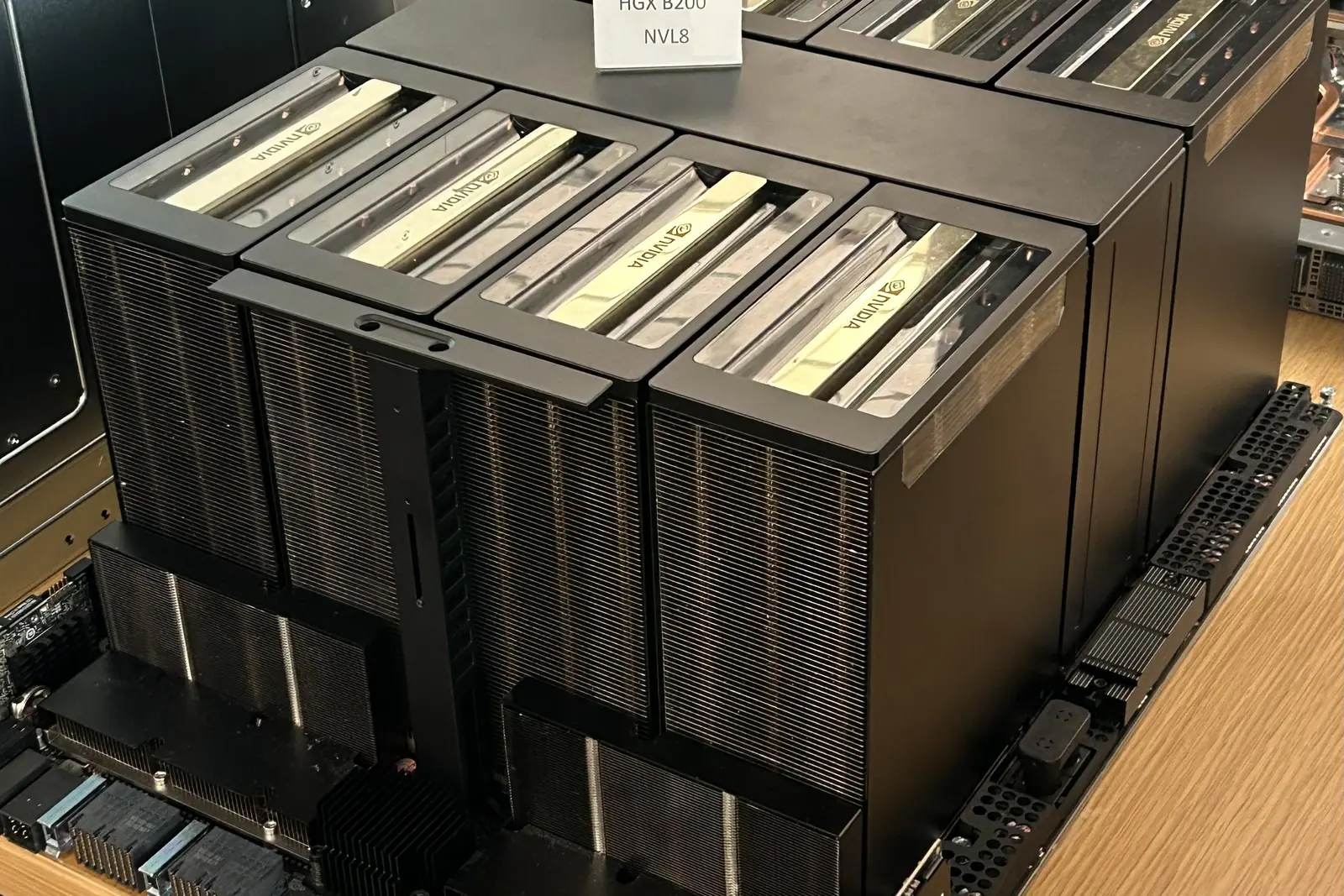
Nvidia has told the companies that build servers around its chips, including Dell and Supermicro, to stop shipping them to Malaysia, Singapore, Thailand and Indonesia, according to the Financial Times, The Wall Street Journal and The New York Times. The pause follows new Commerce Department rules aimed at Chinese firms that rent Nvidia computing power in the region. Nvidia hasn't commented, and it's unclear how long the halt will last.
Key takeaways
- U.S.-owned data center operators appear to be exempt, one person familiar with the halt told The New York Times.
- Nvidia booked $104 billion of revenue through its Singapore subsidiary in 2025, up 72% in a year, the FT reported from company accounts.
- The Institute for Progress estimates that remote data centers like these supply about 24% of China's AI computing power, the WSJ reported.
- Bankers backing a Singapore cloud project meant to serve TikTok owner ByteDance have stopped about $500 million in credit, the FT said.
In this article
Last updated: Thursday, Nov. 26, 2026, 10:35 p.m. ET. Nvidia hasn't commented. We'll update this post if the company or the Commerce Department says more.
Nvidia has put a hold on sending its AI servers to four of the fastest-growing data center markets in the world. Server makers that package its chips, including Dell and Supermicro, have told buyers in Malaysia, Singapore, Thailand and Indonesia that Nvidia won't let their orders ship, according to the Financial Times, which cited three people with knowledge of the matter.
The Wall Street Journal reported the same pause on Thursday, as covered by TechCrunch, and The New York Times said data center operators in all four countries have had orders put on hold. Nvidia declined to comment to the FT and didn't respond to the Times. Dell and Supermicro didn't respond either, Reuters said.
Read also: Nvidia investigates CEO Jensen Huang after a China spy report · Jensen Huang resigns as Nvidia CEO after affair reports; Colette Kress steps in · Dow erases a 1,100-point drop to close higher as Nvidia leads an AI stock selloff
Why these four countries
Chinese companies aren't allowed to buy Nvidia's most advanced chips under U.S. export controls. Many have found a way around that: instead of owning the hardware, they rent time on it from cloud providers in Southeast Asia that do.
The Times describes these companies as "neoclouds," data center operators that specialize in renting out computing power. Some serve local businesses. Others depend on demand from China's biggest tech groups, including Alibaba, Tencent and ByteDance.
That workaround is big. The WSJ cited an estimate from the think tank Institute for Progress that remote data centers like these supply about 24% of China's AI computing power.
The new U.S. rule behind the pause
The Commerce Department moved last week to close that gap. Under the new policy, data center operators in several Southeast Asian countries would need a license to get Nvidia's top chips if they supply large amounts of computing power to companies based in a handful of high-risk countries, including China, Russia and Iran, the Times reported. The Times described the policy as still under review. Reuters said the curbs took effect last week.
The FT reported that cloud providers have 90 days to win a license by proving their end users don't include restricted companies, and that the industry is struggling with how to do that. One cloud executive told the paper there is no guidance on how to apply.
That confusion appears to be why Nvidia hit pause. A person familiar with the halt told the Times it is a stopgap until the Trump administration explains how companies can get licenses to keep buying. It's not clear whether the freeze is temporary, the FT said. U.S.-owned data center operators appear to be exempt, according to the Times.
What's at stake for Nvidia
Southeast Asia is a huge business for the chipmaker. The FT reported, citing company accounts, that Nvidia booked $104 billion in revenue through its Singapore subsidiary in 2025, up 72% from a year earlier. That figure also includes some revenue from Taiwan and China that Nvidia records through the Singapore unit, so it isn't all regional sales.
The damage could spread past Nvidia. Billions of dollars have gone into data center construction in the region, especially in Malaysia and Indonesia, and a long interruption in chip supply could stall projects and squeeze the lenders behind them, the Times reported.
There's already one example. The FT said Aolani, a Singapore cloud company, planned to provide advanced computing power to ByteDance, the Chinese owner of TikTok, through leasing deals. Bankers who had agreed to finance the project have stopped issuing about $500 million in credit, and ByteDance may drop the deal, according to the FT. Neither company responded to the paper.
How the Jensen Huang saga fits in
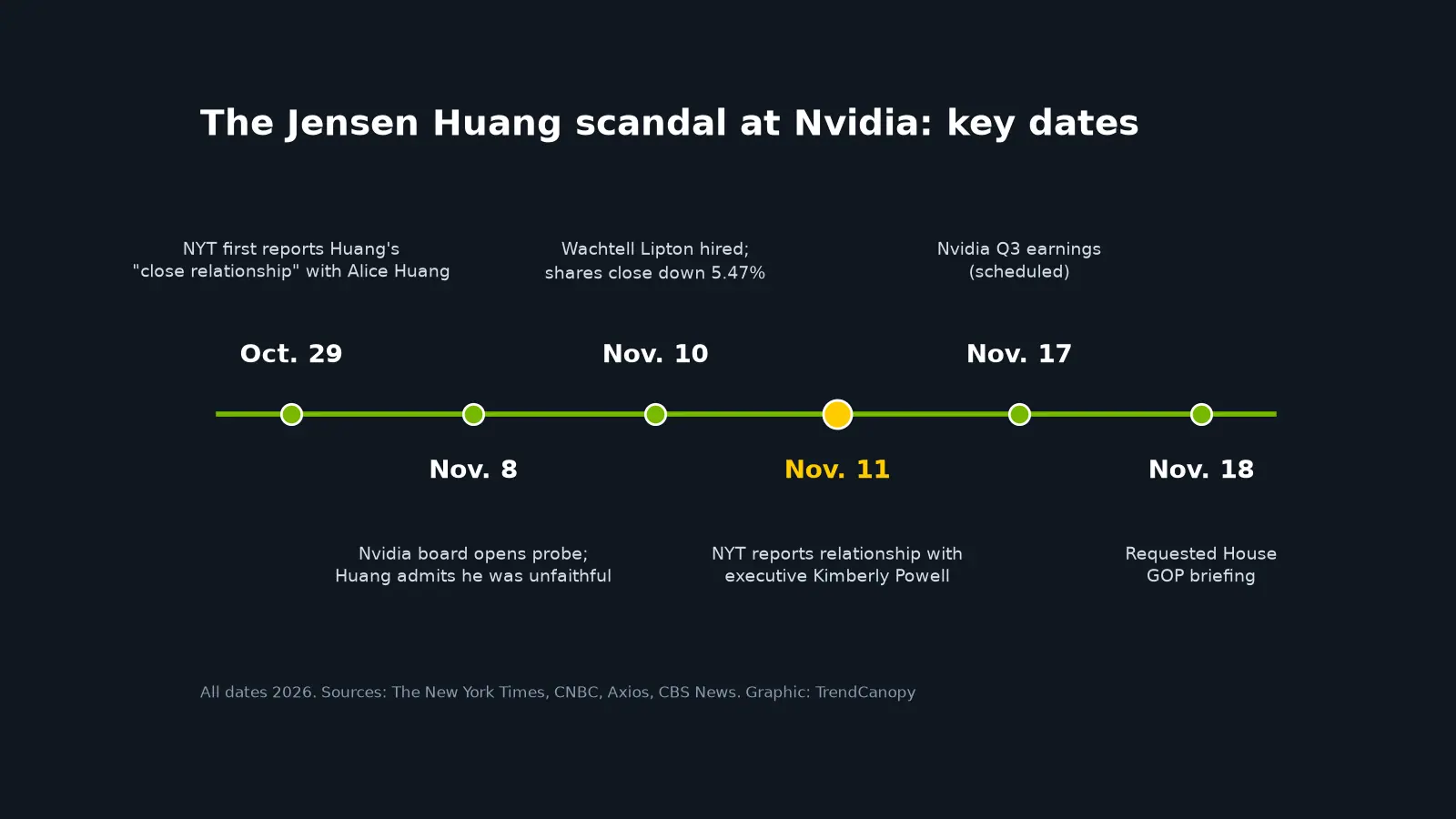
The halt lands days after Nvidia's leadership crisis. Jensen Huang resigned as chief executive this month after reports of extramarital affairs, including one with Alice Huang, an executive at the Singapore data center company Megaspeed. U.S. intelligence officials believe she was in touch with an officer of China's Ministry of State Security during the relationship, the Times reported. Beijing has denied spying.
Megaspeed, an Nvidia partner that rents computing power at its data centers, has come under scrutiny over possible illegal diversion of advanced chips to China, Reuters said. We covered the start of that story in Nvidia investigates CEO Jensen Huang after a China spy report.
The board then brought Huang back on Monday, which we reported in Nvidia reinstates Jensen Huang as CEO, and the stock jumps more than 27%. Some in the industry hoped his return would mean softer enforcement of the new rules, but there's little sign Nvidia will hold back from following them, the FT's sources said.
The revelations also made it harder for Huang to argue his long-held view that the U.S. should keep selling chips to Chinese companies so they stay dependent on American technology, the FT noted.
What to watch next
U.S. stock markets were closed for Thanksgiving, so Friday is the first chance for Nvidia shares to react. Trading ends early, at 1 p.m. ET, for Black Friday.
Beyond that, the key questions are whether the Commerce Department publishes guidance on how to apply for the new licenses, how quickly Nvidia lets shipments restart, and whether Chinese companies such as ByteDance pull back from Southeast Asian data center deals.
Frequently asked questions
- Why did Nvidia stop shipping to Southeast Asia?
- Nvidia hasn't explained it publicly. Reports from the FT, WSJ and New York Times say the pause lets Nvidia and its partners check whether buyers in Malaysia, Singapore, Thailand and Indonesia meet new U.S. export rules. Those rules target Chinese companies that use data centers in the region to rent chips they can't legally buy.
- Which countries does the Nvidia shipment halt affect?
- Four: Malaysia, Singapore, Thailand and Indonesia. Server makers such as Dell and Supermicro have told buyers there that Nvidia won't let their orders ship. U.S.-owned data center operators in those countries appear to be exempt, according to The New York Times.
- How long will Nvidia's pause on Southeast Asia sales last?
- No one has said. A person familiar with the halt told The New York Times it is a stopgap until the Trump administration explains how companies can get licenses to keep buying chips. Under the new rule, cloud providers have 90 days to win a license, the FT reported.
- Does the Nvidia shipment halt affect American buyers?
- Not directly. The pause covers servers headed to four Southeast Asian countries, not U.S. customers or Nvidia's consumer graphics cards. The bigger question for Americans is the stock: Southeast Asia is a large market for Nvidia, and U.S. markets reopen Friday after Thanksgiving with an early 1 p.m. ET close.
Sources
- Nvidia Halts Sales to Southeast Asia as U.S. Tightens China Restrictions · The New York Times, Nov. 26, 2026
- Nvidia halts server shipments to four Southeast Asian countries, FT reports · Reuters (via Investing.com), Nov. 26, 2026
- Nvidia halts chip shipments to Southeast Asia: Report · CNA (republishing the Financial Times), Nov. 26, 2026
- Nvidia hits pause on chip shipments to Southeast Asia · TechCrunch, Nov. 26, 2026
- NVIDIA Reportedly Halts AI Chip Shipments To Southeast Asia · Engadget, Nov. 26, 2026
Tags
About the author
Founder and editor
Marcia Reid is the founder and editor of TrendCanopy, where she reviews and edits every story.
Spotted an error? Read our corrections policy or contact us. Last reviewed November 26, 2026.
Related stories
Trending now
News ·
Supreme Court takes up AR-15 bans Wednesday, with laws in 11 states on the lineTech ·
Air Force Cloud One hack hits the military's flagship cloud, Reuters reportsSports ·
Tyler Bass kicks a 57-yard field goal at the buzzer as the Bills beat the Chiefs 13-10Sports ·
Eagles erase a 21-point deficit to beat the Cowboys 39-38 on a last-second field goalLifestyle ·
Black Friday store hours start at 5 a.m. at Kohl's and JCPenney, while REI stays closed