Judge blocks Trump's second birthright citizenship order in a classwide ruling
Judge Christopher Cooper in Washington said the August order can't deny citizenship to children of international workers, surrogacy babies and others.
What happened
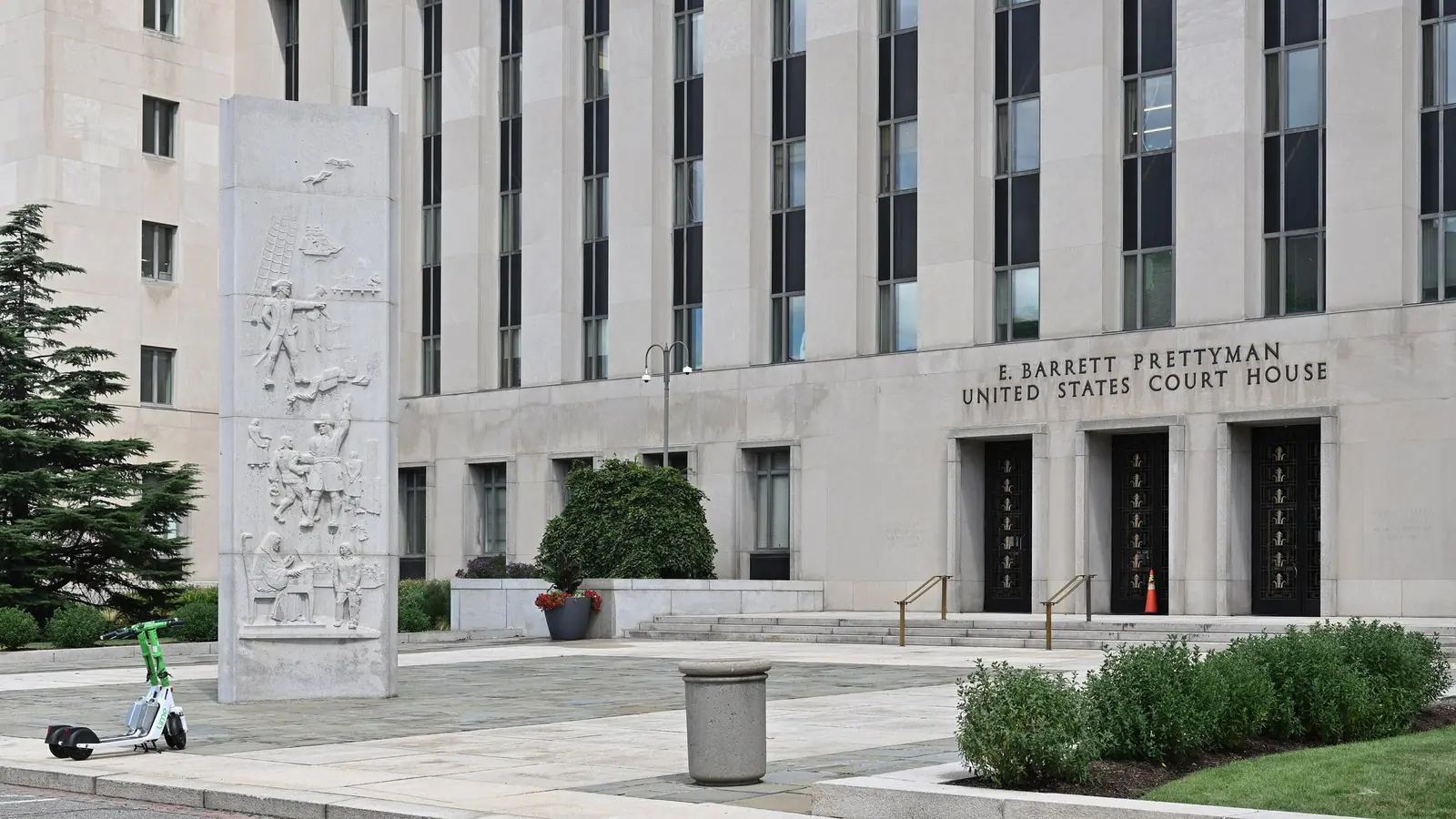
U.S. District Judge Christopher R. Cooper in Washington, D.C., on Wednesday, Nov. 25, 2026, blocked President Trump's second birthright citizenship executive order, EO 14418, for a nationwide class of U.S.-born children. The order tried to deny citizenship to babies whose parents work for foreign governments or international organizations without full diplomatic immunity, babies born through commercial surrogacy and babies with a parent the government links to certain gangs or terror groups. Cooper ruled the president "cannot carve out new exceptions" to birthright citizenship.
Key takeaways
- The class covers children born on or after Aug. 6 who have no U.S.-citizen parent and fall into one of the order's targeted groups. Children of accredited diplomats aren't included.
- Cooper denied the government's request to put his ruling on hold during an appeal and set the bond at $1.
- A Maryland judge already blocked parts of the same order in September, and the opinion says the administration is trying to dissolve that injunction and plans to appeal.
- The White House hadn't commented on Wednesday's ruling as of this update.
In this article
Last updated: Wednesday, Nov. 25, 2026, 2:45 p.m. ET. This is a developing story. We'll update it if the White House or Justice Department responds or files an appeal.
A federal judge in Washington on Wednesday blocked President Donald Trump's second attempt to narrow birthright citizenship, ruling that the Supreme Court's decision this summer leaves no room for the new limits.
U.S. District Judge Christopher R. Cooper of the District of Columbia certified a class of affected children and issued a classwide preliminary injunction against Executive Order 14418, which Trump signed on Aug. 6. The injunction bars the State Department, the Department of Homeland Security and the Social Security Administration from enforcing it against class members, the court docket and opinion show. Bloomberg Law reported the decision Wednesday afternoon, and the ACLU, which represents the plaintiffs, announced it in a statement.
Read also: The Supreme Court lets Big Bend border wall construction resume · Judge dismisses the case against two ex-FBI officials in the Hunter Biden probe · Salim Said is sentenced to 30 years in the Feeding Our Future fraud
"Barbara's ink had scarcely dried when the President issued a second executive order," Cooper wrote in his 67-page opinion, referring to the June ruling in Trump v. Barbara that struck down Trump's first-day order. "As the Supreme Court has made clear, however, the President cannot carve out new exceptions to birthright citizenship for children born within the United States and subject to its laws."
What the birthright citizenship ruling covers
The first order, from January 2025, went after children of parents who were in the country illegally or on temporary visas. The Supreme Court said those children are citizens at birth.
The August order took a different route. It told agencies not to recognize the citizenship of U.S.-born children with no citizen parent if a parent is an "alien enemy," which the order defines to include members of designated foreign terrorist organizations; works for a foreign government or for an international organization with immunity, such as the United Nations, the IMF or the World Health Organization; or paid for a "commercial transaction" to get the child citizenship, which covers U.S. surrogacy arrangements and so-called birth tourism.
Agencies started putting that into effect in September. Under the Social Security guidance Cooper described, a U.S. birth certificate alone would no longer be enough for affected children to get a Social Security number. The State Department told noncitizen parents to sign attestations under penalty of perjury before their children could get passports.
Cooper rejected each category. Only children of officials with full diplomatic immunity fall outside U.S. "jurisdiction," he wrote, so the attempt to strip citizenship from children of "all foreign governmental employees and employees of international organizations with immunity is unlawful." Babies born through surrogacy are "subject to American law" and are citizens, he found. The alien-enemy exception, he said, has always required a hostile occupation of U.S. territory, not just a parent's ties to a designated group.
The class he certified includes children born in the U.S. on or after Aug. 6 who have no U.S.-citizen parent and whose parent is or will be placed by the government in one of those three groups. He left alone two other parts of the order, one on ambassadors' children and one on births in territories where federal law doesn't grant citizenship, such as American Samoa.
Who brought the case
The lawsuit, Nathan v. Trump, was filed Sept. 28 by the ACLU, the NAACP Legal Defense Fund, Asian Law Caucus, Democracy Defenders Fund and ACLU affiliates in New Hampshire, Maine, Massachusetts and D.C. The named plaintiffs, who use pseudonyms, include a French mother who works for an international organization and gave birth in Washington in August, and an Australian couple who had a child through a U.S. surrogate this fall.
"Third time is not the charm, and the President needs to accept that birthright citizenship is the law of the land," Cody Wofsy, deputy director of the ACLU's Immigrants' Rights Project, said in a statement.
Cooper, an Obama appointee, signaled at a Nov. 12 hearing that he was skeptical of the government's reading of Barbara, States Newsroom reported. A Justice Department lawyer told him the order took effect when it was published and wouldn't apply to children born before Aug. 6.
The Maryland case and what the government says
This is the second court to block the August order. On Sept. 2, U.S. District Judge Deborah Boardman in Maryland halted it for a class of children who would have been covered by Trump's first order, CNN reported. The White House called that "just another ruling from an activist judge," and Attorney General Todd Blanche said then, "If we have to go back to the Supreme Court, we will."
Cooper wrote that the government is now trying to dissolve the Maryland injunction and intends to appeal it, which is one reason he didn't treat that ruling as enough protection. He also turned down the government's request for a stay pending appeal, saying the plaintiffs, not the government, are likely to win.
The White House and Justice Department hadn't publicly responded to Wednesday's ruling or said whether they'll appeal it to the U.S. Court of Appeals for the D.C. Circuit when this was published. Other Trump administration fights over immigration and federal power have reached the high court this term, including the one we covered in The Supreme Court lets Big Bend border wall construction resume. More court coverage is in our news section.
Frequently asked questions
- Did a judge block Trump's new birthright citizenship order?
- Yes. Judge Christopher R. Cooper of the U.S. District Court for the District of Columbia granted a classwide preliminary injunction against Executive Order 14418 on Nov. 25, 2026. Federal agencies can't enforce it against children in the certified class while the case goes on.
- Who does the second birthright citizenship order target?
- It targets U.S.-born children with no U.S.-citizen parent whose parent works for a foreign government or an international organization like the U.N. or IMF, whose parents used a commercial surrogate or "birth tourism," or whose parent the government calls an "alien enemy" tied to a designated terror group.
- Is birthright citizenship still the law?
- Yes. The Supreme Court struck down Trump's first order in Trump v. Barbara in June, and both federal judges who have ruled on the second order have blocked it. Children born in the U.S. are citizens at birth, with only narrow exceptions such as children of foreign diplomats with full immunity.
- Will the Trump administration appeal the birthright citizenship ruling?
- It hasn't announced an appeal of Cooper's ruling yet, but it asked him for a stay pending appeal, which he denied. It is already fighting the Maryland injunction against the same order.
Sources
- Memorandum Opinion, Nathan v. Trump, No. 26-cv-3377 (CRC) · U.S. District Court for the District of Columbia (via ACLU), Nov. 25, 2026
- Nathan v. Trump, 1:26-cv-03377 docket · CourtListener, Nov. 25, 2026
- Trump's Latest Birthright Citizenship Limits Blocked by Judge · Bloomberg Law, Nov. 25, 2026
- Federal Court Blocks New President Trump Birthright Citizenship Executive Order · ACLU, Nov. 25, 2026
- Federal judge blocks Trump's newest attempt to crack down on birthright citizenship · CNN, Sept. 2, 2026
- Trump administration pursues a second round in the courts on birthright citizenship · Wisconsin Examiner (States Newsroom), Nov. 12, 2026
Tags
- #birthright citizenship
- #birthright citizenship ruling
- #Executive Order 14418
- #Nathan v. Trump
- #Christopher Cooper
- #ACLU
- #Fourteenth Amendment
- #immigration
- #courts
About the author
Founder and editor
Marcia Reid is the founder and editor of TrendCanopy, where she reviews and edits every story.
Spotted an error? Read our corrections policy or contact us. Last reviewed November 25, 2026.
Related stories


Trending now
Entertainment ·
Andy Taylor, Duran Duran's original guitarist, dies of prostate cancer at 65Sports ·
Micah Parsons is set for his Packers season debut against the Rams on Thanksgiving EveTech ·
1Password says a hacker copied customer names and emails but never reached vaultsNews ·
Macy's postpones its 100th Thanksgiving Day Parade to Saturday as a storm nears NYCEntertainment ·
HBO Max sets The Pitt season 3 premiere for January as Noah Wyle's Robby returns