Why Are Bond Yields Rising? 10-Year Treasury Tops 5.1%
Why are bond yields rising? Hot inflation data and Fed hike talk pushed the 10-year Treasury yield to 5.17% this week. What it means for mortgage rates.
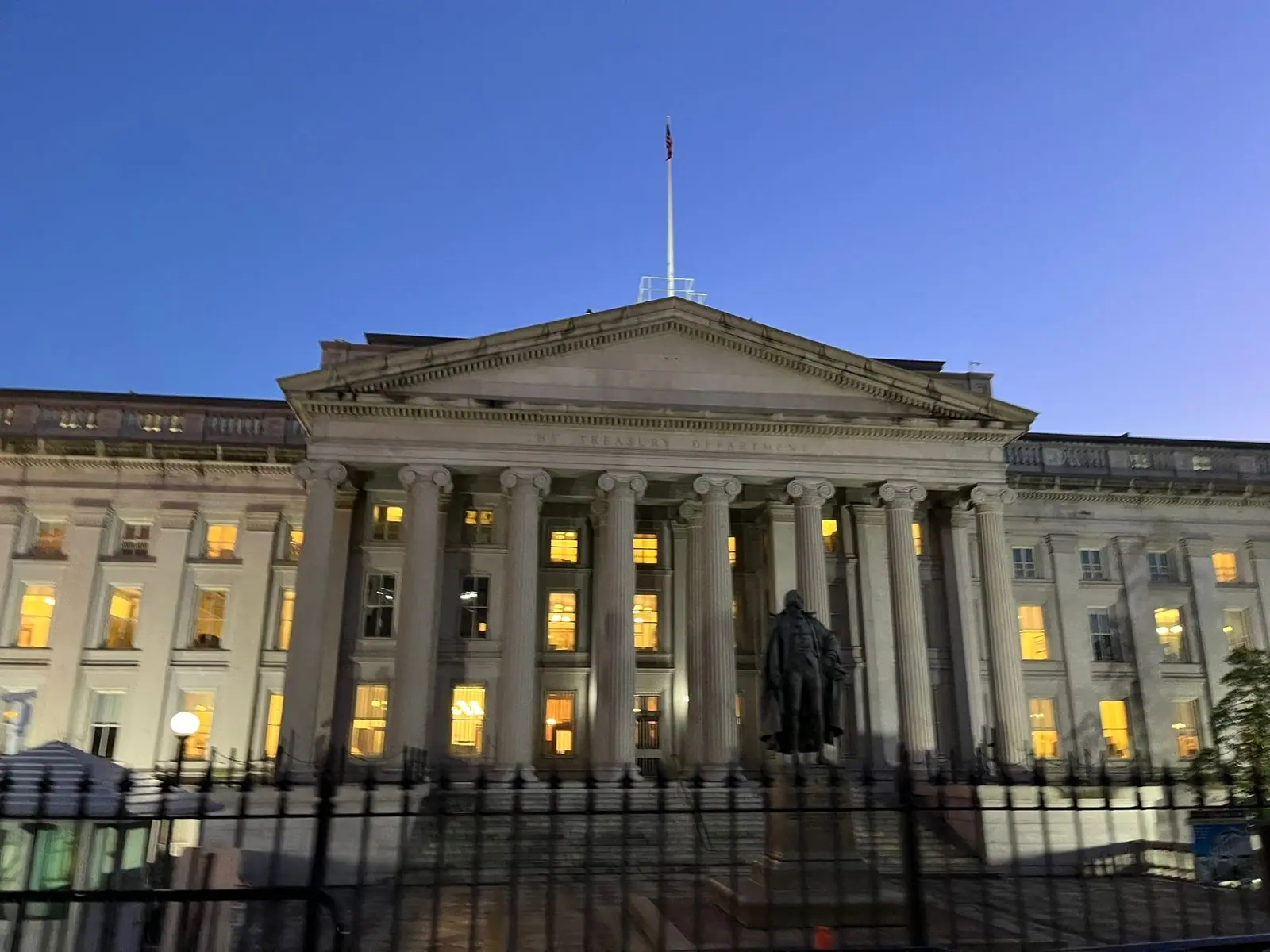
What happened
Bond yields are rising because inflation keeps running hotter than the Federal Reserve wants and traders now expect the Fed to raise rates in December. The 10-year Treasury yield touched 5.17% on Friday, Nov. 13, 2026, capping its biggest weekly jump since April 2025. A hot October CPI report and hawkish comments from Fed officials drove the selloff, and a softer-than-expected producer price report on Friday didn't stop it.
Key takeaways
- The 2-year yield, which tracks Fed expectations most closely, jumped more over Tuesday and Thursday than in any comparable stretch since March 2023, Bloomberg reported.
- Wholesale prices are up 6.5% from a year ago, the biggest annual rise since November 2022.
- Freddie Mac's 30-year mortgage average was 7.11% on Nov. 12, but that survey mostly predates this week's jump in yields.
In this article
Updated Nov. 13, 2026, 8:15 p.m. ET, after the bond market closed for the week.
A week ago, investors were piling into Treasuries. Democrats had just swept the midterms, AI stocks were wobbling, and government bonds looked like the safe place to wait it out. Five trading days later, that trade has blown up.
The 10-year Treasury yield touched 5.174% on Friday, Nov. 13, CNBC reported, and ended the week up about 30 basis points. That's the biggest weekly jump since April 2025, when President Trump's sweeping tariff announcement rattled markets. The 30-year bond yield climbed to about 5.47%.
So, why are bond yields rising this fast? Short answer: inflation won't cool off, and the Federal Reserve is talking about raising rates again.
Why are bond yields rising? Three forces at once
Inflation came in hot, twice
The selloff started Tuesday with the October consumer price index. Prices rose 0.4% for the month, above the 0.3% economists expected, and core CPI also beat forecasts. We broke down that report in our October CPI story.
Friday brought the producer price index, a gauge of wholesale prices. On the surface it looked like relief. PPI rose 0.3% in October, a bit below the 0.4% forecast. But the year-over-year number told a different story: wholesale prices are up 6.5% from a year ago, the biggest annual increase since November 2022, according to CNBC. Core PPI, which strips out food, energy and trade services, rose 0.5% for the month.
Yields dipped for a few minutes after the PPI release, then turned higher again. Traders didn't see enough in the report to change their minds.
The Fed is openly talking about hikes
Bond prices move opposite to yields, and nothing pushes yields up like the prospect of higher interest rates. This week Fed Governor Christopher Waller backed a rate increase and said he'd favor a half-point hike if inflation keeps accelerating, Bloomberg reported. Dallas Fed President Lorie Logan added to the hawkish tone.
That hit short-term bonds hardest. The 2-year Treasury yield, the one most tied to Fed policy, posted its biggest two-day jump on Tuesday and Thursday since March 2023, according to Bloomberg. (The bond market was closed Wednesday for Veterans Day.)
Realtor.com's economists summed up the mood after the CPI report: a December hike is now essentially priced in, and the argument is about how big and how fast.
More government debt to sell
Long-term yields have a separate problem. Growing Treasury debt supply is adding upward pressure on yields, Bloomberg reported, on top of the inflation worries. More bonds for sale means buyers can demand a higher return to take them.
The Nvidia leadership crisis didn't help bonds the way a scare usually would. Stocks wobbled on Friday as the chipmaker's turmoil weighed on tech shares, but money didn't rush back into Treasuries for safety. If you've been following Jensen Huang's exit from Nvidia, that's a notable shift: bad news for stocks, and bonds still fell.
What the 10-year Treasury yield means for your money
The 10-year yield matters outside Wall Street because lenders use it as a benchmark. CNBC calls it the key benchmark for mortgages, auto loans and credit card debt. When it climbs and stays up, borrowing gets more expensive across the board.
Mortgage rates this week
Here's the catch with mortgage rates right now. Freddie Mac's weekly survey showed the average 30-year fixed rate falling to 7.11% on Nov. 12, down from 7.18%, its fourth straight weekly decline and the lowest in seven weeks. The 15-year average dropped to 6.45%.
That sounds like good news. But Freddie Mac's number averages applications from Thursday through Wednesday, so most of this week's bond selloff isn't in it yet. Realtor.com warned the downtrend "could potentially reverse" next week with the 10-year back above 5%.
A year ago the 30-year average was 6.24%. For anyone house hunting, that gap is the reason sales are weak: existing-home sales in October fell to their lowest pace in 16 years, NPR reported.
If you're close to locking a rate, watch the next Freddie Mac release on Thursday, Nov. 19, and ask your lender how long a lock lasts.
Savings, CDs and credit cards
Higher yields aren't bad for everyone. Savers can lock in better returns on Treasury bills, CDs and high-yield accounts when rates rise. Credit card rates, which follow the Fed's benchmark, are likely to keep climbing if the Fed hikes in December. We covered how that plays out in our explainer on the Fed's October decision.
Will Treasury yields keep going up?
Wall Street isn't sure, and the forecasts are far apart.
Tracy Chen, a portfolio manager at Brandywine Global, told Bloomberg the selloff in developed-market government bonds "is far from over" and said the 10-year could head toward 5.5%. Strategists at Goldman Sachs, on the other hand, forecast the 10-year will drop to 4.6% in 2027. Some investors are already buying: a hedge fund manager at K2 Asset Management told Bloomberg he sees the 10-year as attractive around 5.3%.
The next few weeks have clear checkpoints:
- More inflation data. Every report between now and December will be read as a vote on the size of the Fed's next move.
- The Fed meeting, Dec. 8-9. The decision comes Dec. 9, according to the Fed's calendar. A half-point hike would be a bigger shock than a quarter point.
- Treasury auctions. Weak demand at government debt sales tends to push yields up further.
For now, the message from the bond market is blunt. Investors who bet a week ago that rates had peaked are paying for it, and borrowers are likely next.
Frequently asked questions
- Why are bond yields rising right now?
- Inflation is running hotter than expected and the Fed is signaling more rate hikes. October consumer prices rose 0.4%, above forecasts, and Fed Governor Christopher Waller backed a hike. Traders now expect a December increase, and a rising supply of new government debt is adding pressure on long-term yields.
- What is the 10-year Treasury yield today?
- The 10-year Treasury yield hit 5.174% at its high on Friday, Nov. 13, 2026, and was around 5.14% to 5.16% late in the day, according to CNBC and Bloomberg. That left it up roughly 30 basis points for the week, its largest weekly gain since April 2025.
- Will mortgage rates go up because of Treasury yields?
- Probably, at least in the short run. Mortgage rates tend to follow the 10-year Treasury yield. Freddie Mac's average fell to 7.11% on Nov. 12, but that survey covers applications through Wednesday, and Realtor.com economists warned the four-week decline could reverse as the 10-year moved back above 5%.
- When is the next Fed meeting?
- The Federal Reserve's next policy meeting is Dec. 8-9, 2026, with the rate decision due Dec. 9. Markets have essentially priced in a rate hike at that meeting, and the debate has shifted to whether the Fed raises by a quarter point or a half point.
Sources
- 10-year Treasury yield moves to 5.17% as traders weigh producer price report · CNBC, Nov. 13, 2026
- Bond Investors Expect More Pain After Week of Soaring Yields · Bloomberg News (via Advisor Perspectives), Nov. 13, 2026
- Mortgage Rates Decline for Fourth Consecutive Week to 7.11% · Freddie Mac, Nov. 12, 2026
- Freddie Mac rates dip again this week, but sticky inflation could erase the relief · Realtor.com Economic Research, Nov. 12, 2026
- FOMC meeting calendars · Federal Reserve, 2026
Tags
- #why are bond yields rising
- #10-year Treasury yield
- #Treasury yields
- #mortgage rates
- #inflation
- #Federal Reserve
About the author
Founder and editor
Marcia Reid is the founder and editor of TrendCanopy, where she reviews and edits every story.
Spotted an error? Read our corrections policy or contact us. Last reviewed November 13, 2026.
Related stories
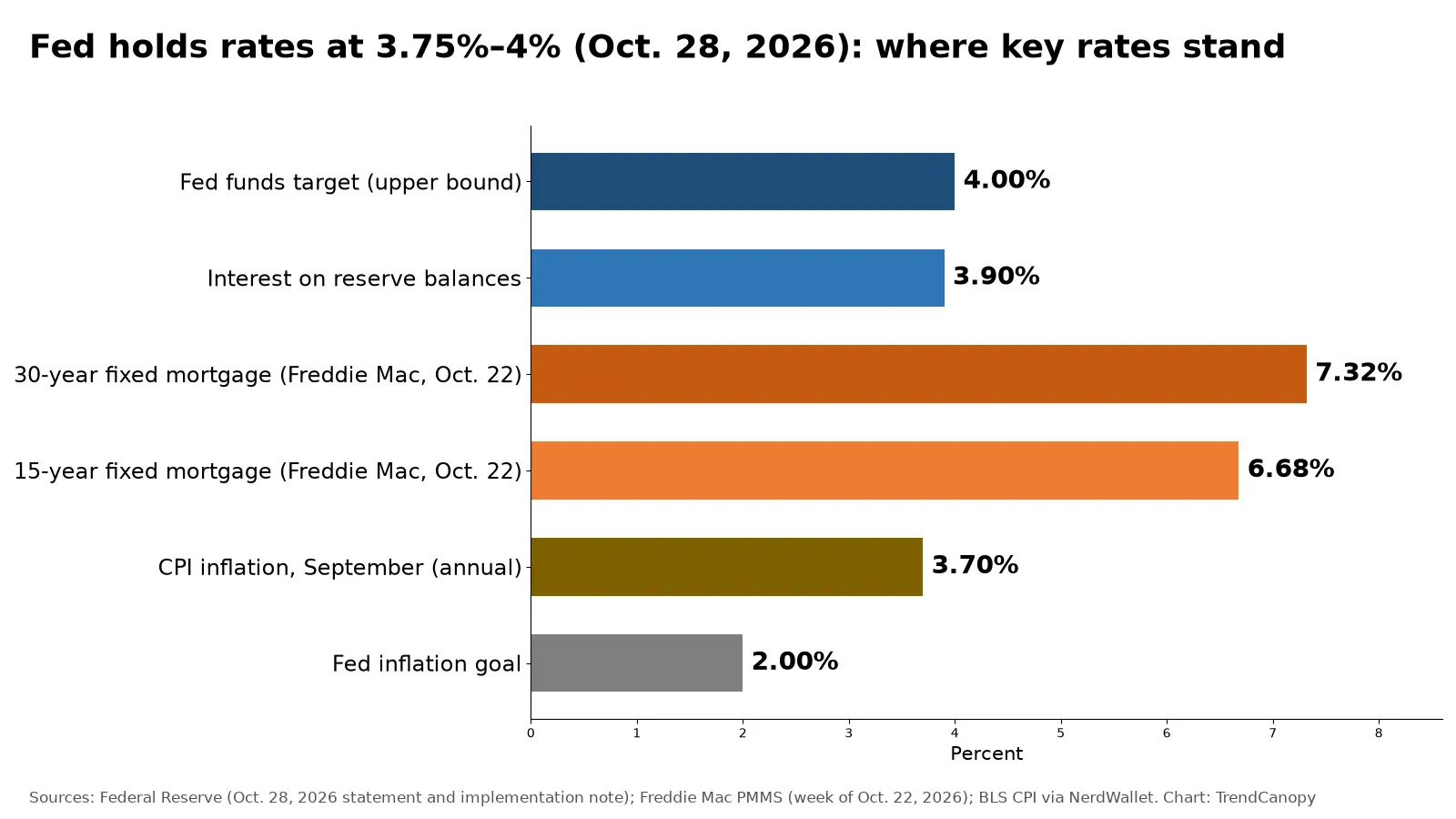
Fed Holds Rates at 3.75%-4%: What It Means for Your Money
The Fed held rates at 3.75%-4% on Oct. 28, 2026, in a 10-2 vote as Lisa Cook dissented. What it means for mortgages, credit cards, savings and a December hike.
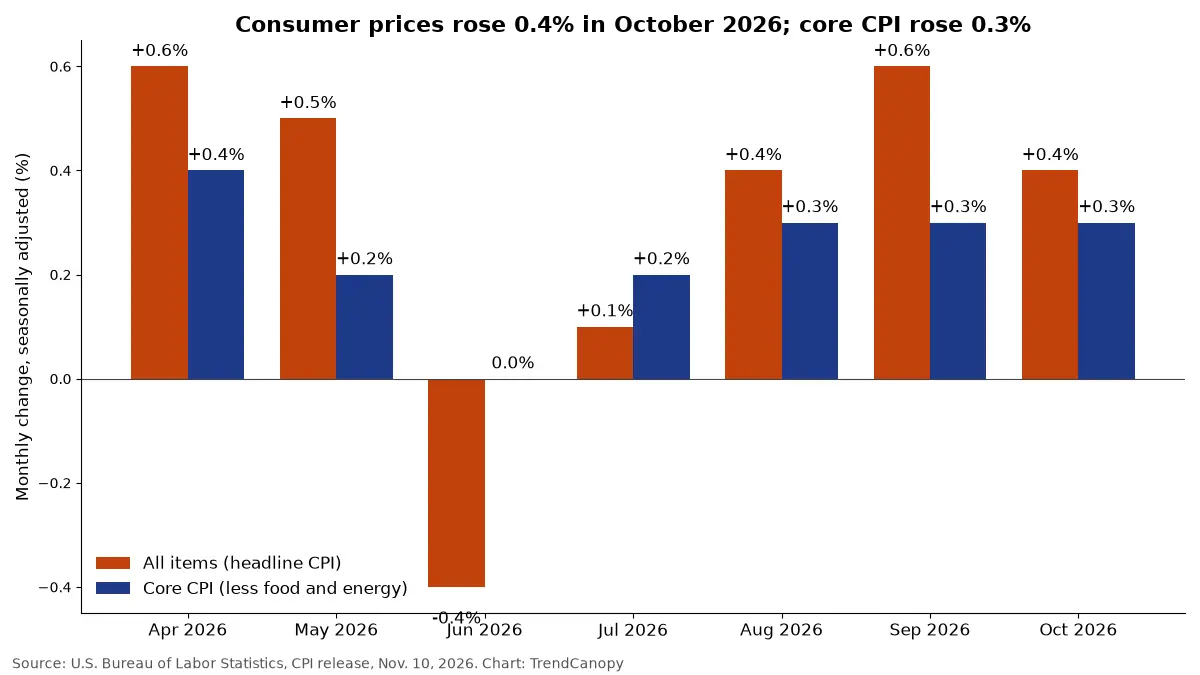
CPI Report: October Inflation Rose 0.4%, Hotter Than Expected
The October CPI report shows prices rose 0.4% and core CPI 0.3%, both above forecasts. Why there's no annual rate and what it means for a December Fed hike.

Scout Motors Hits 212,000 Reservations: Traveler, Terra Release Date
Scout Motors has about 212,000 reservations as its $2 billion South Carolina plant starts validation builds. Release date, price and range for Traveler and Terra.
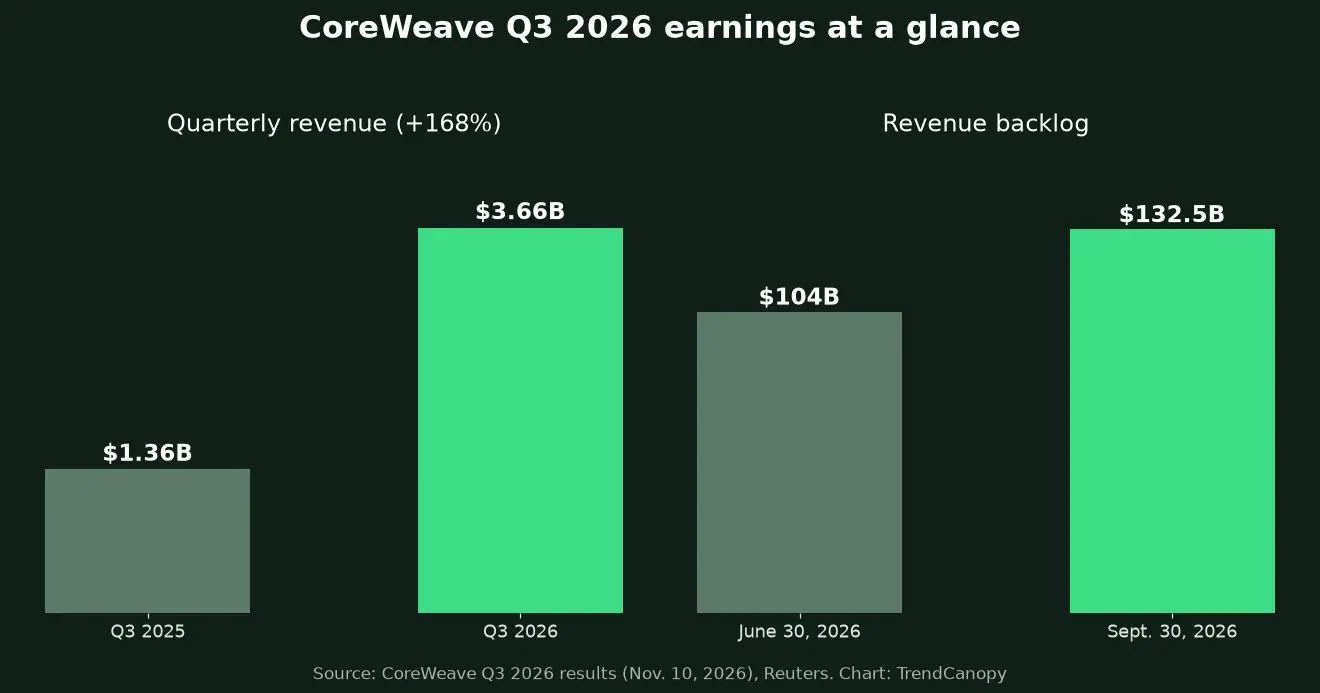
CoreWeave Earnings: Stock Jumps After Q3 Revenue Soars 168%
CoreWeave earnings beat forecasts as Q3 revenue hit $3.66 billion and backlog reached $132.5 billion. Why CRWV stock jumped and what still worries investors.

Toyota Kei Truck Coming to the US: Scion Returns With the KEI-01
Toyota's kei truck, the Scion KEI-01, arrives in the US in late 2027 with a 660cc engine, 4WD and a 25 mph top speed. Who can buy it and what it costs.
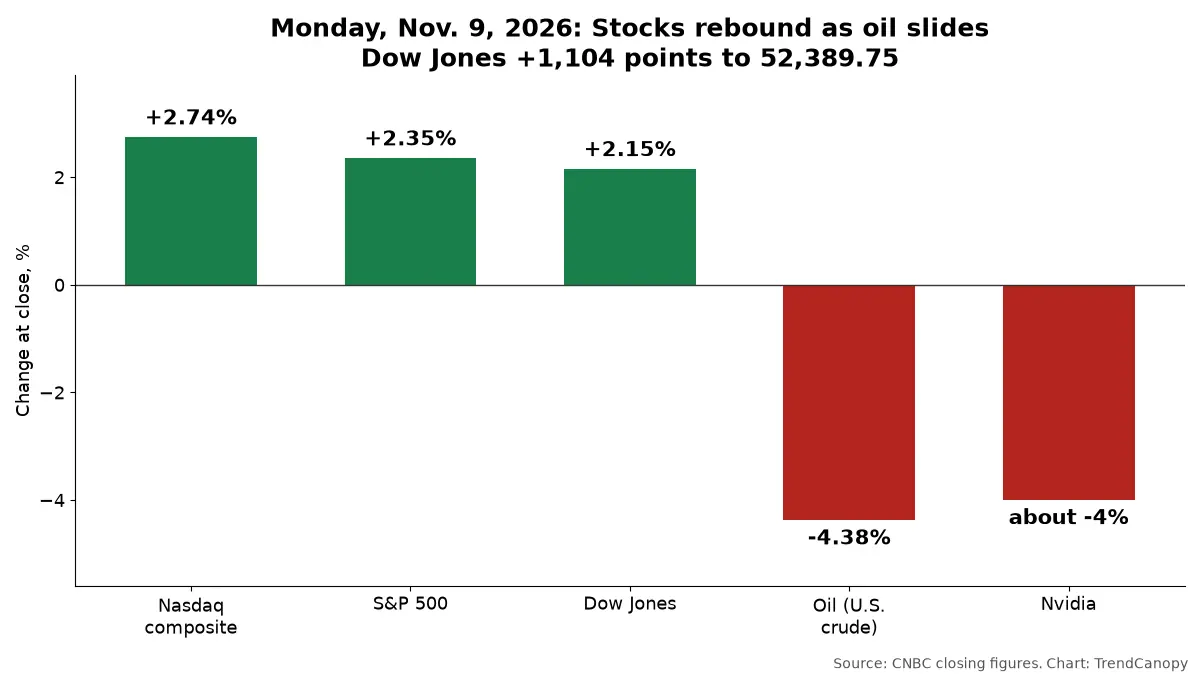
Dow Jones Today: Dow Surges 1,104 Points as Tech Stocks Rebound
The Dow Jones surged 1,104 points Monday to 52,389.75 as tech stocks rebounded and oil fell 4%. Nvidia slid about 4%. Why stocks rose and what's next.