Fed Holds Rates at 3.75%-4%: What It Means for Your Money
The Fed held rates at 3.75%-4% on Oct. 28, 2026, in a 10-2 vote as Lisa Cook dissented. What it means for mortgages, credit cards, savings and a December hike.

What happened
The Federal Reserve kept its benchmark federal funds rate in a target range of 3.75% to 4% on Wednesday, Oct. 28, 2026, in a 10-2 vote. Governor Lisa Cook and Cleveland Fed President Beth Hammack dissented, both preferring a quarter-point hike. The Fed said inflation 'remains elevated' and that it wants more information before its next move. Futures markets point to a strong chance of a rate hike at the next meeting, Dec. 8-9. For households, credit card rates are likely to keep rising, 30-year mortgage rates remain above 7%, and top high-yield savings accounts still pay more than 4%.
Key takeaways
- Rates have been at this level since a quarter-point hike in September.
- It was Lisa Cook's first dissent.
- The Fed's statement upgraded its view of the economy to 'expanding at a strong pace.'
- Chair Kevin Warsh said one 2027 meeting will focus only on strategy, with no rate vote.
In this article
Updated Oct. 29, 2026, with this week's Freddie Mac mortgage rates and September PCE inflation data.
The Federal Reserve left interest rates unchanged on Wednesday, Oct. 28, 2026, keeping the federal funds rate in a target range of 3.75% to 4%. The decision was widely expected, but the vote was not unanimous: Governor Lisa Cook and Cleveland Fed President Beth Hammack dissented in favor of a quarter-point hike, the Fed's statement shows. The Fed rate decision was one of the top U.S. stories on Google News overnight.
Not financial advice. This article explains the Federal Reserve's published decision and reporting on its likely effects. Talk to a qualified professional about your own situation.
The Fed holds rates: what it decided on Oct. 28
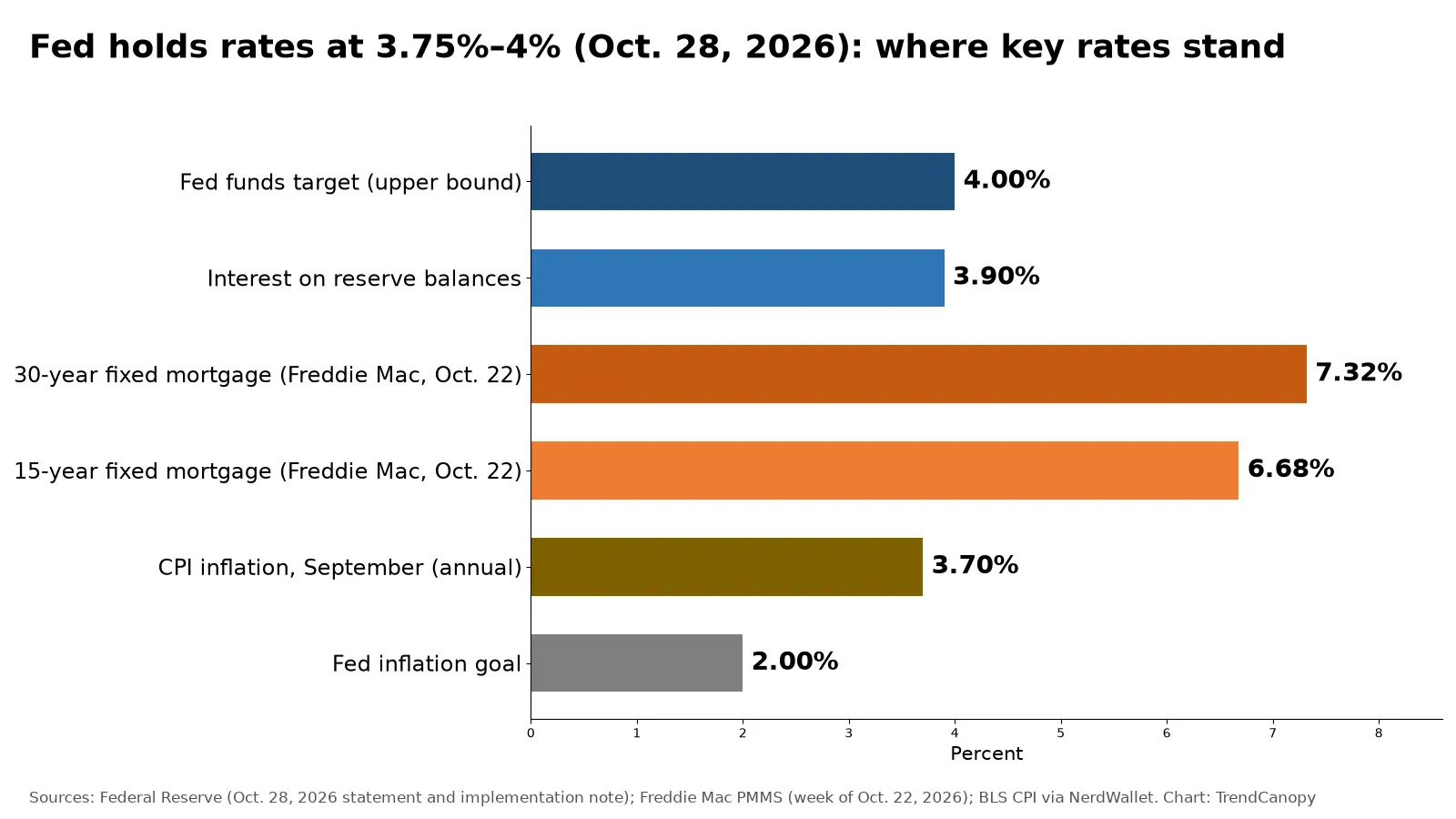
The Federal Open Market Committee (FOMC) voted 10-2 to hold its benchmark rate at 3.75% to 4%, where it has been since a quarter-point increase in September, CNBC reported. In its implementation note, the Fed also kept the interest rate it pays banks on reserve balances at 3.90%, effective Oct. 29.
Three lines in the policy statement stood out:
- The economy is "expanding at a strong pace." That is an upgrade from "solid" in September, Axios noted. The Fed also said job gains have kept pace with the workforce and the unemployment rate "has changed little."
- "Inflation remains elevated." The Fed's goal is 2%. Inflation has been above that target for more than five years, according to CNBC.
- The Fed is waiting for data. "The accumulation of more information will help the Committee determine the policy stance appropriate to ensure a timely return of inflation to the Committee's 2 percent goal," the statement said.
So this was a pause. Nothing in the statement suggests the Fed is done tightening.
Why Lisa Cook's dissent made headlines
Dissents by Washington-based Fed governors have historically been rare, though that norm has broken down since 2024, according to Axios. This was Cook's first dissent since joining the Fed's Board of Governors in 2022 as an appointee of President Joe Biden, CNBC reported.
Her vote drew extra attention because Cook is the governor President Donald Trump has been trying to remove over allegations about information on home loan applications. The Supreme Court stopped an earlier attempt, and the administration has restarted the effort with a White House hearing scheduled for early November, according to CNBC. Her lawyers say the allegations are a pretext, Axios reported. Asked whether he or the Fed would take part in that hearing, Chair Kevin Warsh said, "Not to my knowledge."
Hammack, a consistently hawkish voice, also dissented in July for the same reason. Dallas Fed President Lorie Logan and Minneapolis Fed President Neel Kashkari, who dissented alongside her in July, joined the majority this time, CNBC said.
Is a rate hike coming in December?
The next FOMC meeting is Dec. 8-9, 2026, according to the Fed's meeting calendar. It is a meeting that includes a new Summary of Economic Projections, often called the "dot plot."
Markets think a hike is possible. Futures pricing indicates a strong possibility of another hike in December, and perhaps one or two more in 2027, CNBC reported. Before Wednesday's decision, traders had priced in less than a 10% chance of an October hike, according to the CME Group's FedWatch tool.
Key data between now and then will shape the call:
- PCE inflation, the Fed's preferred gauge, rose 3.6% in September from a year earlier, and core PCE, which excludes food and energy, rose 3.1%, the Bureau of Economic Analysis reported on Oct. 29. That keeps inflation well above the Fed's 2% goal, and CNBC said the data shows the Fed "could have more work to do" heading into its December meeting.
- Consumer prices. September's Consumer Price Index showed annual inflation rising to 3.7%, NerdWallet noted.
- Growth. The Atlanta Fed's GDPNow tracker points to 3.4% annualized growth in the third quarter, which would be the strongest in a year, according to CNBC.
Warsh has avoided giving forward guidance about the Fed's next steps. Politics are also in the background: the midterm elections are Nov. 3, and some observers have speculated that officials would be reluctant to raise rates so close to a vote, CNBC reported. For voting dates and deadlines, see our 2026 midterms early voting guide.
What the Fed decision means for your money
The federal funds rate is what banks charge each other for overnight loans, but it ripples into many consumer rates. Because the Fed held steady and more hikes may be coming, consumers are unlikely to see much relief from high borrowing costs soon, CNBC's personal finance team reported.
Credit cards
Most credit cards have variable rates tied to the prime rate, which is generally about 3 percentage points above the Fed's benchmark. Changes usually show up within one or two billing cycles. Average card rates have risen for three straight months and are at their highest since December 2025, LendingTree's Matt Schulz told CNBC, adding that rates are "highly likely to rise in the next few months, too, as card issuers implement the Fed's September hike."
What you can do: Paying down variable-rate balances, or asking your issuer for a lower rate, matters more than usual when rates are rising.
Mortgages
Fixed mortgage rates don't move in lockstep with the Fed. They generally track long-term Treasury yields and inflation expectations. Freddie Mac's 30-year fixed average was 7.24% as of Oct. 29, 2026, down 0.08 percentage point from 7.32% a week earlier but well above 6.17% a year ago. The 15-year fixed averaged 6.60%, down from 6.68% the week before, according to Freddie Mac. Freddie Mac publishes a new weekly average on Thursdays at noon ET.
NerdWallet's Zillow-based weekly average slid to 7.17% APR in the week ending Oct. 28, and NerdWallet warned that hotter inflation data could push rates higher in November. If you're weighing a refinance or PMI changes, our explainer on the White House mortgage executive order covers what changed.
Savings accounts and CDs
Savings yields tend to follow the Fed's rate, so a hold keeps them largely steady. Some top online high-yield savings accounts still pay more than 4%, according to Bankrate data cited by CNBC. That is far more than a typical savings account at a big bank.
Car loans, student loans and other debt
Variable-rate loans and home equity lines of credit generally move with the prime rate, so they won't change from this decision alone. Fixed-rate auto loans and existing federal student loans keep the rate you locked in. If you have defaulted federal loans, see how student loan debt collection is working this year.
Warsh changes the Fed's meeting schedule
The other news from Warsh's press conference: the Fed will reshape its calendar. "We believe eight meetings per year is the right number for the FOMC, but in 2027, one meeting will focus exclusively on broad monetary policy strategy, with neither a vote on the federal funds rate nor a policy statement anticipated," Warsh said, as quoted by CNBC. He said he expects two strategy meetings and six rate-setting meetings in 2028.
That means fewer chances each year for the Fed to change rates, which could make each decision a bigger market event.
What's next
- Oct. 29: September PCE inflation data was released, showing 3.6% headline and 3.1% core inflation.
- Early November: White House hearing on Lisa Cook's potential removal.
- Nov. 3: Midterm elections.
- Nov. 18: Minutes of the October meeting are due, three weeks after the decision, per the Fed's usual schedule.
- Dec. 8-9: Next FOMC meeting and new economic projections.
The Fed hit pause in October, not stop. With inflation at about 3.7% and the economy growing strongly, two officials already want higher rates, and markets see a real chance of a December hike. For now, credit card debt keeps getting pricier and mortgage rates stay above 7%, while savers keep earning solid yields. If you work in tech, Microsoft's voluntary buyout offer is the other money story worth your time this week.
Frequently asked questions
- Did the Fed raise interest rates in October 2026?
- No. On Oct. 28, 2026, the Federal Open Market Committee voted 10-2 to keep the federal funds target range at 3.75% to 4%. Governor Lisa Cook and Cleveland Fed President Beth Hammack dissented, both preferring a quarter-point hike. Rates have been at this level since a quarter-point hike in September.
- What is the federal funds rate right now?
- The target range is 3.75% to 4%, effective Oct. 29, 2026. The Fed also kept the interest rate it pays banks on reserve balances at 3.90%, according to its implementation note, and AP describes the key rate as about 3.9%.
- Why did Lisa Cook dissent?
- Cook preferred to raise the target range by a quarter percentage point, the Fed's statement says. It was her first dissent since joining the Board of Governors in 2022, CNBC reported. She is also the governor President Trump is seeking to remove, with a White House hearing on that scheduled for early November.
- Will the Fed raise rates in December?
- Possibly. Futures markets point to a strong chance of a rate hike at the next meeting, Dec. 8-9, 2026, with the decision expected Dec. 9. The Fed said inflation 'remains elevated' and that it wants more information before its next move.
- What does the Fed decision mean for mortgage and credit card rates?
- Credit card rates are likely to keep rising, since most cards are tied to the prime rate. Mortgage rates track long-term Treasury yields more than the Fed's overnight rate; Freddie Mac's 30-year fixed average was 7.24% as of Oct. 29, 2026, down from 7.32% a week earlier.
Sources
- Federal Reserve issues FOMC statement · Federal Reserve Board, Oct. 28, 2026
- Implementation Note issued October 28, 2026 · Federal Reserve Board, Oct. 28, 2026
- Meeting calendars and information · Federal Open Market Committee
- Fed holds rates steady amid ongoing concerns over inflation · CNBC, Oct. 28, 2026
- Fed rate decision: What it means for your money · CNBC, Oct. 28, 2026
- Fed keeps key rate unchanged at about 3.9% despite elevated inflation · Associated Press, Oct. 28, 2026
- Fed leaves rates steady as governor Lisa Cook dissents · Axios, Oct. 28, 2026
- Primary Mortgage Market Survey · Freddie Mac, Oct. 29, 2026
- Personal Income and Outlays, September 2026 · U.S. Bureau of Economic Analysis, Oct. 29, 2026
- Third-quarter U.S. GDP increases a better-than-expected 3.4% as September inflation accelerates · CNBC, Oct. 29, 2026
- As Fed Holds Steady, Are 7.5% Mortgage Rates Still Possible? · NerdWallet, Oct. 28, 2026
Tags
- #Federal Reserve
- #Interest Rates
- #Mortgage Rates
- #Inflation
- #Personal Finance

About the author
Editorial team
The TrendCanopy editorial team researches what Americans are searching for, checks the facts against primary sources and publishes clear, sourced explainers.
Spotted an error? Read our corrections policy or contact us. Last reviewed October 29, 2026.
Related stories
Student Loan Wage Garnishment: What Borrowers Should Know
Reports say wage garnishment on defaulted federal student loans could restart, which the Education Department disputes. What's official and what to do.
Trump Mortgage Executive Order: What It Changes for PMI
Trump's Oct. 22 mortgage executive order targets mortgage insurance, refinance title costs and USDA and VA loan rates. What it does and doesn't do.
SSI November 2026 Payment Comes Oct. 30: What to Know
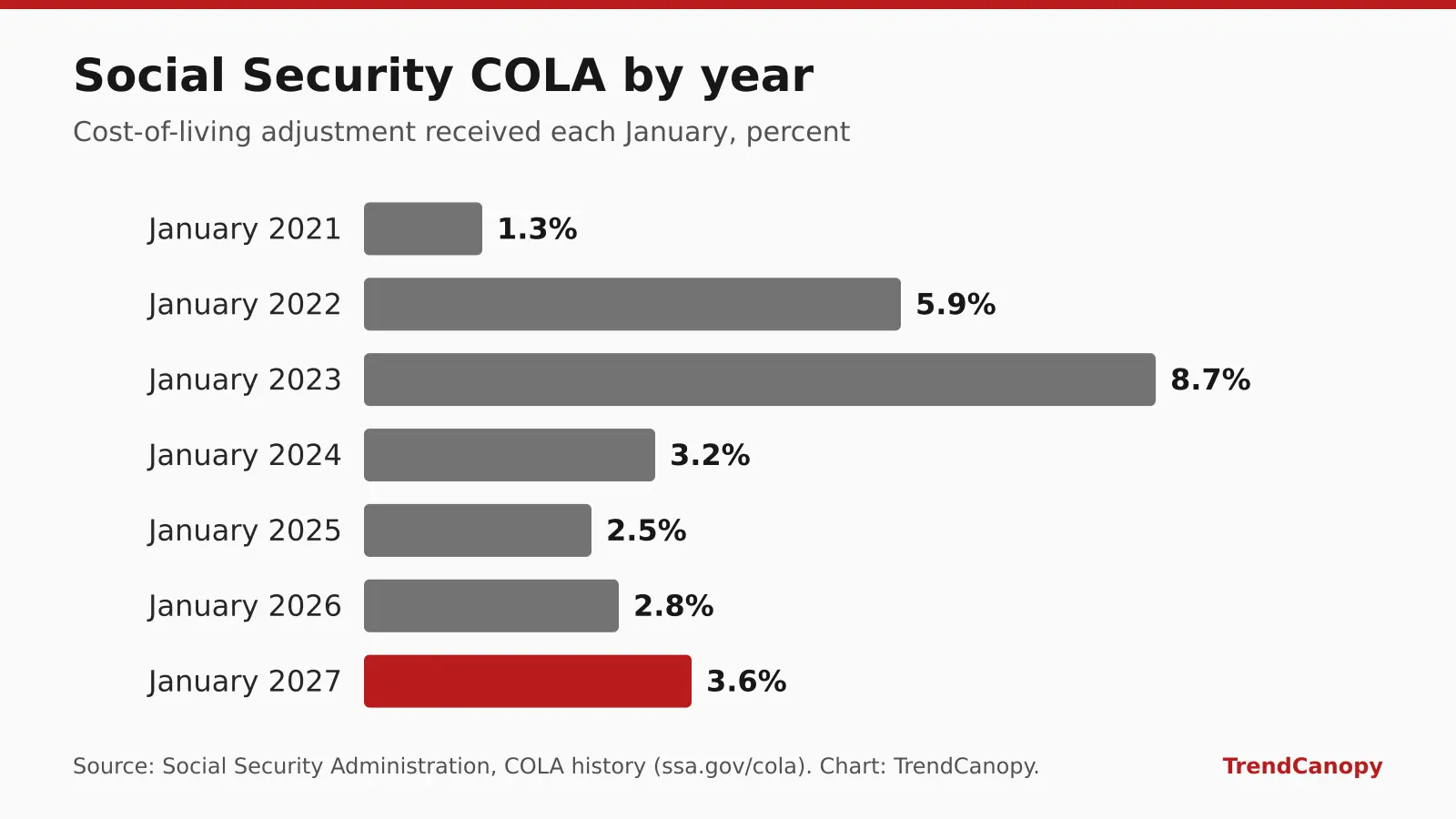
There's no SSI payment in November: it arrives early on Oct. 30. Here's the full payment schedule and what the 3.6% COLA for 2027 means for your check.