Trump signs the Common Cents Act, ending the penny and setting nickel rounding rules
President Trump's Common Cents Act makes the end of penny production permanent and lets stores round cash totals to 5 cents. Here's how the rounding works.
What happened
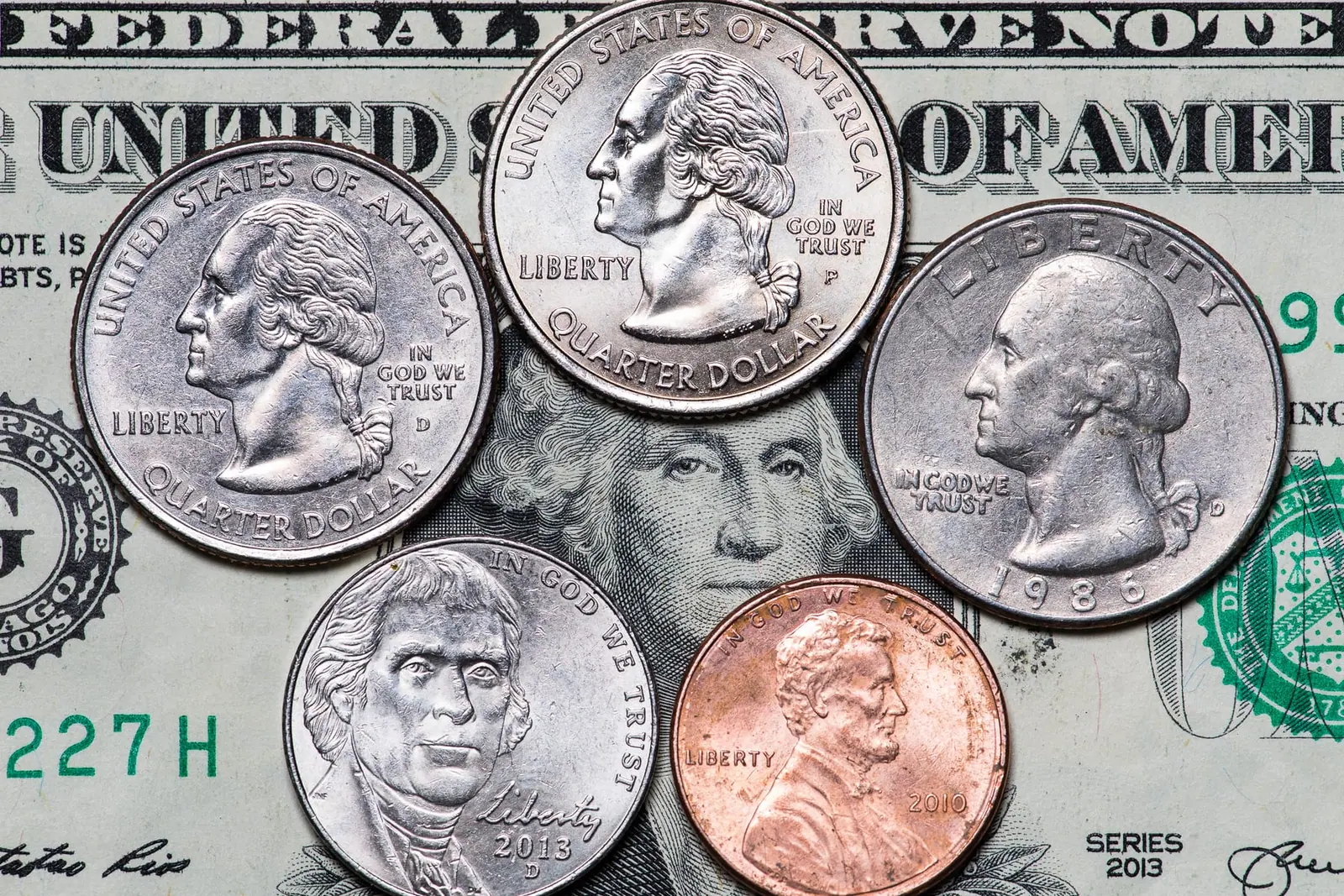
President Donald Trump signed the Common Cents Act on Friday, Nov. 20, 2026, writing into law the end of penny production that the U.S. Mint began a year ago. The law lets businesses round cash totals up or down to the nearest 5 cents when they can't give exact change. Card, check and other non-cash payments stay exact to the cent, and existing pennies remain legal tender.
Key takeaways
- Rounding is optional, and a store can always round a cash total down in the customer's favor.
- Employers who pay wages in cash and choose to round must round up, never down.
- The nickel can now be made with a zinc core and a nickel outer layer to cut what it costs to mint.
- Treasury now has to give Congress 60 days' notice before it stops minting any other circulating coin.
In this article
Published Nov. 21, 2026, 2:25 p.m. ET. Based on the signed bill text and reporting from NBC News, CBS News and Roll Call.
The Mint stopped striking pennies a year ago. Now it's the law.
President Donald Trump signed the Common Cents Act on Friday, Nov. 20, the White House said. The measure orders the Treasury Department to stop producing one-cent coins for general circulation, lets businesses round cash sales to the nearest nickel, and changes what the nickel itself can be made of.
Read also: Trump signs a mortgage executive order aimed at PMI and refinance costs · Bitcoin price sinks below $56,000 for a two-year low, then bounces back to $60,000 · Anthropic stock drops more than 10% as the Nasdaq wipes out its gain for the year
For most people, the part that matters is at the register. Until now, stores had no federal rule for what to do when they ran out of pennies, and some worried about lawsuits if they rounded. The new law gives them one.
What the Common Cents Act does
The bill is short, and its text does four main things.
It ends the circulating penny for good. Treasury "shall cease production" of one-cent coins for general circulation. The Mint may keep making pennies to sell to collectors.
It keeps old pennies spendable. Any penny minted before the law took effect stays legal tender "for all debts, public charges, taxes, and dues."
It sets cash rounding rules. Businesses, banks and anyone else exchanging cash may round to a multiple of 5 cents when exact change can't be provided.
It changes the nickel. The 5-cent coin can now have an inner layer of zinc and an outer layer of nickel, weighing between 4 and 6 grams. Today's nickel is a copper-nickel alloy, and zinc is cheaper. Treasury has to test any new mix so it costs less and, as far as practical, still works in vending machines and other coin-operated equipment.
The bill passed both chambers by voice vote, NBC News reported. The House approved it on Sept. 14 and the Senate on Sept. 28, according to the House Financial Services Committee. It sat for nearly two months before Trump signed it.
Penny rounding rules at the register
The rounding section is where shoppers will notice a difference. It works on the final digit of the total, including tax.
| Total ends in | What can happen | Example |
|---|---|---|
| 0 or 5 | Nothing changes | $8.25 stays $8.25 |
| 1, 2, 6 or 7 | Round down | $8.27 becomes $8.25 |
| 3, 4, 8 or 9 | Round up | $8.28 becomes $8.30 |
CBS News gave the same kind of example: a $10.02 cash purchase would round down to $10, and a $10.04 purchase would round up to $10.05, it reported.
A few details are easy to miss.
- It's permitted, not required. The law says nothing in it forces anyone to round. A store with a drawer full of pennies can keep giving exact change.
- It only kicks in without exact change. The basic rounding rule applies "if exact change cannot be provided at that time."
- Rounding in your favor is always allowed. A business can round your cash payment down, or the change it owes you up, any time it wants.
- Tiny totals have their own rule. A cash total of 1 or 2 cents can be rounded up to a nickel.
- Change counts too. The rules also cover the change due when you hand over more cash than the total.
The law also protects businesses that follow the rules. A store that rounds this way won't be in violation of federal, state, tribal or local requirements because of it. CBS News noted that before the law, businesses could be sued for failing to give exact change, even when they rounded in the customer's favor.
Card payments stay exact
None of this touches cards. The rounding rules don't apply to credit cards, debit and other electronic payments, checks, gift cards or money orders. If your groceries ring up at $47.83 and you tap your phone, you pay $47.83.
Cash wages round up
There's a separate rule for employers who pay workers in cash. If they choose to round, they have to round the paycheck up to the next multiple of 5 cents. They're not required to round at all. The law also says it doesn't excuse anyone from minimum wage, overtime or paid leave rules.
Are pennies still legal tender?
Yes, and they aren't going anywhere soon. The Treasury Department said last year that the Federal Reserve would keep recirculating the roughly 114 billion pennies in existence "for as long as possible," NBC News reported.
The law asks the Fed to plan for that. Within 90 days, the Fed's Board of Governors has to publish a strategy for handling penny deposits and orders at the commercial coin terminals that serve Federal Reserve banks. That includes how to limit disruptions to the penny supply.
Treasury has 60 days to assess how penny shortages and rounding affect low-income communities, older consumers and people without bank accounts, and to recommend fixes to Congress. The Fed then owes follow-up reports roughly six, 18 and 30 months after its first one.
So if you have a jar of pennies at home, you can still spend them or take them to a bank or coin-counting machine. They're worth exactly what they were last week.
Why Congress ended penny production
Cost, mostly. U.S. Mint figures cited by People show the cost of making one penny climbed from 1.42 cents to 3.69 cents.
"If the federal government is spending nearly four cents to make a penny worth one cent, something is broken," said Rep. Lisa McClain, the Michigan Republican who sponsored the bill, in a statement released by House Financial Services Chairman French Hill. McClain has said the law will save $85 million a year. The Mint put the immediate yearly savings from stopping production at $56 million, according to NBC News.
Trump ordered Treasury to stop making new pennies in February 2025, calling the cost "so wasteful!" The Mint finished its last run of circulating pennies in Philadelphia that November. Members of Congress have floated killing the coin since at least 1989, Roll Call noted.
Retailers pushed hard for the rounding language once the coins began drying up. "Retailers have been looking for federal guidance on processing cash transactions since penny production ended," Brennan Duckett of NACS, the convenience store trade group, told CBS News. Kwik Trip CEO Scott Zietlow said every cash sale in recent months had been "a reminder that we needed more clarity."
Could the nickel be next?
Not without warning. A Senate addition to the bill means Treasury can't stop minting any other circulating coin unless it notifies the House and Senate banking committees at least 60 days ahead. That notice has to include the reasoning and a full plan for phasing the coin out, covering effects on consumers, businesses and the economy. A briefing for lawmakers must follow within 30 days.
That extra step is why the bill bounced back to the House this fall, according to Roll Call. Nobody has proposed retiring the nickel. The law points the other way, giving the Mint room to make it more cheaply.
What you'll actually see in the coming weeks is probably more signs at cash registers explaining rounding. Don't expect it to dent your budget. Rounding can move a cash purchase by 2 cents at most, in either direction, while inflation is doing far more damage, as Consumer prices rose 0.4% in October, hotter than economists expected showed.
Frequently asked questions
- What is the Common Cents Act?
- The Common Cents Act is a federal law signed on Nov. 20, 2026, that permanently stops production of pennies for general circulation. It also sets rules for rounding cash transactions to the nearest 5 cents, allows a cheaper nickel made with zinc, and makes Treasury notify Congress before dropping any other coin.
- Are pennies still legal tender?
- Yes. The law says every penny minted before it took effect remains legal tender for all debts, public charges, taxes and dues. You can keep spending them, and stores can still accept them. The Treasury Department has said roughly 114 billion pennies are still in existence.
- How does penny rounding work?
- If a cash total ends in 1, 2, 6 or 7 cents, it can be rounded down to the nearest 5 cents. If it ends in 3, 4, 8 or 9 cents, it can be rounded up. A $10.02 total becomes $10, and $10.04 becomes $10.05. Rounding applies only when exact change isn't available.
- Does the penny rounding law apply to credit cards?
- No. The rounding rules cover cash only. The law specifically excludes payments by credit card, debit and other electronic transfers, checks, gift cards and money orders. Those transactions are still charged to the exact cent, so a $10.03 card purchase costs $10.03.
- When did the U.S. stop making pennies?
- The U.S. Mint stopped making pennies for circulation in November 2025, about nine months after President Trump told the Treasury Department to halt production. The Common Cents Act, signed in November 2026, turns that halt into law. The Mint can still make collector pennies for sale.
Sources
- H.R. 10167, Common Cents Act (enrolled bill text) · Congress.gov / U.S. Government Publishing Office, Nov. 2026
- H.R. 10167 – Common Cents Act · The White House, Nov. 20, 2026
- Trump formally ends minting of the penny after nearly 250 years of production · NBC News, Nov. 20, 2026
- Trump signs Common Cents Act into law · CBS News, Nov. 20, 2026
- Trump signs bill to halt penny production · Roll Call, Nov. 20, 2026
- Chairman Hill Applauds Signing of Common Cents Act into Law · U.S. House Committee on Financial Services, Nov. 20, 2026
- Trump signs bill to phase out penny production · ABA Banking Journal, Nov. 20, 2026
- Trump Formally Ends Penny Production After Nearly 250 Years, Signs 'Common Cents Act' · People, Nov. 21, 2026
Tags
- #Common Cents Act
- #penny
- #penny rounding rules
- #are pennies still legal tender
- #U.S. Mint
- #cash rounding law
About the author
Founder and editor
Marcia Reid is the founder and editor of TrendCanopy, where she reviews and edits every story.
Spotted an error? Read our corrections policy or contact us. Last reviewed November 21, 2026.
Related stories

Trump signs a mortgage executive order aimed at PMI and refinance costs
Trump's Oct. 22 mortgage executive order targets mortgage insurance, refinance title costs and USDA and VA loan rates. What it does and doesn't do.

Bitcoin price sinks below $56,000 for a two-year low, then bounces back to $60,000
The bitcoin price hit about $55,830 late Friday, its weakest since September 2024, as $2.4 billion in leveraged crypto bets were wiped out. Here's why.
Anthropic stock drops more than 10% as the Nasdaq wipes out its gain for the year
A day after its record IPO, Anthropic stock slid toward its $83 offer price and dragged AI names lower, pushing the S&P 500 into correction territory.

Intuit sells Mailchimp to Bending Spoons for $3.68 billion, a third of what it paid
Intuit agreed to sell Mailchimp for $3.68 billion, five years after paying $12 billion, and its shares fell after hours. What it means for Mailchimp users.

JPMorgan Chase says a vendor cyberattack may have exposed customer names and emails
Chase says a vendor cyberattack may have exposed some customer names and emails. The bank says services weren't hit and it isn't tied to this week's outage.

AMD stock drops 8% after a short seller ties its firmware to a blacklisted Chinese firm
Hunterbrook disclosed a short bet on AMD and said blacklisted server maker IEIT kept getting newer AMD firmware. What the report claims and what is unproven.
Trending now
Sports ·
Navajo Stirling knocks out Jiri Prochazka at UFC Qatar to stay unbeaten at 12-0Sports ·
Nebraska upsets No. 14 Ohio State 31-28, a major blow to the Buckeyes' playoff hopesNews ·
Mexico captures 'El Chapo Isidro,' one of the FBI's 10 most wanted, in SinaloaEntertainment ·
Kate Middleton says cancer 'does change you' in a documentary headed to NBCNews ·
The Navy says the USS Doris Miller won't be renamed after talk of naming it for Trump