Bernie Sanders pushes a $2,400 Social Security raise as a top priority
Bernie Sanders says the Social Security Expansion Act and its $2,400 yearly raise will be a top priority. What the bill does, who pays and its odds.
What happened
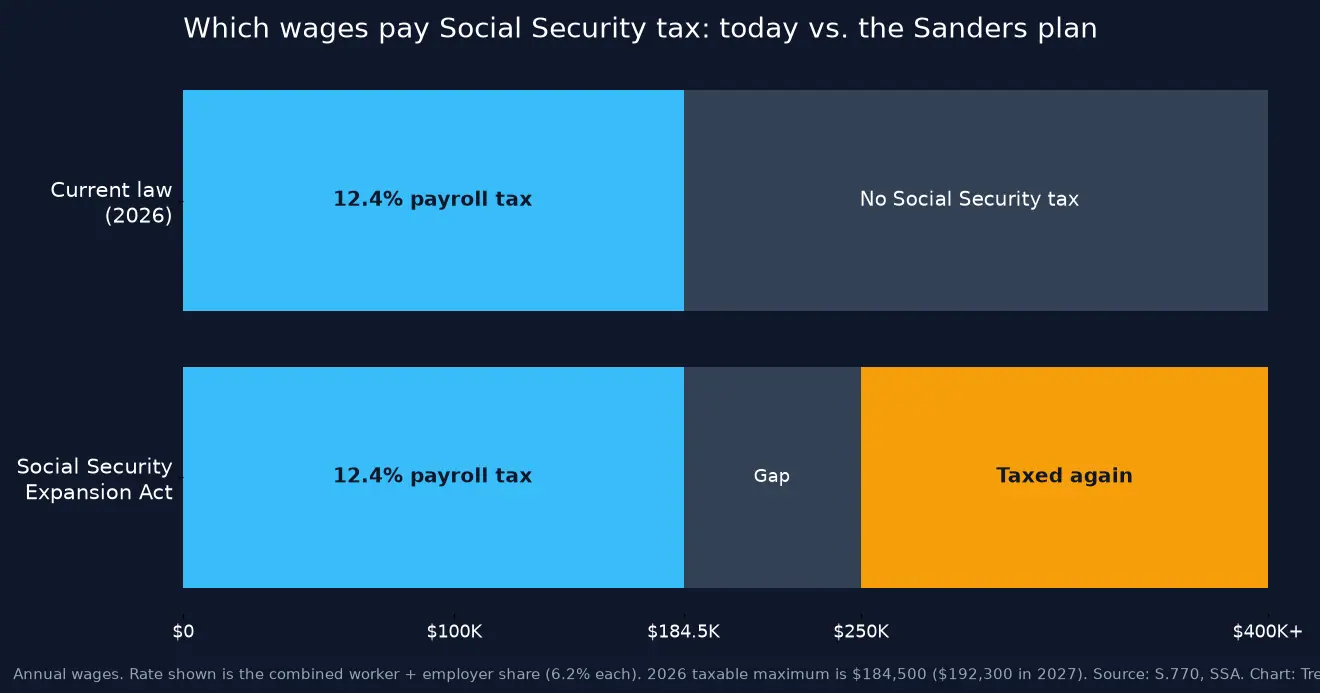
Sen. Bernie Sanders says the Social Security Expansion Act, which would raise benefits by $2,400 a year, will be a top priority when he becomes the next chair of the Senate's Social Security subcommittee. The bill, first filed in February 2025, would pay for the raise by applying the 12.4% payroll tax to wages above $250,000. It has never received a vote.
Key takeaways
- Annual cost-of-living adjustments would be tied to the CPI-E, an inflation index that gives more weight to health care and prescription drugs.
- The bill would also tax investment and business income of high earners at 12.4%, restore student benefits up to age 22 and raise the special minimum benefit.
- Social Security's retirement trust fund is projected to run dry in late 2032, after which only 78% of scheduled benefits could be paid.
In this article
Bernie Sanders wants to raise every Social Security check by $2,400 a year, and he thinks he'll soon have a better seat from which to push it. The Vermont independent said on Nov. 7 that, as the expected next chair of the Senate Finance Subcommittee on Social Security, expanding benefits through his Social Security Expansion Act will be "a top priority." By this weekend, "bernie sanders social security expansion act" had climbed onto Google Trends' US trending list with more than 1,000 searches, as retirees tried to figure out whether the money is actually coming.
Short answer: not yet. Here's what the bill would do, who would pay for it and what stands in the way.
This article explains a proposed bill. It is not financial advice, and nothing here changes your current benefits.
Read also: SSI November checks arrive early, so there is no payment in November · The Fed holds rates at 3.75%-4% in a 10-2 vote, with Lisa Cook dissenting · Student loan wage garnishment may restart, though the Education Department disputes it
What the Bernie Sanders Social Security Expansion Act would do
The bill is S.770, filed on Feb. 27, 2025, by Sanders and Sen. Elizabeth Warren of Massachusetts, with nine other Democratic senators as cosponsors. Reps. Jan Schakowsky of Illinois and Val Hoyle of Oregon introduced the House version. Its main pieces, according to the bill text and Sanders' fact sheet:
- A $2,400-a-year raise for current and new beneficiaries. That's about $200 a month.
- A different COLA formula. Annual cost-of-living adjustments would follow the CPI-E, the Bureau of Labor Statistics index built around spending by Americans 62 and older.
- A bigger special minimum benefit for low-wage, long-career workers, set at 125% of the poverty line.
- Student benefits up to age 22 for full-time college or trade school students whose parent died or became disabled. Congress ended those in 1983.
- One merged trust fund, combining the retirement and disability funds.
Is the $2,400 on top of the COLA?
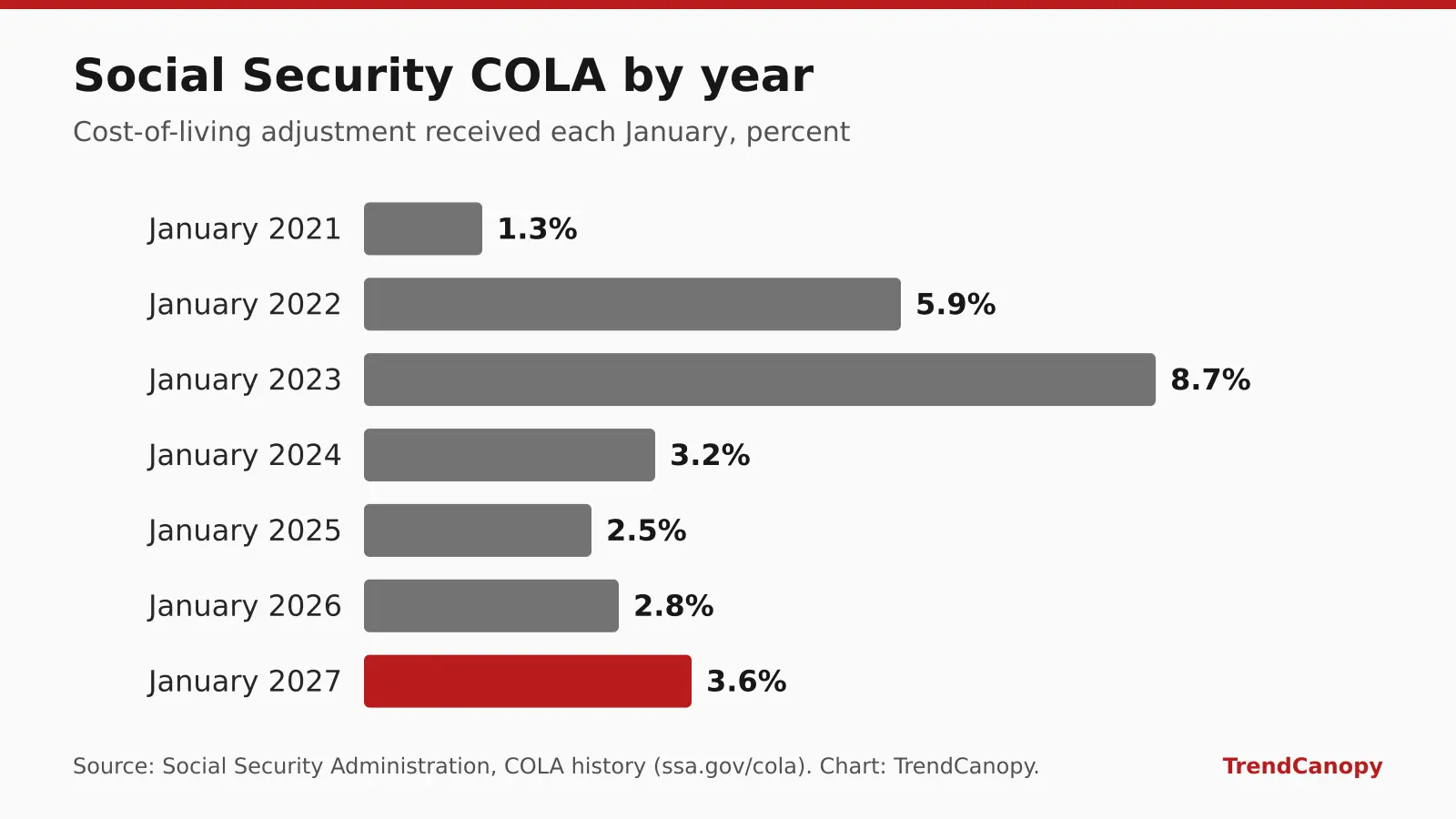
Yes. AL.com reported that Sanders describes the increase as coming in addition to the yearly cost-of-living adjustment, and that it would reach retirement, disability and survivor beneficiaries alike. For comparison, the 2027 COLA that Social Security announced in October is 3.6%. We covered what that means for SSI checks in our 2027 COLA and SSI payment guide.
How the Social Security payroll tax cap change would work
This is the part that decides the bill's fate.
Right now, workers and employers each pay 6.2% of wages into Social Security, but only up to a yearly limit. That limit, the taxable maximum, is $184,500 in 2026 and rises to $192,300 in 2027, Newsweek reported. Every dollar earned above it is free of Social Security tax.
Sanders wouldn't scrap the cap outright. His bill restarts the tax on wages above $250,000, leaving a gap between the regular cap and that line. Because the regular cap climbs with average wages each year, the gap gets smaller until it eventually closes.
The bill also goes after income that doesn't show up on a paycheck. It raises the net investment income tax by 12.4 percentage points for high earners and applies it to certain business income that escapes payroll tax today, so capital gains and dividends above the threshold would be hit too.
Sanders' office says more than 91% of households, those making $250,000 or less, would not pay a cent more. His fact sheet puts the trade-off bluntly: a CEO making $20 million pays the same amount into Social Security as someone earning at the cap.
Would high earners get bigger checks?
That's an open question critics keep raising. Kevin Thompson, CEO of 9i Capital Group, asked in Newsweek whether people paying more in would "also be entitled to larger benefits."
The 2032 shortfall behind the push
Sanders isn't pitching this into a vacuum. The 2026 Social Security Trustees Report, released June 9, projects the retirement (OASI) trust fund will be depleted in the fourth quarter of 2032. After that, payroll taxes coming in would cover about 78% of scheduled benefits, roughly a 22% across-the-board cut unless Congress acts. Treat the retirement and disability funds as one pot and the money lasts until the third quarter of 2034, with 83% payable after that.
Sanders cites a 2023 analysis by Social Security's Office of the Chief Actuary, done at his request, that found his plan would keep the program fully funded for 75 years while still paying the higher benefits. That's his number, from his office. Newsweek also quoted a financial literacy instructor at the University of Tennessee at Martin, Alex Beene, who said lifting the cap probably wouldn't be a permanent fix by itself.
Can the Social Security $2,400 increase actually pass?
It hasn't come close so far. Congress.gov shows S.770's only action is its referral to the Senate Finance Committee on the day it was filed. Republicans have opposed the tax increases that pay for it, and some economists worry about adding benefits to a program that already faces a gap, Newsweek reported.
What changes in January is Sanders' platform. AL.com reported that Democrats are poised to take control of both chambers when the new Congress is seated. A subcommittee chair can schedule hearings and push a bill into the conversation. Getting it through the full Finance Committee, both chambers and onto a president's desk is a much taller order.
So for anyone counting on an extra $200 a month in 2027: don't budget for it. The 3.6% COLA is the raise that's locked in.
What to watch next
The first real sign of movement would be a hearing on the bill once the new subcommittee lineup is official. After that, watch for a fresh cost estimate from Social Security's actuaries or the Congressional Budget Office, and for any Republican willing to talk about the cap. Without that, the Social Security Expansion Act stays what it's been since early 2025: a marker for where the left wants the 2032 fight to start.
If you're sorting out other money changes landing this fall, our explainer on student loan default collections in 2026 separates what's official from what's only been reported.
Frequently asked questions
- What is the Social Security Expansion Act?
- It is a bill, S.770, introduced by Sen. Bernie Sanders and Sen. Elizabeth Warren on Feb. 27, 2025. It would raise Social Security benefits by $2,400 a year, switch COLAs to the CPI-E inflation index and apply the payroll tax to wages above $250,000. It was referred to the Senate Finance Committee and has not had a vote.
- Will Social Security recipients get $2,400 more a year?
- Not unless Congress passes the Social Security Expansion Act and a president signs it. Sanders is promoting the bill again, but it remains at the introduced stage. If it became law, the increase would work out to about $200 a month on top of the regular annual COLA.
- How would Sanders pay for the Social Security increase?
- By applying the 12.4% Social Security payroll tax, split between worker and employer, to wages above $250,000, and adding a 12.4% tax on high earners' investment and business income. Today wages above $184,500 a year aren't taxed for Social Security at all. Sanders says 91% of households would see no tax increase.
- When will Social Security run out of money?
- Social Security won't run out entirely. The 2026 Trustees Report projects the retirement trust fund will be depleted in the fourth quarter of 2032, after which incoming payroll taxes could pay about 78% of scheduled benefits. Combined with the disability fund, reserves would last until 2034.
- Is Bernie Sanders chair of the Social Security subcommittee?
- Not yet. Sanders said on Nov. 7 that he expects to be the next chair of the Senate Finance Subcommittee on Social Security when the new Congress convenes in January. He has been the subcommittee's ranking member, the top spot for the minority side.
Sources
- S.770 - Social Security Expansion Act, 119th Congress · Congress.gov, Feb. 27, 2025
- Sanders, Warren, Schakowsky, Hoyle Introduce Legislation to Expand Social Security · Office of Sen. Bernie Sanders, Feb. 27, 2025
- Social Security Expansion Act one-pager (2025) · Office of Sen. Bernie Sanders
- Social Security Board of Trustees: Projection for Combined Trust Funds Remains Consistent with Prior Year · Social Security Administration, June 9, 2026
- Bernie Sanders Proposes $2,400 Social Security Boost in New Leadership Role · Newsweek, Nov. 13, 2026
- Social Security benefits would go up extra $200 a month in bill key backer says is 'top priority' · AL.com, Nov. 11, 2026
Tags
- #Social Security Expansion Act
- #Bernie Sanders
- #Social Security
- #Payroll tax cap
- #COLA
- #Personal Finance
About the author
Founder and editor
Marcia Reid is the founder and editor of TrendCanopy, where she reviews and edits every story.
Spotted an error? Read our corrections policy or contact us. Last reviewed November 15, 2026.
Related stories
SSI November checks arrive early, so there is no payment in November
There's no SSI payment in November; it arrives early on Oct. 30. The full payment schedule and what the 3.6% COLA for 2027 means for your check.
The Fed holds rates at 3.75%-4% in a 10-2 vote, with Lisa Cook dissenting
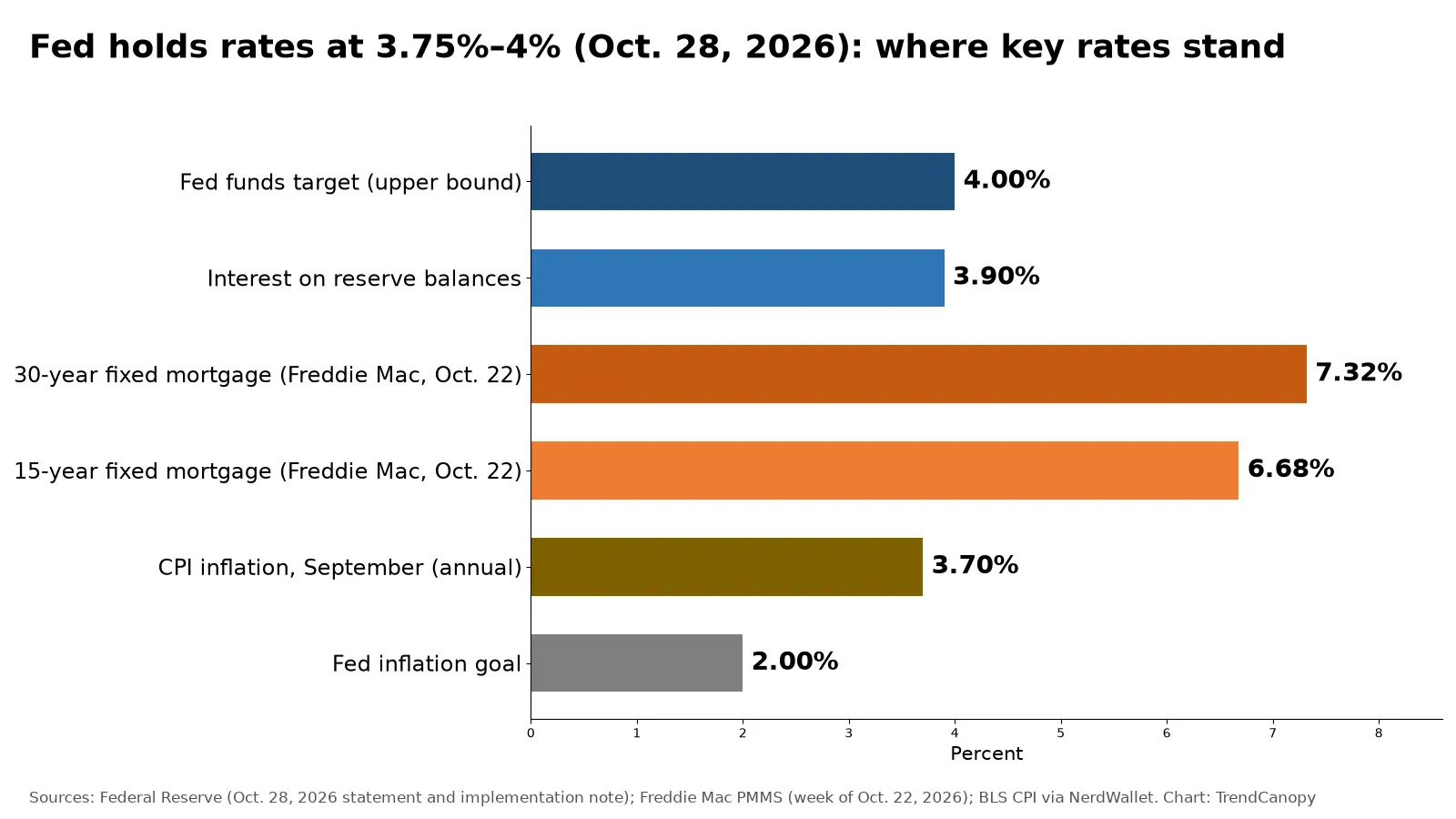
The Fed held rates at 3.75%-4% on Oct. 28, 2026, in a 10-2 vote as Lisa Cook dissented. What it means for mortgages, credit cards, savings and a December hike.

Student loan wage garnishment may restart, though the Education Department disputes it
Reports say wage garnishment on defaulted federal student loans could restart, which the Education Department disputes. What's official and what to do.

Trump signs a mortgage executive order aimed at PMI and refinance costs
Trump's Oct. 22 mortgage executive order targets mortgage insurance, refinance title costs and USDA and VA loan rates. What it does and doesn't do.

Chris Van Hollen challenges Chuck Schumer for Senate majority leader
Sen. Chris Van Hollen is running against Chuck Schumer to lead the new Democratic Senate majority. Who backs each man, when the vote is and what Van Hollen wants.

Nvidia board says Jensen Huang won't return as CEO, even as earnings beat forecasts
Nvidia's chairman said the board won't reinstate Jensen Huang, hours after Huang offered to come back. Revenue hit $115.8 billion and shares rose late.
Trending now
News ·
House Democrats pick Hakeem Jeffries for speaker, putting him in line to make historyTech ·
GTA 6 reviews give Rockstar a 99 on Metacritic, tying Zelda's all-time recordNews ·
Florida flooding closes Broward schools after 15 inches of rain hits HollywoodEntertainment ·
Kevin Feige says Marvel was swapping Kang for Doom before Jonathan Majors was firedMoney ·
Anthropic prices its IPO at $83 a share, valuing the Claude maker at $1.5 trillion