Foundayo Sleep Apnea Results: Lilly's Pill Cuts Episodes 44%
Foundayo sleep apnea trial results: Lilly's GLP-1 pill cut breathing interruptions up to 44% in a year-long study. FDA filing timing and how it compares.
What happened
Eli Lilly said Monday, Nov. 9, 2026, that Foundayo, its once-daily GLP-1 weight-loss pill, sharply reduced sleep apnea severity in a pair of year-long Phase 3 studies of 712 adults with overweight or obesity. Breathing interruptions fell by up to 43.8%, compared with 6.3% on placebo. Lilly plans to ask the FDA to approve the pill for moderate-to-severe obstructive sleep apnea by the end of 2026.
Key takeaways
- Results were presented at the American Heart Association's Scientific Sessions in Chicago and published the same day in JAMA.
- People on the pill lost about 28 pounds on average over 52 weeks, roughly 11% of their body weight.
- About 12% of non-CPAP users on Foundayo quit because of side effects, mostly stomach trouble, versus 3.8% on placebo.
In this article
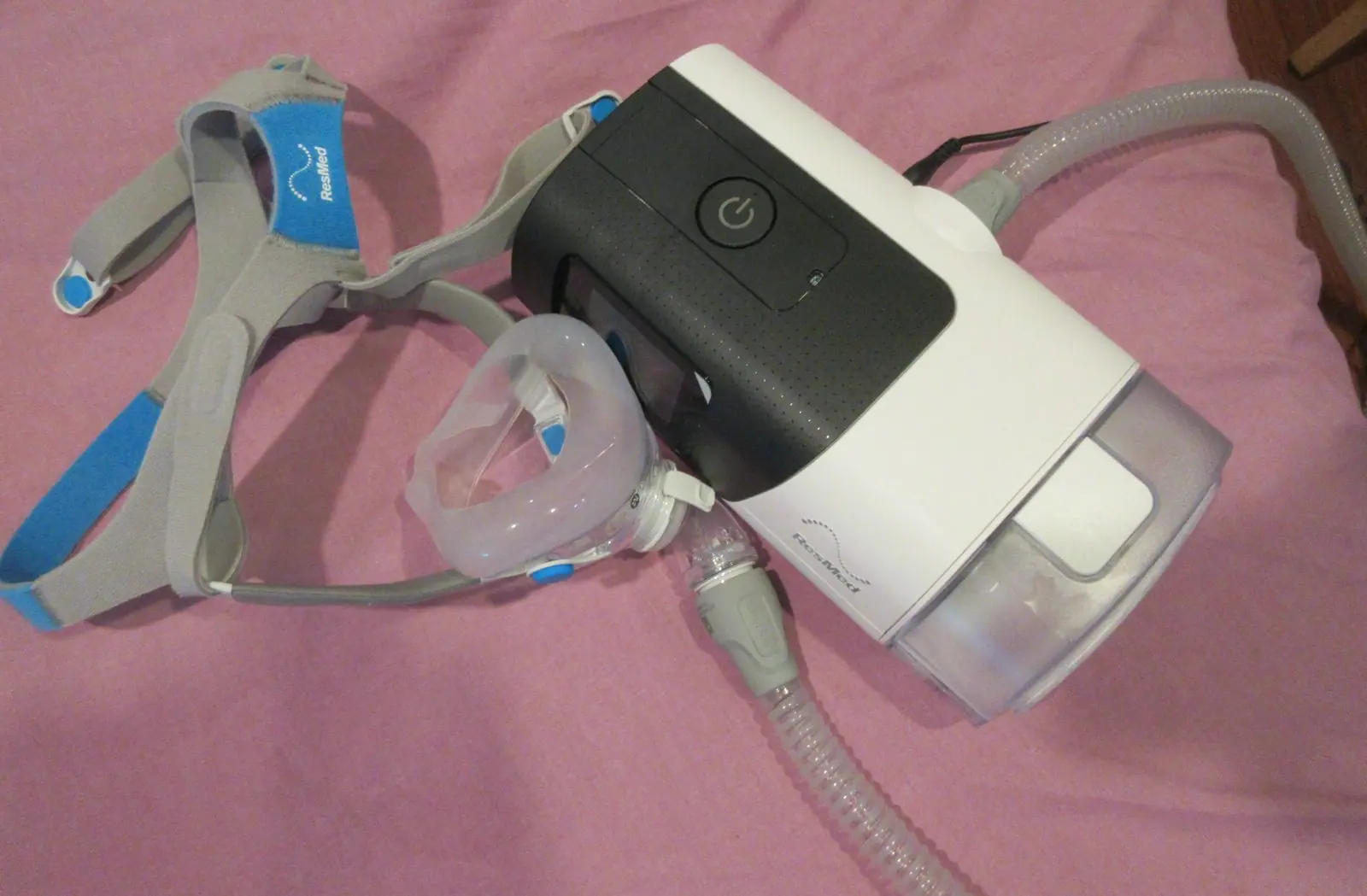
For most of the roughly 80 million U.S. adults the National Council on Aging estimates have obstructive sleep apnea, treatment has meant a mask, a hose and a humming machine on the nightstand. On Monday morning, Eli Lilly put up numbers suggesting a daily pill could become another option.
The company said its weight-loss pill Foundayo (orforglipron) cut sleep apnea severity in two year-long Phase 3 studies, and it plans to seek FDA approval for the condition before the year is out. The data went public at 9:30 a.m. ET, when Lilly released the results, researchers presented them at the American Heart Association's Scientific Sessions in Chicago, and JAMA published the full paper.
What the Foundayo sleep apnea trial found
The ATTAIN-OSA program enrolled 712 adults with moderate-to-severe obstructive sleep apnea and a body mass index of 27 or higher. It ran as two separate studies. Study 1 had 363 people who couldn't or wouldn't use a positive airway pressure (PAP) machine, the category that includes CPAP. Study 2 had 349 people who had been on PAP for at least three months and kept using it.
Sleep apnea is graded by the apnea-hypopnea index, or AHI: how many times an hour breathing stops or turns shallow. Fifteen to 29 events an hour counts as moderate. Thirty or more is severe. Participants in this trial started around 51 to 58 events an hour, firmly in severe territory.
After 52 weeks, according to Lilly's figures:
| Measure | Study 1: no PAP | Study 2: using PAP |
|---|---|---|
| Drop in breathing events per hour, Foundayo | 21.1 (43.8%) | 18.3 (27.5%) |
| Drop in breathing events per hour, placebo | 4.3 (6.3%) | 5.5 (3.0%) |
| Reached remission or mild sleep apnea on Foundayo | 31.5% | 19.6% |
| Cut in oxygen-drop burden on Foundayo | 55.9% | 45.8% |
| Average weight loss on Foundayo | 28.0 lbs (11.5%) | 28.2 lbs (11.2%) |
The oxygen-drop row, which researchers call hypoxic burden, needs some explanation. AHI counts how often breathing falters. Hypoxic burden measures how far and how long blood oxygen sinks each time, and researchers increasingly see it as the part tied to heart damage.
Blood pressure and inflammation moved too. Systolic pressure fell an average of 8.6 points in Study 1 and 7.3 points in Study 2, and hsCRP, an inflammation marker, dropped by 48.9% and 38.6%.
Why the AHA's numbers look a little different
Readers comparing coverage may notice the American Heart Association's release says breathing interruptions fell by "about 18" an hour, not 21. That isn't an error on either side. Lilly reports what statisticians call the efficacy estimand, which estimates the effect if everyone had stayed on the drug for the full year. The AHA's summary reflects a broader analysis that counts people who stopped. The direction is the same either way: the pill beat placebo on every main measure in both studies.
Is Foundayo approved for sleep apnea?
No. Foundayo is currently FDA-approved only for chronic weight management, in adults with obesity or adults with overweight who also have a weight-related health problem. It reached U.S. pharmacies in April 2026.
Lilly said it will submit the sleep apnea data to the FDA for moderate-to-severe obstructive sleep apnea in adults with obesity or overweight by the end of 2026, with filings in other countries to follow. Lilly hasn't said when it expects a decision.
Until then, a doctor prescribing Foundayo would be doing so for weight, not for the sleep apnea itself. Insurance coverage often hinges on that distinction.
Foundayo vs. Zepbound for sleep apnea
Lilly already sells the only drug approved for the condition. Zepbound, its weekly tirzepatide injection, won FDA approval for moderate-to-severe obstructive sleep apnea in adults with obesity in December 2024, CNBC noted.
The pitch for Foundayo is convenience. It's a once-daily tablet that, unlike some oral GLP-1 drugs, can be taken any time of day with no rules about food or water. For people who dislike needles, or who have given up on a CPAP mask, that could matter.
What nobody can say yet is which works better. The two drugs haven't been tested against each other for sleep apnea, and their trials enrolled different patients over different periods, so stacking one set of percentages next to the other isn't a fair fight. Lilly also has a third drug, retatrutide, that it says has been studied for sleep apnea.
Does it replace a CPAP machine?
The researchers were blunt about this. Dr. Vaishnavi Kundel of the Icahn School of Medicine at Mount Sinai, who presented the results, said in the AHA release that a pill could "expand access to treatment" and might be used alongside CPAP. The AHA release states that the medication is not meant to replace CPAP therapy.
Kundel did make one comparison. Earlier research found CPAP lowers blood pressure by about two to three points, she said, while blood pressure in these studies fell by about seven points after a year on the pill.
Side effects and the trial's limits
The side effects looked like those of every other GLP-1 drug: nausea, diarrhea, constipation, indigestion and vomiting, mostly mild to moderate. Dropout is the more telling figure. In Study 1, 12.2% of people on Foundayo quit because of side effects, compared with 3.8% on placebo. In Study 2, the split was 6.8% versus 0.6%.
The AHA listed several limits:
- The studies ran for one year, so long-term heart outcomes are unknown.
- People with Type 1 or Type 2 diabetes, and people with only mild sleep apnea, were excluded.
- Only about 30% of participants were women, and some racial and ethnic groups were underrepresented.
Researchers also said weight loss likely drove much of the improvement, and it isn't clear yet whether the drug does anything for the airway beyond that. Lilly funded both studies, which ran at 66 sites across four continents from October 2024 to July 2026.
What this means if you have sleep apnea
For now, nothing changes at the pharmacy counter. Foundayo's label still says weight management, and an FDA review typically takes months after a filing.
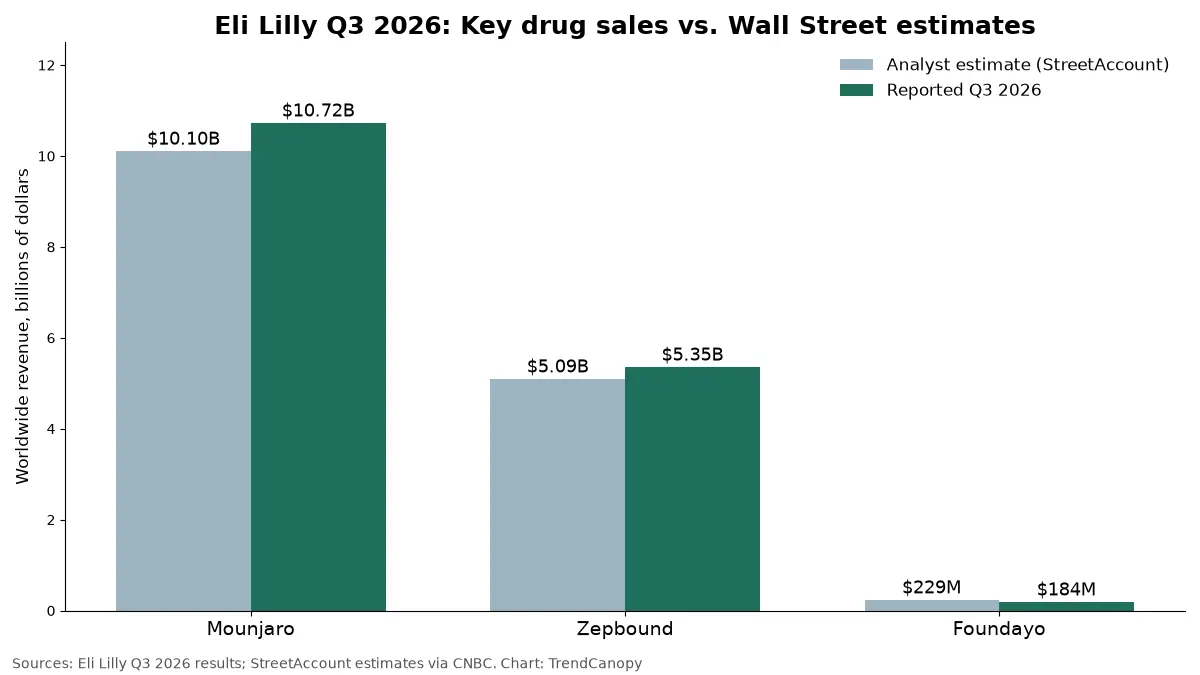
The bigger shift is in how doctors may talk about sleep apnea. The AHA counts healthy sleep among its Life's Essential 8 measures of heart health, and Lilly's results add to a growing case that treating weight treats the airway too. Sales of the pill have trailed Wall Street's hopes so far, as Lilly's third-quarter earnings showed, and a second approved use could give it a boost.
If loud snoring, gasping at night or daytime exhaustion sound familiar, a sleep study is still the first step, and a doctor can lay out which options, from CPAP to Zepbound, make sense today.
Frequently asked questions
- Is Foundayo approved for sleep apnea?
- Not yet. Foundayo is FDA-approved only for chronic weight management in adults with obesity, or overweight plus a weight-related condition. Lilly said Nov. 9, 2026, that it plans to file for a moderate-to-severe obstructive sleep apnea approval by the end of 2026. The FDA would then review the application.
- Does Foundayo help with sleep apnea?
- In Lilly's ATTAIN-OSA trial, yes. Among people not using CPAP, Foundayo cut breathing interruptions by 21.1 events per hour, or 43.8%, after 52 weeks, versus 6.3% on placebo. About 31.5% reached remission or mild sleep apnea. The studies lasted one year and were funded by Lilly.
- Foundayo vs. Zepbound for sleep apnea: what's the difference?
- Zepbound, a weekly injection, has been FDA-approved for moderate-to-severe sleep apnea in adults with obesity since December 2024. Foundayo is a daily pill that can be taken without food or water rules, but it isn't approved for sleep apnea yet. The two haven't been compared head to head in a sleep apnea trial.
- Can you take Foundayo with a CPAP machine?
- The trial tested exactly that. In the study of 349 people who kept using CPAP, Foundayo reduced breathing interruptions by 27.5%, compared with 3% on placebo. Researchers said the pill is not meant to replace CPAP. Anyone with sleep apnea should talk to their doctor before changing their treatment.
Sources
- Lilly's Foundayo (orforglipron) significantly reduced obstructive sleep apnea severity, reinforcing its potential to improve health beyond weight loss · Eli Lilly and Company via PR Newswire, Nov. 9, 2026
- Daily, oral GLP-1 medication reduced episodes of sleep apnea in adults with excess weight · American Heart Association Newsroom, Nov. 9, 2026
- Eli Lilly's Foundayo obesity pill eases sleep apnea in late-stage trial, paving way for approval · CNBC, Nov. 9, 2026
- ATTAIN-OSA trial record (NCT06649045) · ClinicalTrials.gov, Accessed Nov. 9, 2026
Tags
- #Foundayo
- #Sleep Apnea
- #Eli Lilly
- #GLP-1
- #American Heart Association
- #Health
About the author
Founder and editor
Marcia Reid is the founder and editor of TrendCanopy, where she reviews and edits every story.
Spotted an error? Read our corrections policy or contact us. Last reviewed November 9, 2026.
Related stories
Ozempic Blindness Warning: FDA Adds NAION Risk to All GLP-1s
The FDA's new Ozempic blindness warning covers every GLP-1, from Wegovy to Zepbound. What NAION is, how rare it is, and the symptoms to watch for.
Energy Drinks and Cardiac Arrest in Young Adults: What the New Study Found
A new study ties energy drinks to cardiac arrest and heart attack reports in young adults. What the FDA data shows, its limits and how much caffeine is safe.
Toothpaste Recall 2026: Brush Buddies, Evo and ARU Tubes
More than 4.3 million tubes of Brush Buddies, Evo and ARU toothpaste are in an FDA Class II recall. The full product list and what to do if you have one.
Eli Lilly Earnings Q3 2026: LLY Stock, Zepbound and Guidance
Eli Lilly's Q3 2026 earnings beat estimates on $24.4 billion in revenue, and Lilly raised its 2026 sales outlook to $91-92 billion. What moved LLY stock.
mRNA Melanoma Vaccine Cuts Recurrence Risk 42% in Trial
Merck and Moderna's personalized mRNA melanoma vaccine, intismeran, cut recurrence or death by 42% in a Phase 3 trial. What the data show and what's next.

SS United States Sunk Off Florida: Where the Reef Is and Who Can Dive It
The SS United States sank in the Gulf off Destin, Florida, on Nov. 11, 2026, becoming the world's largest artificial reef. Depth, location and diving rules.