Energy Drinks and Cardiac Arrest: What the New Study Found
A new study ties energy drinks to cardiac arrest and heart attack reports in young adults. What the FDA data shows, its limits and how much caffeine is safe.

What happened
A preliminary study released Nov. 2, 2026, links energy drinks and stimulant supplements to cardiac arrest and heart attack reports, especially in adults ages 18 to 34. Researchers reviewed 28,345 reports to an FDA safety database from 2017 to 2025 and found cardiac arrest was reported about 11 times more often with caffeine and stimulant products than with other foods and supplements. The study shows an association, not proof that the drinks caused the heart problems.
Key takeaways
- About 45% of the heart-related reports tied to caffeine and stimulant products involved people ages 18 to 34.
- The work will be presented at the American Heart Association's Scientific Sessions in Chicago, Nov. 6-9, and has not been peer-reviewed.
- The lead author is Sai Samayamanthula, a fourth-year medical student at the University of Virginia School of Medicine.
In this article
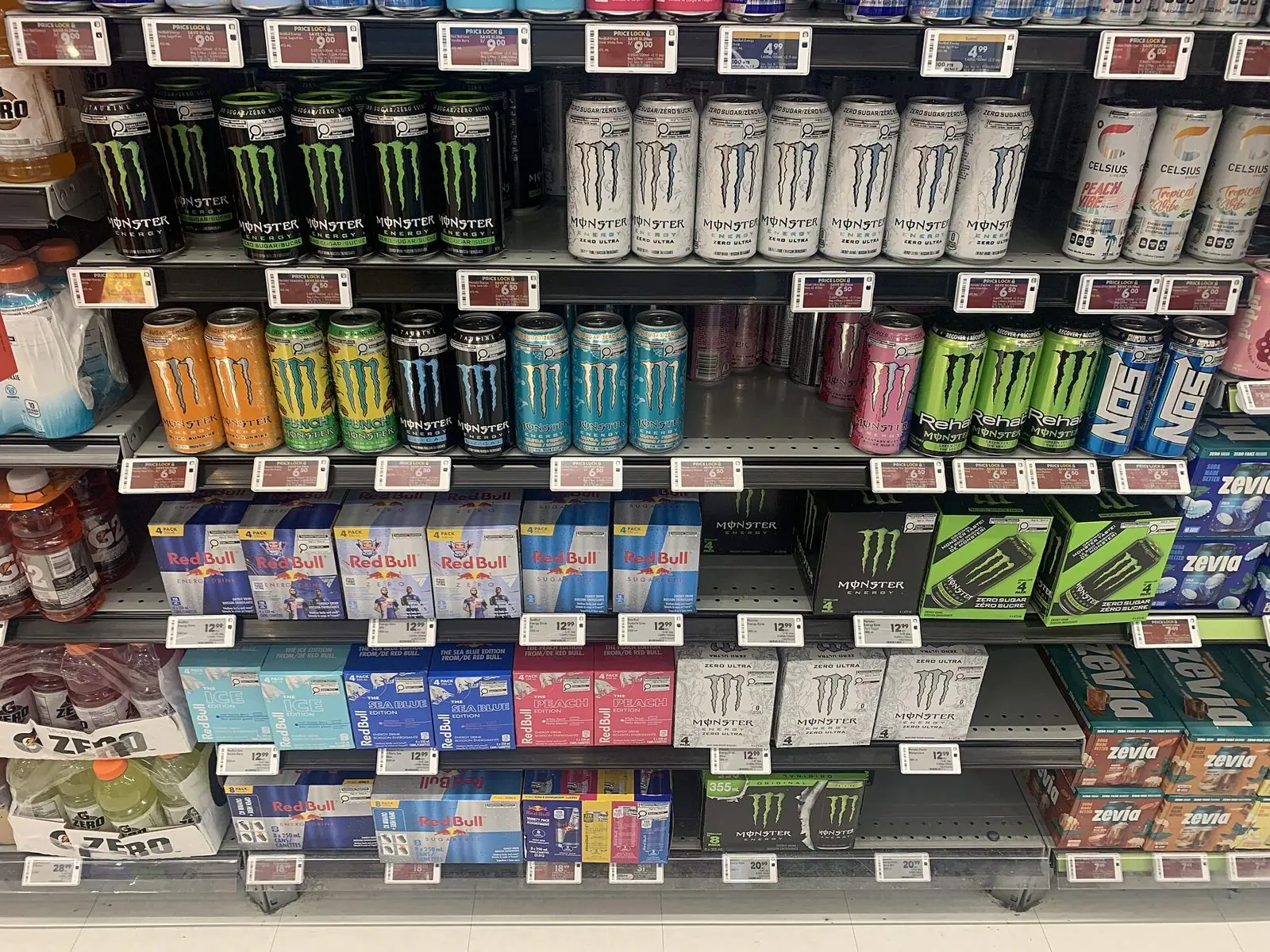
Energy drinks sit in the same cooler as sparkling water at most gas stations, and that placement is part of the problem, according to the researchers behind a study that started trending Monday afternoon. Searches for "energy drinks heart problems" jumped onto Google's U.S. trending list after the American Heart Association released the findings and NBC News picked them up.
The headline number is striking. The fine print matters just as much, so here's both.
What the energy drinks and cardiac arrest study found
Researchers looked at 28,345 reports of possible bad reactions to foods and dietary supplements filed with an FDA safety database between 2017 and 2025. Of those, 854 involved energy drinks or supplements containing caffeine or other stimulants. The team compared them with 27,491 reports about products without stimulants, such as soft drinks, protein bars, smoothies, meal replacement shakes and vitamins. Everyone in the data was 13 or older.
Compared with that baseline, the stimulant products showed up far more often in reports of serious heart events:
| Heart event | How much more often it was reported with caffeine or stimulant products |
|---|---|
| Cardiac arrest | About 11 times |
| Heart attack | About 4.5 times |
| Ventricular arrhythmias or palpitations | About 4 times |
| Elevated heart rate | Nearly 3 times |
| Chest pain | 2.71 times |
| Fainting | About 2 times |
The pattern held for men and women alike. What caught the researchers' attention was age. About 45% of the reports linking these products to heart trouble involved adults ages 18 to 34, a group doctors don't usually think of as high risk for cardiac arrest or heart attacks.
Which products counted
The study didn't name brands. It sorted products by what was in them. The caffeine and stimulant group covered caffeine itself; related compounds such as theobromine, guarana, yerba mate and green tea or coffee extracts; and stimulants including synephrine, yohimbine, ephedra, DMAA and higenamine. Some of those last ingredients turn up mostly in pre-workout powders and weight-loss supplements rather than canned drinks.
Why the study can't prove energy drinks cause heart attacks
This is the part that tends to get lost on social media. The study found an association in voluntary reports. It doesn't show that energy drinks caused any cardiac arrest or heart attack.
Reports to the FDA database come from consumers, doctors and manufacturers who choose to file them. Nobody knows how many people drank the same products and felt fine, or how many had a heart problem and never reported it. That makes it impossible to calculate an actual risk for any one person from this data.
Dr. Gregory Marcus, a cardiologist at the University of California, San Francisco, who led the AHA's 2026 scientific statement on caffeine and heart disease and wasn't involved in the research, said there are biological reasons the link could be real. He also said other factors may have shaped the results and more research is needed.
The work is also early. It's a research abstract set for the AHA's Scientific Sessions in Chicago, Nov. 6-9. Abstracts at that meeting aren't peer-reviewed, and the association treats the findings as preliminary until they appear in a journal.
Why young adults stood out
The researchers don't know for sure. They offered a few possibilities: young adults may simply use these products more, they may take them before hard workouts or mix them with alcohol or drugs, and some may have a heart condition nobody has diagnosed yet.
Sai Samayamanthula, the study's lead author and a medical student at the University of Virginia School of Medicine, said the risk for healthy people who have an energy drink once in a while is probably small. Regular users are a different case, according to Samayamanthula, because they can blow past the daily caffeine limit without noticing.
How much caffeine is in an energy drink, and how much is too much
The FDA says most energy drinks have between 54 and 328 milligrams of caffeine per 16 fluid ounces, with some 12-ounce brands landing between 41 and 246 milligrams. That's a huge range. One can might be the equivalent of a small coffee. Another might be closer to three.
For most adults, the agency cites 400 milligrams a day as an amount not generally associated with negative effects. That's roughly two to three 12-ounce cups of coffee. People vary a lot in how they handle caffeine, though, and certain medications and medical conditions make some people more sensitive. The FDA estimates that rapid consumption of about 1,200 milligrams can cause toxic effects such as seizures.
Per ounce, the gap with coffee can be wide. According to the AHA, some energy drinks contain as much as three times more caffeine than brewed coffee, and some pre-workout supplements contain more than 12 times as much.
There's also a regulatory wrinkle. The FDA treats energy drinks and stimulant supplements as foods or dietary supplements, not drugs, so they don't go through the premarket safety testing that medications do. The agency says it has no regulation written specifically for energy drinks. Companies are responsible by law for making sure the caffeine they add is safe.
Teens and kids
The FDA says too much caffeine in children and teens can raise heart rate and blood pressure, cause palpitations and anxiety, and disrupt sleep. Federal dietary guidelines say children under 2 shouldn't have caffeinated drinks at all. Because the study included reports from people as young as 13, it's a reasonable prompt for parents to check what's in the cans and pre-workout tubs at home. It's also a bad week to lean on extra caffeine for anyone still groggy after daylight saving time ended on Nov. 1.
What to watch for, and what doctors are being told
The researchers want two things out of this: more systematic safety tracking of caffeine and stimulant products, and more questions in the exam room. Samayamanthula said doctors should ask younger patients who come in with palpitations, chest pain or fainting whether they use these products recently or regularly.
For readers, the practical math is simple. Read the label, add up every source of caffeine in your day, including coffee, soda and supplements, and know that most U.S. energy drinks list total caffeine from all sources on the label, guarana included, according to the FDA. Anyone who has felt their heart race, had chest pain or fainted after an energy drink or pre-workout should tell a doctor about it, and serious reactions can be reported to the FDA.
None of this means a single can is dangerous. It means the reports that do reach the FDA skew toward stimulant products and toward people ages 18 to 34, which is enough to make cardiologists want better data. The first chance for them to question it in person comes later this week in Chicago. If the full paper holds up after peer review, it could add pressure for clearer caffeine labels and closer FDA tracking.
Frequently asked questions
- Can energy drinks cause cardiac arrest?
- It hasn't been proven. A new study found cardiac arrest was reported about 11 times more often with caffeine and stimulant products than with other foods in FDA safety reports. Doctors have described cardiac arrests after heavy use, but the study only shows an association and can't show the drinks caused the events.
- Are energy drinks bad for your heart?
- Occasional use is probably low risk for most healthy people, the study's lead author said, but regular use can push caffeine past safe limits. Reports involving energy drinks were about 4.5 times more likely to mention heart attacks and four times more likely to mention dangerous rhythm problems or palpitations.
- How much caffeine is too much?
- For most adults, the FDA cites 400 milligrams a day as an amount not generally linked to negative effects, about two to three 12-ounce cups of coffee. Sensitivity varies by person, and the FDA says rapid intake of around 1,200 milligrams can cause toxic effects such as seizures.
- How much caffeine is in an energy drink?
- The FDA says energy drinks generally contain 54 to 328 milligrams of caffeine per 16 fluid ounces, and some 12-ounce brands contain 41 to 246 milligrams. The American Heart Association says some energy drinks carry three times the caffeine of brewed coffee per ounce, and some pre-workout supplements more than 12 times.
Sources
- Energy drinks, stimulant products linked to cardiac arrest, heart attack in young adults · American Heart Association Newsroom, Nov. 2, 2026
- Energy drinks linked to higher risk of cardiac arrest in young adults, study finds · NBC News, Nov. 2, 2026
- Spilling the Beans: How Much Caffeine is Too Much? · U.S. Food and Drug Administration, Accessed Nov. 2, 2026
- Caffeine and Cardiovascular Disease fact sheet · American Heart Association Newsroom, Accessed Nov. 2, 2026
Tags
- #Energy Drinks
- #Caffeine
- #Heart Health
- #American Heart Association
- #FDA
- #Public Health

About the author
Editorial team
The TrendCanopy editorial team researches what Americans are searching for, checks the facts against primary sources and publishes clear, sourced explainers.
Spotted an error? Read our corrections policy or contact us. Last reviewed November 2, 2026.
Related stories

Bird Flu Death in Washington: What Yakima Officials Say
A bird flu death in Washington, the first in the U.S. this year, followed exposure at a Yakima County dairy. What's known, who is at risk and what to avoid.

Toothpaste Recall 2026: Brush Buddies, Evo and ARU Tubes
More than 4.3 million tubes of Brush Buddies, Evo and ARU toothpaste are in an FDA Class II recall. The full product list and what to do if you have one.
Is Election Day a Holiday? School, Time Off and Poll Hours
Is Election Day a holiday? Not federally, but 14 states treat Nov. 3 as one. Who gets time off to vote, which schools close and when polls open.