Daylight Saving Time Ends Nov. 1, 2026: What to Know
Daylight saving time ends at 2 a.m. Sunday, Nov. 1, 2026. Who changes, who doesn't, what to reset and where the permanent DST bill stands.

Quick read
Daylight saving time ends at 2 a.m. local time on Sunday, Nov. 1, 2026, when clocks in most of the United States fall back one hour to 1 a.m. You gain an hour of sleep, and sunrise and sunset come about an hour earlier by the clock. Hawaii, most of Arizona and the U.S. territories do not change. Daylight saving time returns on Sunday, March 14, 2027.
Key takeaways
- Along with Hawaii and most of Arizona, Puerto Rico, Guam, the U.S. Virgin Islands, American Samoa and the Northern Mariana Islands stay put. Everyone else, in 48 states and D.C., falls back.
- Your phone updates itself. Car, oven, microwave and wall clocks need resetting by hand.
- The House passed the Sunshine Protection Act, which would make daylight saving time permanent, 308-117 in July 2026. The Senate hasn't passed it.
In this article
It is the time of year when Americans search "when do the clocks change?" The answer for 2026: daylight saving time (DST) ends at 2 a.m. on Sunday, Nov. 1, when clocks in most of the country fall back one hour. Below: who changes and who doesn't, what you'll have to reset by hand, and where Congress stands on ending the twice-a-year switch.
When daylight saving time ends and the clocks change
According to the National Institute of Standards and Technology, the U.S. government's official timekeeper, daylight saving time in 2026 runs from March 8 to Nov. 1. The switch back to standard time happens at the same local time in every time zone:
| Local time | What happens |
|---|---|
| Sunday, Nov. 1, 1:59:59 a.m. (daylight time) | The last second of daylight saving time |
| Next second | Clocks show 1:00:00 a.m. again (standard time) |
| 1 a.m. to 2 a.m. | This hour happens twice, so Sunday has 25 hours |
Definition: Daylight saving time is the part of the year when clocks are set one hour ahead of standard time, which shifts an hour of daylight from the morning to the evening. Standard time is the clock time used the rest of the year. The memory aid is "spring forward, fall back."
The current rules
Under the Energy Policy Act of 2005, which took effect in 2007, DST:
- Begins at 2 a.m. on the second Sunday in March
- Ends at 2 a.m. on the first Sunday in November
- Lasts 238 days, about 65% of the year
These rules come from NIST, which notes that DST and time zones are regulated by the U.S. Department of Transportation. The next start date is Sunday, March 14, 2027, according to timeanddate.com.
Who changes their clocks, and who doesn't
Clocks fall back in 48 states and Washington, D.C. A few places stay on standard time all year, so their clocks do not change:
- Hawaii
- Arizona, except the Navajo Nation, which does observe DST
- Puerto Rico, Guam, the U.S. Virgin Islands, American Samoa and the Northern Mariana Islands
Sources: NIST and timeanddate.com.
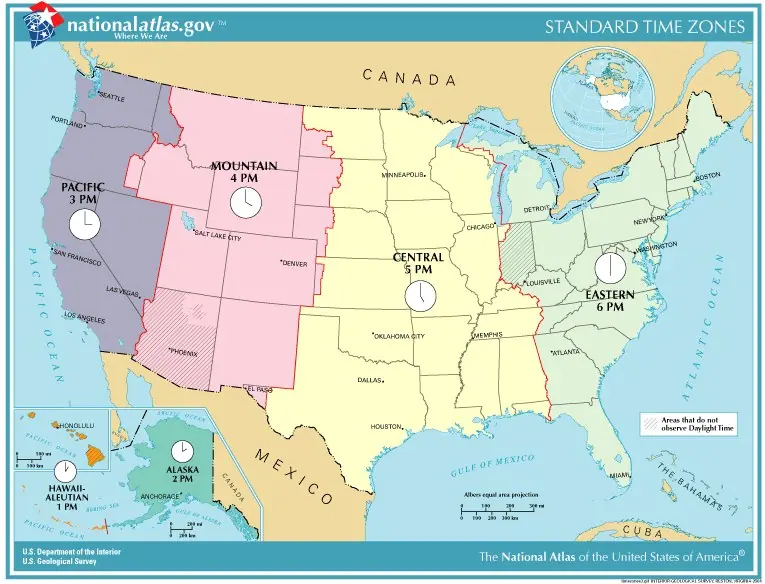
Because Arizona doesn't change, the time difference between Phoenix and California shifts with the seasons. After Nov. 1, Phoenix is one hour ahead of Los Angeles; during DST, they show the same time.
Outside the U.S., Europe ended its summer time a week earlier, on Oct. 25. Several Canadian provinces are moving toward year-round time, and Alberta will not set its clocks back this year, timeanddate.com reports.
What to do before you go to bed Saturday
Most phones, computers and smartwatches update automatically. NIST notes that computer clocks rely on the operating system for DST, so keep your software updated. Radio-controlled clocks that receive NIST's time signal should switch on their own.
Things you will probably need to reset by hand:
- Car dashboard clock
- Oven, microwave and coffee maker
- Wall clocks, wristwatches and older alarm clocks
- Thermostats, sprinkler timers and some security-camera systems
A good reminder for home safety: The U.S. Fire Administration advises testing smoke alarms every month, replacing 9-volt smoke alarm batteries at least once a year and replacing smoke alarms every 10 years. The clock change is an easy moment to check yours.
What changes after Nov. 1
- Earlier sunsets by the clock. Sunset moves about an hour earlier on the clock overnight, so evening commutes get darker.
- Brighter mornings, for now. Sunrise also comes an hour earlier by the clock, before the days keep shortening toward the winter solstice.
- Time differences shift for calls with places that don't change, such as Arizona and Hawaii, and with Europe, which changed a week earlier.
It is also a busy week: Nov. 1 is the day after Halloween, which is also the night of a possible World Series Game 7 (Saturday, Oct. 31, if needed, per MLB.com), and it comes two days before Election Day on Nov. 3.
What's next: will America stop changing the clocks?
The fight over clock changes is back in the news.
- House vote: The U.S. House passed the Sunshine Protection Act, which would make daylight saving time permanent, on July 14, 2026, by a vote of 308 to 117, timeanddate.com reports.
- Senate: The bill has not passed the Senate. Senate Majority Leader John Thune said in early October that "there's no clear path forward or consensus on it yet," USA Today reported, citing an interview with Politico. President Trump has pushed for the bill, while Sen. Tom Cotton of Arkansas has led opposition to it, according to The Hill.
- The trade-off: Supporters want more evening daylight all year. Opponents point to very late winter sunrises. Cotton has said permanent DST would "push winter sunrises to an absurdly late hour," and Sen. Roger Wicker cited "safety concerns in the more northern and rural states where children get on the school bus in very early hours," USA Today reported.
Even if a bill passes, it would not change this year's schedule. Clocks will fall back on Nov. 1, 2026, as planned.
Before you go to bed Saturday
Set your manual clocks back one hour before bed on Saturday, Oct. 31, or when you wake up Sunday, Nov. 1, and enjoy the extra hour. Clocks spring forward again on March 14, 2027. Our Lifestyle section has more everyday stories like this one.
Correction, Oct. 27, 2026: An earlier version of this article described Nov. 1 as a possible World Series Game 7 date. Under MLB's schedule, Game 7, if needed, is Saturday, Oct. 31 (Halloween), the night before clocks fall back.
Frequently asked questions
- What time does daylight saving time end in 2026?
- Daylight saving time ends at 2 a.m. local time on Sunday, Nov. 1, 2026. At that moment clocks go back to 1 a.m., so the hour from 1 a.m. to 2 a.m. happens twice. Your phone updates itself, but car, oven, microwave and wall clocks need resetting by hand.
- Do we gain or lose an hour in November?
- You gain an hour. Clocks fall back one hour in November, which gives most people an extra hour of sleep on Saturday night, and sunrise and sunset come about an hour earlier by the clock. You lose an hour in March, when clocks spring forward.
- Which states don't observe daylight saving time?
- Hawaii and most of Arizona stay on standard time all year, though the Navajo Nation in Arizona does observe daylight saving time. Puerto Rico, Guam, the U.S. Virgin Islands, American Samoa and the Northern Mariana Islands also don't change. Everyone else, in 48 states and D.C., falls back.
- Is daylight saving time becoming permanent?
- Not yet. The U.S. House passed the Sunshine Protection Act, which would make daylight saving time permanent, by a 308-117 vote in July 2026, but the Senate has not passed it. Unless a law is enacted, clocks will keep changing twice a year.
- When does daylight saving time start again?
- Daylight saving time begins again at 2 a.m. local time on Sunday, March 14, 2027, when clocks spring forward one hour and you lose an hour of sleep. Hawaii, most of Arizona and the U.S. territories won't change their clocks then either.
Sources
- Daylight Saving Time Rules · National Institute of Standards and Technology (NIST)
- DST Ends in the US and Canada 2026 · timeanddate.com, Oct. 2, 2026
- John Thune sees no path for year-round daylight saving time · The Hill
- Thune says no 'path forward' for permanent daylight saving time bill · USA Today, Oct. 5, 2026
- Smoke alarms · U.S. Fire Administration (FEMA)
Tags
- #Daylight Saving Time
- #Fall Back
- #Time Change
- #Sunshine Protection Act

About the author
Editorial team
The TrendCanopy editorial team researches what Americans are searching for, checks the facts against primary sources and publishes clear, sourced explainers.
Spotted an error? Read our corrections policy or contact us. Last reviewed October 27, 2026.
Related stories

Arby's Deep Fried Turkey Gobbler Is Back: What to Know
Arby's Deep Fried Turkey Gobbler and Club are back as of Oct. 26, 2026. What's on each sandwich, prices, how long they last and how to order.
Halloween 2026: Spending, Top Costumes and Safety Tips
Americans are set to spend $13.5 billion on Halloween 2026. The top costumes for kids, adults and pets, plus official trick-or-treat and candy safety tips.

McRib Returns Oct. 27, 2026: Cities, Dates and Calories
The McRib is back at McDonald's on Oct. 27, 2026, but only in select cities. Where to find it, when it returns, what's in it and McRib calories, explained.