Starship Flight 15 Launch: Booster Catch Aborted, Ship Reaches Orbit
Starship Flight 15 launched at 5:47 p.m. ET Friday. The booster catch was aborted, but Ship reached orbit and could be caught at the tower Saturday.
What happened
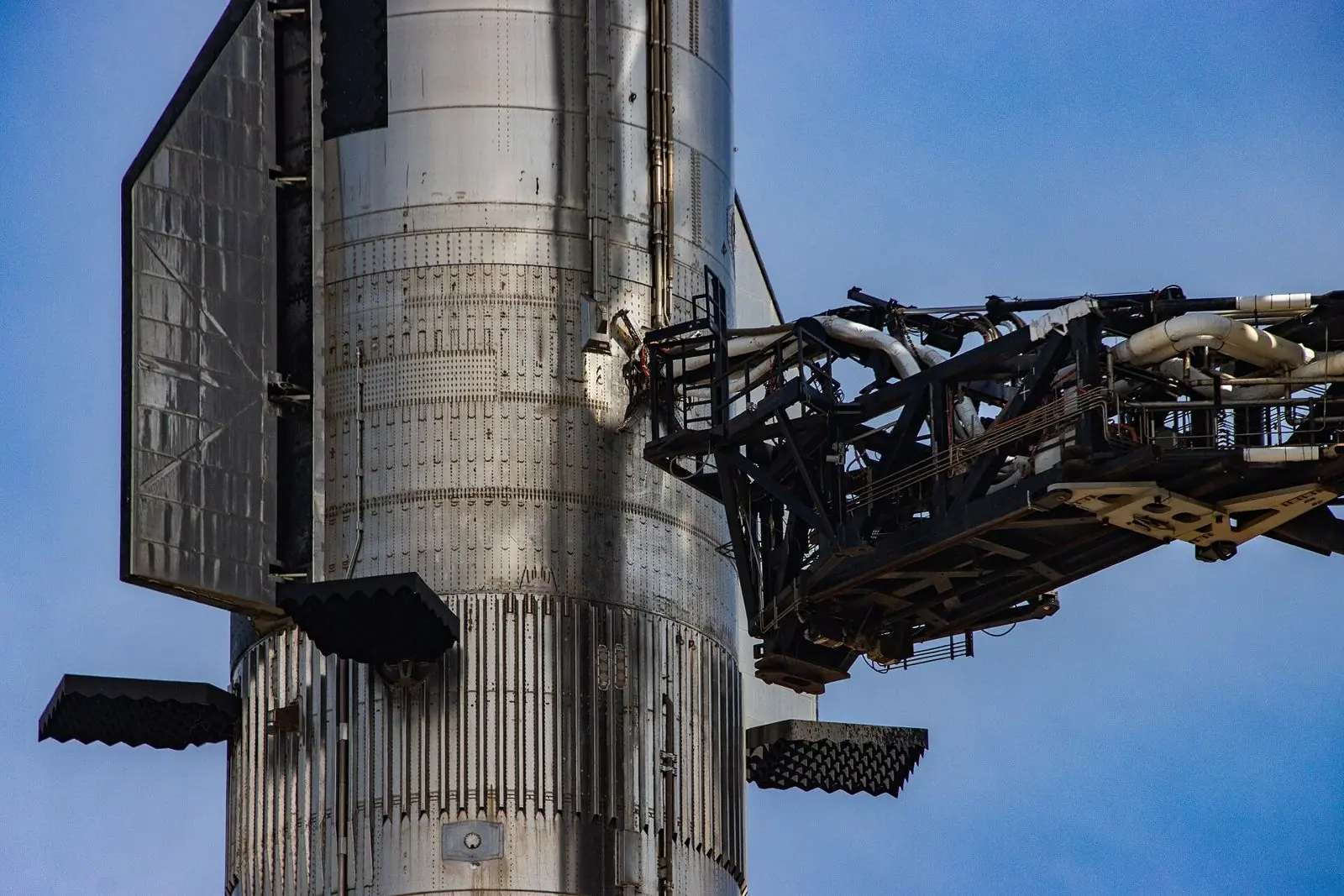
Starship Flight 15 launched from Starbase, Texas, at 5:47 p.m. ET Friday, Nov. 13. SpaceX called off the Super Heavy booster catch and the booster splashed down in the Gulf of Mexico, but the Ship upper stage reached orbit and is set to try the first-ever tower catch of a Starship on Saturday afternoon.
Key takeaways
- SpaceX said it will dig into what caused the booster abort; the reason wasn't clear Friday evening.
- The upper stage is due back at Starbase on Saturday afternoon, about 22.5 hours after liftoff, after roughly 14 orbits.
- Ship will release 26 Starlink V3 satellites, the second batch of SpaceX's newest, largest Starlinks.
- If anything looks wrong during the flight, SpaceX will skip the ship catch and splash down in the Pacific near Hawaii or off Chile.
In this article
Update, Nov. 13, 6:35 p.m. ET: Starship Flight 15 launched, but the booster catch was called off. Starship lifted off from Starbase at 5:47 p.m. ET, Space.com reported. Staging went as planned. Then SpaceX aborted the Super Heavy catch, and Booster 22 came down in the Gulf of Mexico about 6.5 minutes after liftoff instead of in the tower's arms. The AP said the booster malfunctioned and the abort was automatic. SpaceX hasn't given a cause yet. "We'll dig in to what caused that abort during its flight back to the tower," SpaceX's Dan Huot said on the webcast.
Ship 42 kept going. It fired its engines again at about 26 minutes and settled into orbit roughly 170 miles up, only the second time a Starship has reached orbit. "We've got a nominal orbit insertion," Huot said. Next comes the Starlink deployment, then a long day in orbit. If the ship clears SpaceX's three checkpoints, it's due back over Starbase for the first-ever tower catch of an upper stage around 4:17 p.m. ET Saturday, Nov. 14, per Space.com.
This is a developing story. The original preview from Friday morning follows below, and we'll update this post after Saturday's ship return.
SpaceX wants to do something on Friday that no rocket company has done: fly an orbital rocket and get all of it back. The Starship Flight 15 launch time is 5:45 p.m. ET on Friday, Nov. 13, from Starbase in South Texas, with a 75-minute window that closes at 7 p.m. ET, according to SpaceX's mission page.
There's one loose end. As of Friday morning, SpaceX still didn't have a launch license from the Federal Aviation Administration, Reuters reported. That isn't unusual by itself. Reuters noted the FAA has typically issued Starship licenses about a day before past launches, and SpaceX's page still lists the flight as "pending regulatory approval." But until that license shows up, the date is a target, not a promise.
Starship Flight 15 launch time and window
Liftoff is set for 5:45 p.m. ET, which is 4:45 p.m. local time at Starbase and 2:45 p.m. on the West Coast. If the countdown runs long, SpaceX can launch any time until 7 p.m. ET.
SpaceX hasn't publicly named a backup day. Space.com noted that when past Starship flights slipped, the company usually kept the same time of day, so a Saturday attempt would likely open at 5:45 p.m. ET as well.
The rocket is huge. The full stack stands about 407 feet tall, per Reuters, taller than the Statue of Liberty with its pedestal. This flight pairs Booster 22 with Ship 42.
How to watch the Starship launch today
SpaceX's free webcast starts about 30 minutes before liftoff on spacex.com and on the company's X account, @SpaceX. If the launch goes at the top of the window, that's around 5:15 p.m. ET.
This broadcast could run much longer than usual. SpaceX says it plans to stay on the air through the ship catch, with "the potential for hours of live views" from Starship in orbit, beamed down over Starlink. Space.com is also simulcasting the stream on its site and its VideoFromSpace YouTube channel.
What "double catch" means
Both halves of Starship are supposed to come home to the same tower they launched from and get grabbed out of the air by its two big mechanical arms, which SpaceX calls the chopsticks.
SpaceX has caught a Super Heavy booster before. Three first-generation boosters have been snagged on earlier flights, and two of those flew again, the company says. The last tower catch was in March 2025, according to Reuters. Flight 15 is the first catch attempt for the newer, bigger V3 booster.
The upper stage, called Ship, has never been caught. On every test flight so far, it has ended in the ocean, sometimes with a practice landing where it flips upright and fires its engines just above the water. This time it's meant to run that same maneuver over Starbase and settle into the arms.
If both catches work, SpaceX says it would be the first full recovery of an orbital launch system. That's the "holy grail" people keep mentioning. A rocket you can land, refuel and fly again, like an airliner, is the whole economic case for Starship.
Why the ship might not try
The ship catch is conditional. SpaceX says flight controllers will send Ship back to Texas only if the systems it needs for reentry, the landing burn and the tower approach all check out.
The flight plan has three decision points built in, at about 1 hour 28 minutes, 7 hours 15 minutes and 20 hours 42 minutes after liftoff. At each one, controllers can choose to bring Ship down in the Pacific instead, near Hawaii or off the coast of Chile. So a splashdown wouldn't automatically mean something broke. It could just mean SpaceX played it safe.
The return path is also why the FAA license matters so much. Coming back to Starbase from orbit means flying over populated areas, which the FAA weighs when it approves a mission.
Starship Flight 15 timeline
These times come from SpaceX and are approximate, counted from liftoff:
| Time after liftoff | Event |
|---|---|
| 58 seconds | Max Q, peak aerodynamic stress |
| 2 min 21 sec | Hot staging; Ship lights its engines and separates |
| 6 min 35 sec | Super Heavy landing burn ends; booster catch |
| 8 min 9 sec | Ship engine cutoff |
| 26 min 10 sec | Orbital insertion burn |
| 35 min to 1 hr 18 min | Starlink V3 satellites deploy |
| 21 hr 36 min | Deorbit burn |
| 22 hr 11 min | Ship reenters the atmosphere |
| 22 hr 32 min | Landing flip, landing burn and ship catch |
In plain clock terms, the booster should be back in the tower around 5:52 p.m. ET Friday if the rocket launches on time. Ship would be caught around 4:15 p.m. ET Saturday, Nov. 14, as Space.com worked out. A launch at the end of the window pushes that to about 5:30 p.m. ET.
What Ship carries
Ship will release 26 Starlink V3 satellites, the second batch after Flight 14 in September. SpaceX says each one adds 1 terabit per second of capacity, and the 26 together equal about 10 Falcon 9 launches of the smaller Starlink V2 Mini satellites. That makes Flight 15 a working mission, not just a test, a point Reuters also made.
Three of those satellites carry cameras. Their job is to look back at Starship's heat shield and send pictures to engineers, one of the data sources SpaceX says it will use to decide whether Ship is fit to come home. The heat shield itself has extra tile retention and a newer curved tile design meant to cut heating in the gaps.
Over the full mission, Ship is expected to make about 14 trips around Earth at roughly 171 miles up, per Astronomy.
How Flight 14 went
Starship reached orbit for the first time on Flight 14 on Sept. 28 and deployed its first 26 V3 satellites. It wasn't clean. Some engines shut down mid-flight, and a mission planned to last about 10 hours ended after roughly three hours with an intact splashdown in the Pacific, Reuters reported.
Flight 15 asks for a lot more: a full day in orbit, a controlled return over land and a landing on a tower instead of the sea.
Why the stakes are high
Starship is the moon lander NASA picked for its Artemis astronauts, and NASA has paid SpaceX roughly $3.2 billion toward it since 2021, Reuters reported. SpaceX has put at least $15 billion of its own money in. Elon Musk has said he wants weekly Starship launches by the first half of 2027.
The bigger hurdles still sit between this flight and the moon, especially refueling one Starship from another in orbit. But reusing the whole rocket underpins all of it. Each new Starship upper stage that ends up on the seafloor is expensive hardware gone.
Starlink is the near-term payoff. More capacity per launch helps SpaceX's push into phone service too, which came up earlier this month in reports of SpaceX's talks over Boost Mobile.
For now, the thing to watch before 5:45 p.m. is the FAA. No license, no launch.
Frequently asked questions
- Did SpaceX catch the Starship booster on Flight 15?
- No. SpaceX aborted the Super Heavy booster catch shortly after launch on Nov. 13, and the booster made a controlled splashdown in the Gulf of Mexico instead, AP and Reuters reported. The cause wasn't immediately clear.
- What time did Starship Flight 15 launch?
- Starship Flight 15 lifted off at 5:47 p.m. ET (4:47 p.m. CT) on Friday, Nov. 13, 2026, from Starbase in South Texas, two minutes into its 75-minute window, according to Space.com.
- How can I watch the Starship launch today?
- SpaceX streams the launch free on its website and on its X account, @SpaceX, starting about 30 minutes before liftoff, or roughly 5:15 p.m. ET if the launch goes at the top of the window. SpaceX says coverage could continue for hours, through the ship catch on Saturday.
- When will Starship land on Flight 15?
- The Super Heavy booster should be caught about 6.5 minutes after liftoff. The ship lands much later. SpaceX's timeline puts the catch about 22 hours and 32 minutes after launch, which works out to around 4:15 p.m. ET Saturday, Nov. 14, if Starship lifts off right at 5:45 p.m. Friday.
Sources
- SpaceX's attempt for a Starship double catch is thwarted when the booster ends up in Gulf of Mexico · Associated Press, Nov. 13, 2026
- SpaceX launches 15th Starship flight; aborts booster recovery maneuver · NBC News (Reuters), Nov. 13, 2026
- SpaceX launches Starship on ambitious 22-hour Flight 15 test, but aborts booster 'chopsticks' catch · Space.com, Nov. 13, 2026
- Starship Flight 15 · SpaceX, Nov. 2026
- SpaceX to attempt first Starship spacecraft recovery on land in 15th flight · Reuters (via Devdiscourse), Nov. 13, 2026
- What time will SpaceX launch Starship Flight 15, its 1st double landing test, on Nov. 13? · Space.com, Nov. 2026
- Watch SpaceX attempt a historic Starship launch and double-catch landing today (Nov. 13) · Space.com, Nov. 13, 2026
- SpaceX goes for a Starship double catch · Astronomy, Nov. 2026
About the author
Founder and editor
Marcia Reid is the founder and editor of TrendCanopy, where she reviews and edits every story.
Spotted an error? Read our corrections policy or contact us. Last reviewed November 13, 2026.
Related stories

SpaceX Boost Mobile Talks: What a Deal Could Mean
SpaceX is in talks to buy Boost Mobile or use its network, the Washington Post reports. What's known, what it means for customers and for Starlink Mobile.
FAA Nationwide Ground Stop Lifted After Communications Outage Grounded U.S. Flights
The FAA nationwide ground stop has been lifted after a communications outage grounded U.S. flights for about four hours. What we know and your refund rights.

Microsoft Outage: Outlook and Teams Down for a Second Day Worldwide
The Microsoft outage hitting Outlook, Teams and Copilot has stretched into Friday. What Microsoft says about the cause, the fix and when email returns.
Jensen Huang Resigns as Nvidia CEO After Affair Reports; Colette Kress Steps In
Jensen Huang resigned as Nvidia CEO after reports of affairs with Alice Huang and Kimberly Powell. CFO Colette Kress is interim CEO. What we know.

Google Pixel Tag Release Date: On Sale Nov. 11 for $29.99
The Google Pixel Tag goes on sale Nov. 11 for $29.99, or $99.99 for four. What the Android tracker does, which phones work and how it compares to AirTag.
Ring Drone Camera: $250 Price, Jan. 27 Release and How It Works
The Ring drone camera costs $249.99 and ships Jan. 27, 2027, pending FCC approval. How the indoor security drone flies, what it needs and the $1,000 Rover Cam.