An Anthropic mathematician says he and Claude proved the Riemann hypothesis
Levent Alpöge says he and Anthropic's Claude found a proof of the 167-year-old Riemann hypothesis. Outside experts haven't checked it yet. What we know.
What happened
Levent Alpöge, a mathematician who works at Anthropic, posted a statement Friday saying he believes he and the company's AI model Claude have found a proof of the Riemann hypothesis, the most famous unsolved problem in math. He released the proof as Lean code, a format computers can check line by line. No outside expert has confirmed it yet.
Key takeaways
- Alpöge says the same method also proves the broader Generalized Riemann Hypothesis.
- He hasn't posted a human-readable proof and says an unpublished version ran past 250,000 pages, New Scientist reported.
- The Riemann hypothesis is one of the Clay Mathematics Institute's seven Millennium Prize Problems, each worth $1 million.
- The announcement came one day after Anthropic's stock market debut.
In this article
Last updated: Friday, Nov. 20, 2026, 10:40 a.m. ET. This is a developing story. We'll update it as mathematicians check the proof.
Levent Alpöge, a mathematician employed by Anthropic, said Friday that he and the company's AI model Claude have found a proof of the Riemann hypothesis. The problem has gone unsolved since 1859 and is widely called the most famous open question in mathematics.
"I believe I have, working with Claude, discovered a proof of the Riemann Hypothesis," Alpöge wrote in a four-page statement posted on his website. Scientific American and New Scientist both reported the claim.
Read also: Anthropic prices its IPO at $83 a share, valuing the Claude maker at $1.5 trillion · Anthropic files for a Nasdaq IPO after reporting $16.29 billion in revenue · Game Awards 2026 nominees put GTA 6 up for Game of the Year before it even launches
Here's the catch. Nobody outside has confirmed it yet.
What Alpöge says he and Claude proved
In the note, Alpöge says the method goes further than Riemann's original guess. It "easily extends much further, resolving the so-called Generalized Riemann Hypothesis," he wrote, and he expects it to reach the Extended Riemann Hypothesis "with more time." He also says he and Claude "formalized the arguments without assumptions."
He gives Claude much of the credit for the final stretch. "This time Claude far outpaced me near the finish line," he wrote.
The tone is unusual for a math announcement. "It is natural to feel that this is an end, in my case a loss of a principal guiding light," Alpöge wrote, "but what I saw during the course of progress so amazed me that I believe it is one dawn across science of something far greater."
He hasn't released a proof written for people to read. New Scientist reported that he called posting one "obviously inappropriate" and said an unpublished version ran to more than 250,000 pages. Instead, he put out the proof as code for Lean, a proof assistant that checks every logical step by machine.
Why the Riemann hypothesis proof isn't settled yet
Lean is a strict checker. If the code compiles, each step follows from the last. But it only proves the statement it's given, so experts still need to confirm that the theorem in the code really is the Riemann hypothesis and that nothing extra was assumed along the way. Scientific American said that check shouldn't take long.
Kevin Buzzard of Imperial College London, a leading figure in Lean, was cautious. "Let's see if it compiles first," he told New Scientist, adding that it might be a while before the right experts can explain the thrust of the argument.
As of Friday morning, no independent mathematician had publicly said the proof works.
What is the Riemann hypothesis?
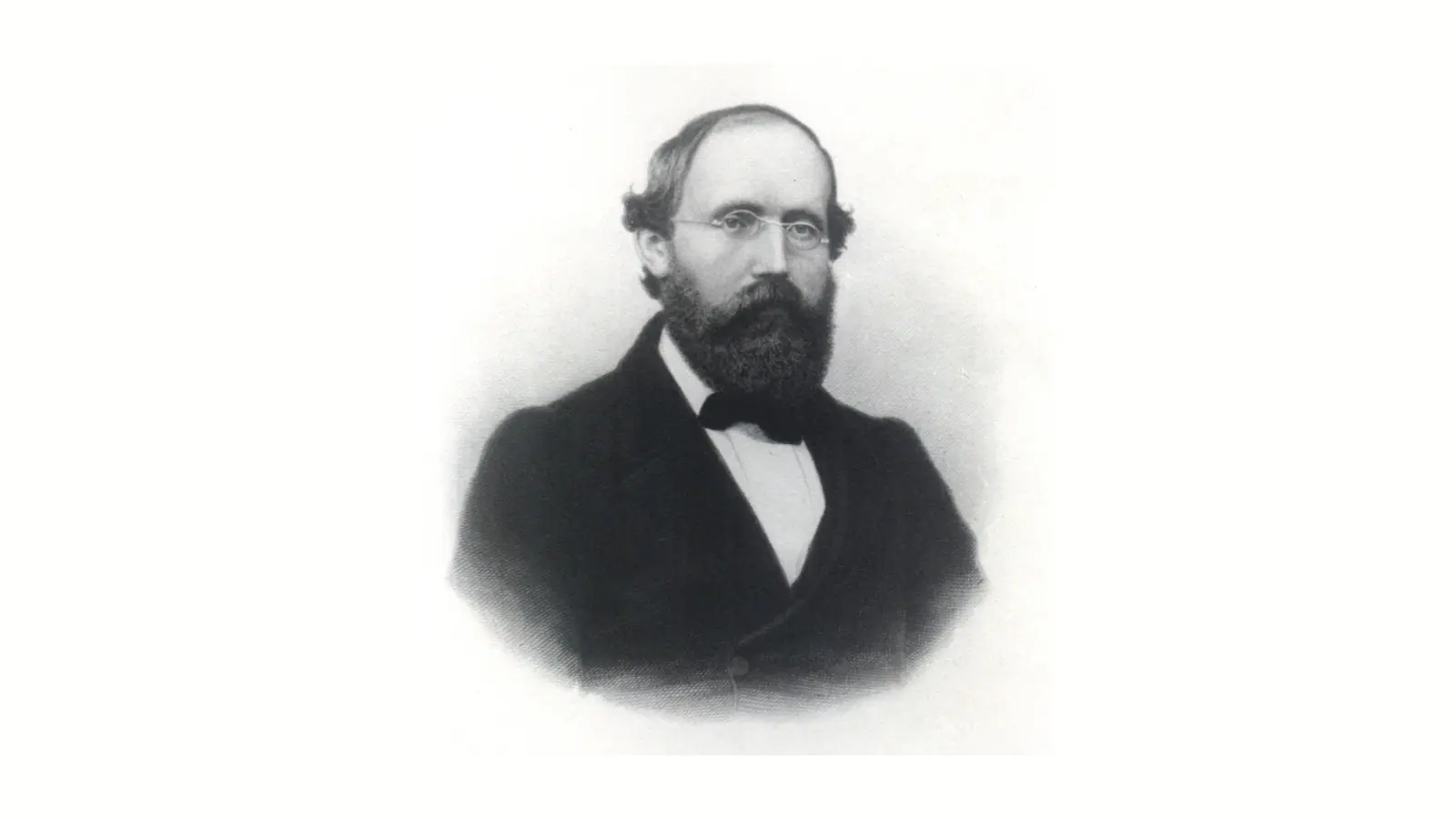
It's about prime numbers, the numbers divisible only by 1 and themselves. Primes look scattered at random, but in an 1859 paper Bernhard Riemann linked their pattern to what's now called the zeta function. He guessed that all of its "nontrivial" zeros sit on a single line, with real part exactly 1/2.
If that's true, mathematicians get tight control over how primes are spread out. Huge amounts of later work assume it. The Clay Mathematics Institute made it one of its seven Millennium Prize Problems in 2000, with $1 million for a solution.
Who is Levent Alpöge?
Alpöge is a number theorist. His website lists a PhD from Princeton, a junior fellowship at Harvard's Society of Fellows and papers on Hilbert's tenth problem with Manjul Bhargava and others. He now works at Anthropic.
He's had big AI-assisted claims before. In July he posted a short counterexample showing the Jacobian conjecture is false, a result found with Claude, according to New Scientist and Scientific American.
Why the timing is drawing attention
Anthropic started trading on Nasdaq on Thursday under the ticker ANT. We covered the Anthropic IPO and its first day of trading and what the company disclosed in its S-1 filing.
New Scientist reported that Alpöge appears to say he held the announcement until after the listing. "The precise timing is horrible. If I could have, I'd have finished this all much earlier," he wrote, adding that he spoke with CEO Dario Amodei and that "there was a constraint to respect."
Anthropic hasn't commented publicly on the claim as of this writing.
What we still don't know
- Whether the Lean code compiles cleanly and states the real hypothesis.
- When mathematicians outside Anthropic will weigh in.
- Whether Alpöge will post a readable version of the argument.
Frequently asked questions
- Has the Riemann hypothesis been proved?
- Not officially. Anthropic mathematician Levent Alpöge claimed on Nov. 20, 2026, that he and Claude found a proof, but outside mathematicians still have to check the Lean code and confirm it proves the real hypothesis.
- Who is Levent Alpöge?
- He's a number theorist who works at Anthropic. His website lists a Princeton PhD, a junior fellowship at Harvard's Society of Fellows and research on Hilbert's tenth problem. In July he used Claude to post a counterexample to the Jacobian conjecture.
- What is the Riemann hypothesis?
- It's an 1859 conjecture by Bernhard Riemann that the nontrivial zeros of the Riemann zeta function all have real part 1/2. If true, it pins down how evenly the prime numbers are spread out.
- Will he get the $1 million Millennium Prize?
- Not soon, if ever. The Clay Mathematics Institute's rules require a solution to be published in a qualifying outlet and accepted by the math community for at least two years before a prize is considered.
Sources
- Remark (statement and Lean archive) · Levent Alpöge, Nov. 20, 2026
- Anthropic mathematician claims to prove Riemann hypothesis, most famous problem in all of math · Scientific American, Nov. 20, 2026
- Anthropic mathematician claims AI-assisted proof of the Riemann hypothesis · New Scientist, Nov. 20, 2026
- The Riemann Hypothesis (Millennium Prize Problems) · Clay Mathematics Institute, Accessed Nov. 20, 2026
Tags
- #Riemann hypothesis
- #Riemann hypothesis proof
- #Levent Alpöge
- #Anthropic
- #Claude
- #Millennium Prize
- #Lean proof
About the author
Founder and editor
Marcia Reid is the founder and editor of TrendCanopy, where she reviews and edits every story.
Spotted an error? Read our corrections policy or contact us. Last reviewed November 20, 2026.
Related stories

Anthropic prices its IPO at $83 a share, valuing the Claude maker at $1.5 trillion
Anthropic set its IPO price above the $70 to $78 range and sold more shares, raising about $81.3 billion before ANT starts trading on the Nasdaq Thursday.

Anthropic files for a Nasdaq IPO after reporting $16.29 billion in revenue
Anthropic filed its S-1 on Oct. 26, 2026, for a Nasdaq IPO under the ticker ANT. The filing shows $16.29 billion in first-half revenue, an $80.7 billion loss, and large compute deals.

Game Awards 2026 nominees put GTA 6 up for Game of the Year before it even launches
Geoff Keighley revealed The Game Awards 2026 nominees on Tuesday. GTA 6 leads with eight nods. See the Game of the Year field, voting and the Dec. 10 show.
Xbox says Project Helix is a console that plays PC games, not a PC
Microsoft's Jason Ronald used the Xbox 25th anniversary magazine to explain how the next Xbox will handle PC games. What's confirmed, and what's still rumor.

GTA 6 sales hit $3.79 billion on day one, the biggest entertainment launch ever
Rockstar says GTA 6 sales included a record 32.5 million copies sold before release. How the total compares with GTA 5, and why Take-Two stock barely moved.
Google takes Android developer verification global in January, limiting sideloading
Google says its developer ID checks will start rolling out worldwide in January 2027. Here's what changes for sideloaded apps and how the advanced flow works.
Trending now
News ·
Mamdani releases a plan to close Rikers Island by 2032 with four borough jailsNews ·
Russian missiles land in Poland as Tusk calls it an intentional provocationSports ·
Colts release Daniel Jones and hand the starting job to Anthony RichardsonMoney ·
Anthropic stock drops more than 10% as the Nasdaq wipes out its gain for the yearEntertainment ·
Sunrise on the Reaping box office starts with $21.25 million in previews, eyeing $100 million