Ukraine Peace Talks in Abu Dhabi: Europe Joins, Moscow Objects
France says Europe will be at the U.S.-brokered Russia-Ukraine talks in Abu Dhabi on Nov. 10-11, despite the Kremlin calling them a three-way meeting. Who's going and what's on the table.
What happened
France's foreign minister, Jean-Noël Barrot, said Sunday, Nov. 8, that European officials will attend the U.S.-mediated Russia-Ukraine talks in Abu Dhabi on Tuesday and Wednesday, Nov. 10-11. The Kremlin had said the meeting was agreed as a three-way session between Washington, Moscow and Kyiv. It is the fourth round of Trump-brokered talks and the first since February, and Russia is sending its most senior lineup yet.
Key takeaways
- Barrot wouldn't say who will represent France, or whether Europeans will negotiate directly or only observe.
- Zelenskyy told CNN he hasn't been briefed on the 'major agreement' Trump mentioned, and compared the risk to the 1945 Yalta conference.
- Russia's team adds two deputy foreign ministers, a General Staff deputy and its military intelligence chief alongside lead negotiator Vladimir Medinsky.
- Zelenskyy said Russia fired 36 ballistic missiles at the Kyiv area overnight Saturday, and only four were intercepted.
In this article
Two days after the Kremlin said there was no seat for Europe at this week's Ukraine peace talks, France says Europe is coming anyway.
"France will be there and will ensure that Europe's voice is heard," Foreign Minister Jean-Noël Barrot told French radio on Sunday, according to NPR. The meetings open Tuesday in Abu Dhabi, with the United States in the middle and Russian and Ukrainian delegations on either side.
Here's who is going, what's on the agenda and why few people expect a breakthrough.
What France actually said
Barrot was careful about the details. He said Europeans "will be well represented," but he wouldn't name France's envoy, said he won't be at the table himself, and didn't say whether European officials will negotiate or just observe.
His point was about principle. In recent weeks, he said, Europeans have told the American mediators that no discussion about the continent's future can ignore what Europe wants, and that nothing touching "the European security architecture" can be designed or even discussed without them, Euronews reported.
Until Sunday, the Nov. 10-11 meeting had been billed as a three-way session. Kremlin spokesman Dmitry Peskov said Friday that the trilateral format was already agreed and accused European governments of not deciding who speaks for them. He did concede that security talks would need Europe at some point.
Why Trump's 'major agreement' comment matters
The pressure from Paris follows something President Trump said on Thursday. After meeting Kremlin envoy Kirill Dmitriev, he predicted a coming deal that was "going to involve more than Ukraine" and "might involve all of Europe." He didn't explain.
That worried Kyiv. Ukrainian President Volodymyr Zelenskyy told CNN on Friday that nobody had briefed him on the deal and warned that "it can be dangerous." He pointed to Yalta in 1945, when the Allied powers settled Europe's postwar map without several of the countries affected. Barrot said Sunday he didn't know what Trump had in mind either.
Who will be in the room
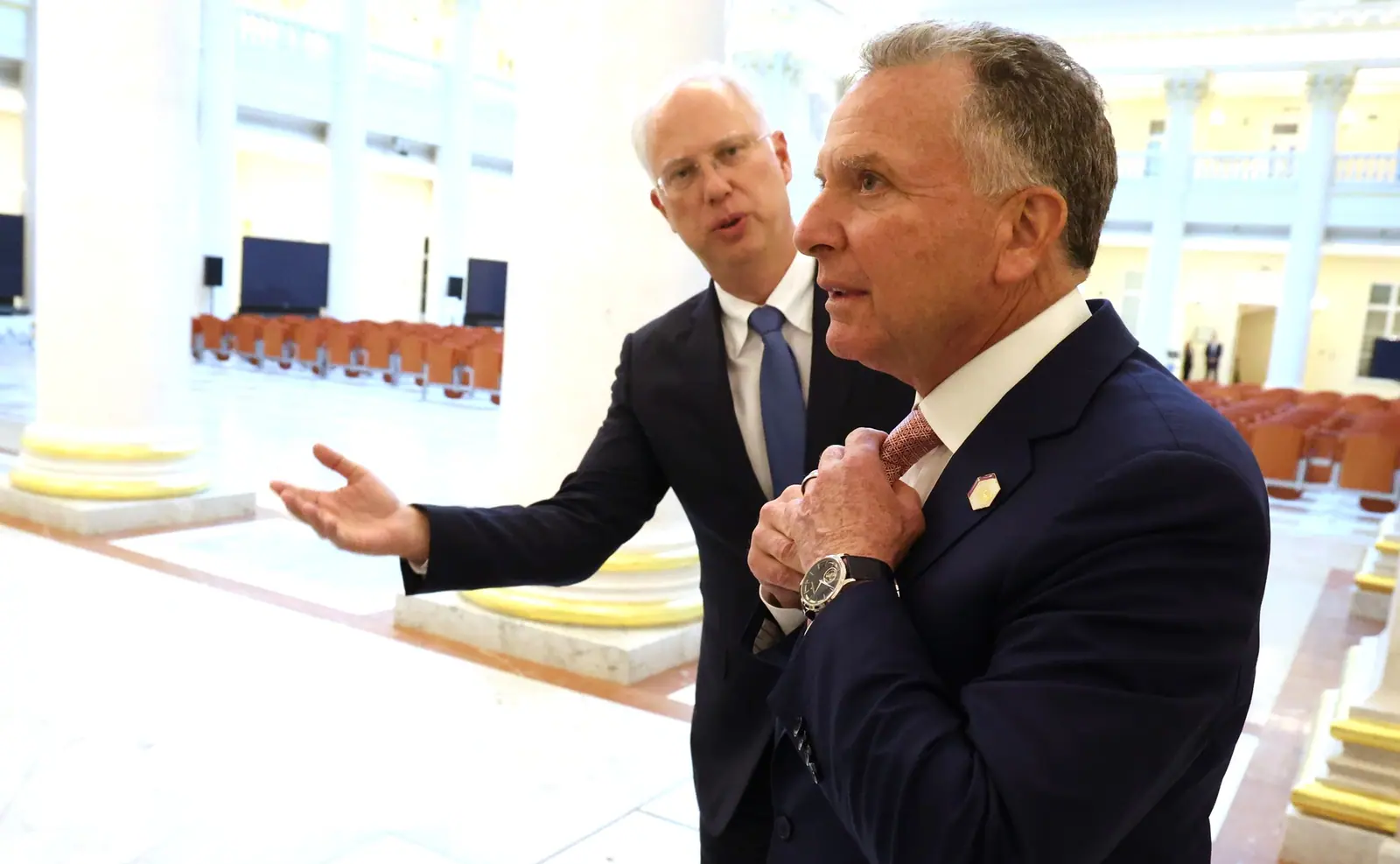
Russia's delegation is again led by Vladimir Medinsky, a hard-line Putin aide who has been part of most talks with Ukraine since the failed first round in March 2022. This time, NPR reports, he's bringing more senior people than ever: Deputy Foreign Ministers Sergei Ryabkov and Mikhail Galuzin, Yury Zhigarlovsky of the General Staff's operations directorate, and military intelligence chief Igor Kostyukov.
That lineup could signal Moscow is ready to take on harder political and military questions. The Institute for the Study of War, a U.S. think tank, isn't so sure, noting that some of the same officials have slowed past talks or pushed harder on Russia's demands.
U.S. envoy Steve Witkoff has said the agenda covers postwar security arrangements, de-escalation and humanitarian issues. It's the fourth round the Trump administration has brokered and the first since Geneva in February. Russia agreed to come back only after Witkoff met Vladimir Putin in St. Petersburg in October.
The gaps haven't moved much
The core disagreement is the same as it was a year ago. Russia wants Ukraine to cede large parts of its territory and give up on NATO membership. Zelenskyy wants any security guarantee spelled out, including who would act, and how, if Russia attacks again.
Some veterans of the process expect little. John Herbst, a former U.S. ambassador to Ukraine, wrote for the Atlantic Council that Putin has rejected every U.S. proposal Kyiv accepted, and that "perhaps the only outcome of the talks" will be agreeing to another round.
Politics in Washington also hang over the meeting. Democrats did well enough in last week's midterms to take control of Congress in January, and Zelenskyy has said that could help Ukraine's chances of more U.S. aid. NPR notes that Moscow may want to lock in the current administration's outline of a deal before that new Congress is sworn in. A possible Trump, Xi and Putin meeting at the APEC summit in Shenzhen, China, later this month is also being discussed.
The war hasn't paused
None of this has slowed the fighting. Zelenskyy said Russia fired 36 ballistic missiles at the Kyiv area overnight Saturday and only four were shot down. He accused Moscow of treating diplomacy "as a form of aggression." In southern Ukraine, the death toll from a guided-bomb strike Monday on an aid distribution site in Komyshuvakha has risen to at least 55.
The one recent bright spot is small: a limited local pause, which Melania Trump helped arrange, that let humanitarian aid into a town in Russian-occupied Ukraine. Whether Abu Dhabi produces anything bigger will start to become clear on Tuesday.
Frequently asked questions
- When are the Ukraine peace talks in Abu Dhabi?
- Tuesday, Nov. 10, and Wednesday, Nov. 11, 2026, in Abu Dhabi, the capital of the United Arab Emirates. The United States is mediating between Russian and Ukrainian delegations.
- Is Europe part of the Ukraine peace talks?
- France says yes. Foreign Minister Jean-Noël Barrot said on Nov. 8 that Europeans will be well represented and France will be there, though he didn't name a representative or say whether they'll sit at the table or observe. Kremlin spokesman Dmitry Peskov had said the three-way format with the U.S., Russia and Ukraine was already agreed.
- What did Trump say about a major agreement with Russia?
- After meeting Kremlin envoy Kirill Dmitriev on Thursday, Nov. 5, Trump said a coming agreement would involve more than Ukraine and might involve all of Europe. He gave no details, and both Zelenskyy and Barrot said they did not know what he meant.
- Who is on Russia's negotiating team?
- Vladimir Medinsky, a Putin aide who has led most of Russia's talks with Ukraine since March 2022, heads it again. For the first time, NPR reports, the team also includes Deputy Foreign Ministers Sergei Ryabkov and Mikhail Galuzin, General Staff deputy Yury Zhigarlovsky and military intelligence chief Igor Kostyukov.
- Is there a ceasefire in Ukraine right now?
- No general ceasefire is in place. A limited local pause, which Melania Trump helped broker, let humanitarian aid into one town in Russian-occupied Ukraine. The fighting elsewhere goes on, including a large missile attack on the Kyiv area on the night of Nov. 7-8.
Sources
- Europe to join U.S.-brokered Ukraine talks in Abu Dhabi, defying Kremlin objections · NPR, Nov. 8, 2026
- Europeans to join Russia-Ukraine talks in Abu Dhabi, says French FM Barrot · Euronews, Nov. 8, 2026
- Europeans will join Ukraine talks in Abu Dhabi, French minister says · The Straits Times, Nov. 8, 2026
Tags
- #Ukraine
- #Russia
- #Peace Talks
- #Abu Dhabi
- #Steve Witkoff
- #Europe
About the author
Founder and editor
Marcia Reid is the founder and editor of TrendCanopy, where she reviews and edits every story.
Spotted an error? Read our corrections policy or contact us. Last reviewed November 8, 2026.
Related stories

Brooklyn Building Collapse Death Toll Rises to 8 on Flatbush Avenue
The Brooklyn building collapse death toll rose to 8 Thursday, with 17 hurt, Mayor Mamdani said. What we know about the Flatbush site, victims and the cause.
Scott Colom Wins Mississippi Senate Race, Unseating Hyde-Smith
Scott Colom wins the Mississippi Senate race, beating Sen. Cindy Hyde-Smith. He's the first Democrat the state has sent to the Senate since 1982.
Scott Bessent Moved to a Military Base After Iranian Threats
Treasury Secretary Scott Bessent has moved from his Georgetown home to a military base after Iranian threats. What we know about the move and why he's a target.
Jim Jordan Elected House Minority Leader, Beating Scalise 106-73
Jim Jordan is the new House GOP leader. Republicans picked him as minority leader over Steve Scalise, 106-73, after losing the House in the midterms.
Nor'easter This Week: Where the First Snow Could Fall in the Northeast
A nor'easter could bring the first snow of the season to interior New England, upstate New York and the Appalachians Thursday to Saturday. Timing and cities.

Supreme Court Lets Big Bend Border Wall Construction Resume
The Supreme Court on Monday let Trump restart Big Bend border wall construction in West Texas, lifting a judge's order. What the ruling does and what's next.