NASA Astronaut Application 2026: Requirements, Pay, Deadline
NASA's 2026 astronaut application is open until Dec. 3. Who qualifies, what the job pays, which degrees don't count and how the yearlong selection works.
What happened
NASA opened its 2026 astronaut application on Nov. 7, looking for the next class of candidates to train for Artemis Moon missions, a planned Moon Base and eventual crewed flights to Mars. U.S. citizens with a qualifying STEM master's degree or an approved alternative, plus three years of related experience, can apply on USAJOBS until 11:59 p.m. Eastern on Thursday, Dec. 3, 2026. NASA plans to pick the class in fall 2027.
Key takeaways
- The USAJOBS listing puts candidate pay at $164,395 a year, based on 2026 federal pay schedules.
- Applicants pick one of seven tracks, including an operations track for people from deep-sea diving, mission control and rescue work.
- Previous applicants get no head start. NASA says everyone who applied before must reapply from scratch.
- Degrees in engineering technology, aviation, exercise physiology and most psychology fields don't qualify.
In this article
NASA is hiring astronauts again, and this time the job description says "Moon Base" in plain print. The agency opened its 2026 astronaut application on Saturday, Nov. 7, and by Sunday "NASA astronaut application 2026" and "NASA astronaut salary" were sitting near the top of Google's autocomplete suggestions.
The window is short. Applications close Dec. 3, less than four weeks after they opened. The bar is high, and the posting on USAJOBS, the federal government's job site, is far more specific than the press release about who gets screened out. Here's what's in it.
What NASA announced
In its Nov. 7 news release, NASA said the new class will join as the country returns to the Moon, builds a lunar base and prepares for the first crewed trips to Mars. Administrator Jared Isaacman said the people chosen "could walk on the Moon" and help build the systems that eventually carry crews to Mars.
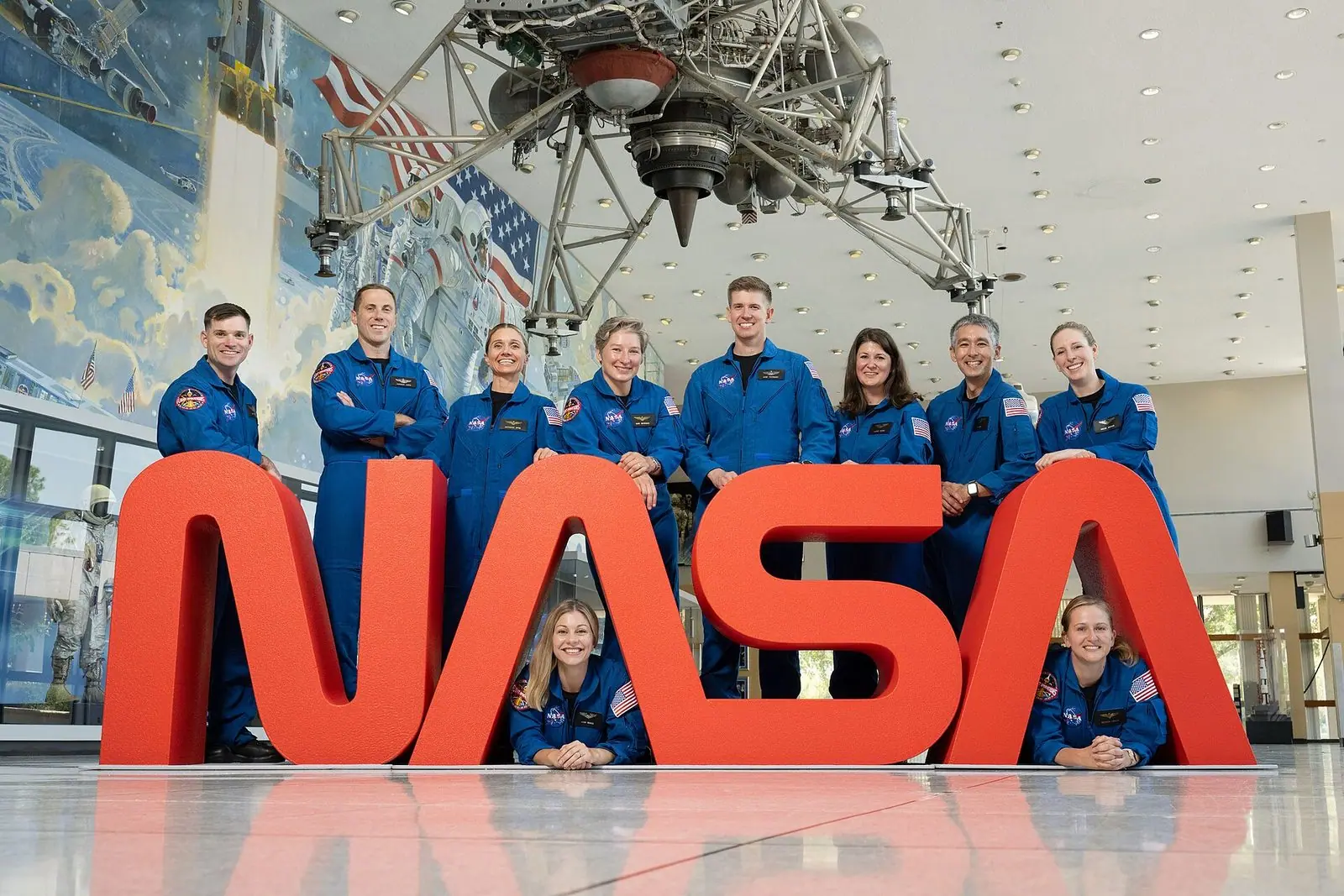
This is NASA's first open call since 2024. That round drew more than 8,000 applications, and 10 candidates were named in September 2025. They are still working through roughly two years of training. NASA has 32 active astronauts, a small corps for an agency planning repeated lunar landings. The Associated Press noted that April's Artemis II flight around the Moon kicked off the current lunar campaign.
NASA astronaut application 2026: the deadline and how to apply
The deadline is 11:59 p.m. Eastern Time on Thursday, Dec. 3, 2026. Everything goes through the USAJOBS listing (announcement NASA-13093568-27-AS). Mailed or emailed materials won't be considered.
A complete application needs:
- A long-form resume or CV. The usual two-page USAJOBS limit doesn't apply, but every job needs month-and-year dates and weekly hours.
- Every STEM-related transcript from a bachelor's degree up. Official or unofficial copies are fine at this stage.
- Five references, entered in the questionnaire, including your most recent supervisor.
- A Pilot Qualifications Form if you have any flight experience at all.
- The online questionnaire and assessment.
Some applicants will then get a link to the USA Hire online tests. NASA says to set aside about two and a half hours for them, and they must be done within 48 hours of the announcement closing. Letters of recommendation and copies of diplomas aren't wanted, and anyone who applied in 2024 has to start over.
NASA astronaut requirements: who qualifies
You must be a U.S. citizen. Beyond that, there are two hurdles, education and experience, and you need to clear both by Dec. 3.
Education
The standard route is a master's degree in engineering, biological science, physical science, computer science or math from an accredited school. Three alternatives also count:
- At least two years (36 semester hours) of a STEM doctoral program.
- A medical degree, including MD, DO, physician assistant, doctor of nursing practice or family nurse practitioner.
- Finishing, or being enrolled in, a recognized Test Pilot School program that wraps up by July 2027, plus a STEM bachelor's degree.
The listing also names degrees that look close but don't count. Engineering technology and aviation technology are out. So are aviation and aviation management, exercise physiology, social sciences such as geography and anthropology, and psychology, except for clinical, physiological and experimental psychology.
Experience
Applicants need at least three years of progressively responsible professional work after their qualifying degree, and they choose one of seven tracks: pilot, flight test, medical, biological and medical science, physical science, engineering, or operations. K-12 teaching in a technical subject can count.
Pilots can substitute flight hours. That means 750 hours as pilot in command of high-performance jets, 1,500 total hours in other fixed-wing aircraft with 750 in command, or 1,000 helicopter hours with 300 in command.
The operations track is the one that may surprise people. It covers work in high-risk settings where mistakes can't be undone, and NASA's examples include saturation or cave diving, launch and mission control, nuclear submarine duty, rescue work and special operations.
Health and fitness
Vision must be correctable to 20/20 in each eye, and glasses, LASIK and PRK are allowed. Candidates have to pass NASA's long-duration flight physical, a fitness test before hiring and a swim test in the first month.
How much do NASA astronauts make?
The USAJOBS posting lists astronaut candidate pay at $164,395 a year, based on 2026 federal pay tables. NASA says that will be adjusted for any raises in 2027 or 2028, and later increases are tied to training and mission milestones. Relocation costs to Houston can be reimbursed.
Candidates start on a 30-month term appointment. Those who finish training move to permanent jobs.
What the job actually asks of you
The fine print is blunt. Candidates must be willing to spend up to seven hours a day in a pressurized spacesuit underwater, fly up to 16 hours a day during flight training and deploy to space for 12 months or longer. Travel takes up 76% or more of the job, remote work isn't allowed during training, and leave can be denied during key periods.
There's also no promise of a ride. NASA says mission assignments depend on factors outside its control and wait times are unknown. Until they're assigned, astronauts work in the astronaut office, which can mean serving as capsule communicator in Mission Control or advising on new spacecraft. Training covers spacewalks, robotics, spacecraft systems, team skills, technical courses with commercial partners such as SpaceX and, depending on the mission, Russian.
When will NASA pick the new class?
Not soon. USAJOBS estimates the selection process will take about a year, with in-person interviews, simulations and medical and psychiatric screening for finalists. NASA expects to announce the class in fall 2027, and the new candidates should report to Johnson Space Center in Houston in the winter of 2027-28.
Status updates will be sparse along the way. NASA says only people invited to interviews will get feedback, so most applicants should expect a long silence after Dec. 3. Given the last round's odds of 10 picks from more than 8,000 applicants, it pays to read the whole announcement before starting.
Frequently asked questions
- When is the NASA astronaut application deadline?
- Applications close at 11:59 p.m. Eastern Time on Thursday, Dec. 3, 2026. The online assessments that some applicants are asked to take afterward must be finished no later than 48 hours after the announcement closes, so NASA advises applying early rather than on the last night.
- How much does a NASA astronaut make?
- The 2026 USAJOBS announcement lists astronaut candidate pay at $164,395 a year. NASA notes that figure reflects 2026 federal pay schedules and will be adjusted for any increase in 2027 or 2028, and that later raises are tied to training and mission milestones.
- What are the requirements to be a NASA astronaut?
- You must be a U.S. citizen with a master's degree in engineering, biological or physical science, computer science or math, or an accepted alternative such as two years of doctoral work, a medical degree or Test Pilot School. You also need three years of related professional experience, or qualifying pilot hours, and must pass NASA's long-duration flight physical.
- Can you be an astronaut without a master's degree?
- Yes, through two routes. Completing at least two years of a STEM doctoral program counts, as does finishing or being enrolled in a recognized Test Pilot School program by July 2027, as long as you also hold a STEM bachelor's degree. A bachelor's degree alone does not qualify.
- How many people apply to be NASA astronauts?
- NASA's last call, in 2024, drew more than 8,000 applications, and the agency picked 10 candidates in September 2025. Since the 1960s NASA has selected 370 people to train as astronaut candidates, and it has 32 active astronauts today.
Sources
- NASA Seeks Next Generation of Explorers to Join Astronaut Corps · NASA, Nov. 7, 2026
- Astronaut Candidate (Announcement NASA-13093568-27-AS) · USAJOBS, Nov. 2026
- Want to fly to the moon? NASA is looking for new astronauts to help grow its Artemis program · Associated Press, Nov. 2026
- Nasa seeks next generation of astronauts to live and work on the moon · The Guardian, Nov. 8, 2026
Tags
- #NASA
- #Astronauts
- #Artemis
- #Jobs
- #Space
About the author
Founder and editor
Marcia Reid is the founder and editor of TrendCanopy, where she reviews and edits every story.
Spotted an error? Read our corrections policy or contact us. Last reviewed November 8, 2026.
Related stories

Brooklyn Building Collapse Death Toll Rises to 8 on Flatbush Avenue
The Brooklyn building collapse death toll rose to 8 Thursday, with 17 hurt, Mayor Mamdani said. What we know about the Flatbush site, victims and the cause.

Scott Colom Wins Mississippi Senate Race, Unseating Hyde-Smith
Scott Colom wins the Mississippi Senate race, beating Sen. Cindy Hyde-Smith. He's the first Democrat the state has sent to the Senate since 1982.

Scott Bessent Moved to a Military Base After Iranian Threats
Treasury Secretary Scott Bessent has moved from his Georgetown home to a military base after Iranian threats. What we know about the move and why he's a target.

Jim Jordan Elected House Minority Leader, Beating Scalise 106-73
Jim Jordan is the new House GOP leader. Republicans picked him as minority leader over Steve Scalise, 106-73, after losing the House in the midterms.

Nor'easter This Week: Where the First Snow Could Fall in the Northeast
A nor'easter could bring the first snow of the season to interior New England, upstate New York and the Appalachians Thursday to Saturday. Timing and cities.
Supreme Court Lets Big Bend Border Wall Construction Resume
The Supreme Court on Monday let Trump restart Big Bend border wall construction in West Texas, lifting a judge's order. What the ruling does and what's next.