Huawei convicted of trade secret conspiracy and bank fraud but cleared of racketeering
Huawei convicted on 10 of 12 counts tied to Iran sanctions and stolen US tech after a two-month Brooklyn trial. Here's what jurors rejected and what comes next.
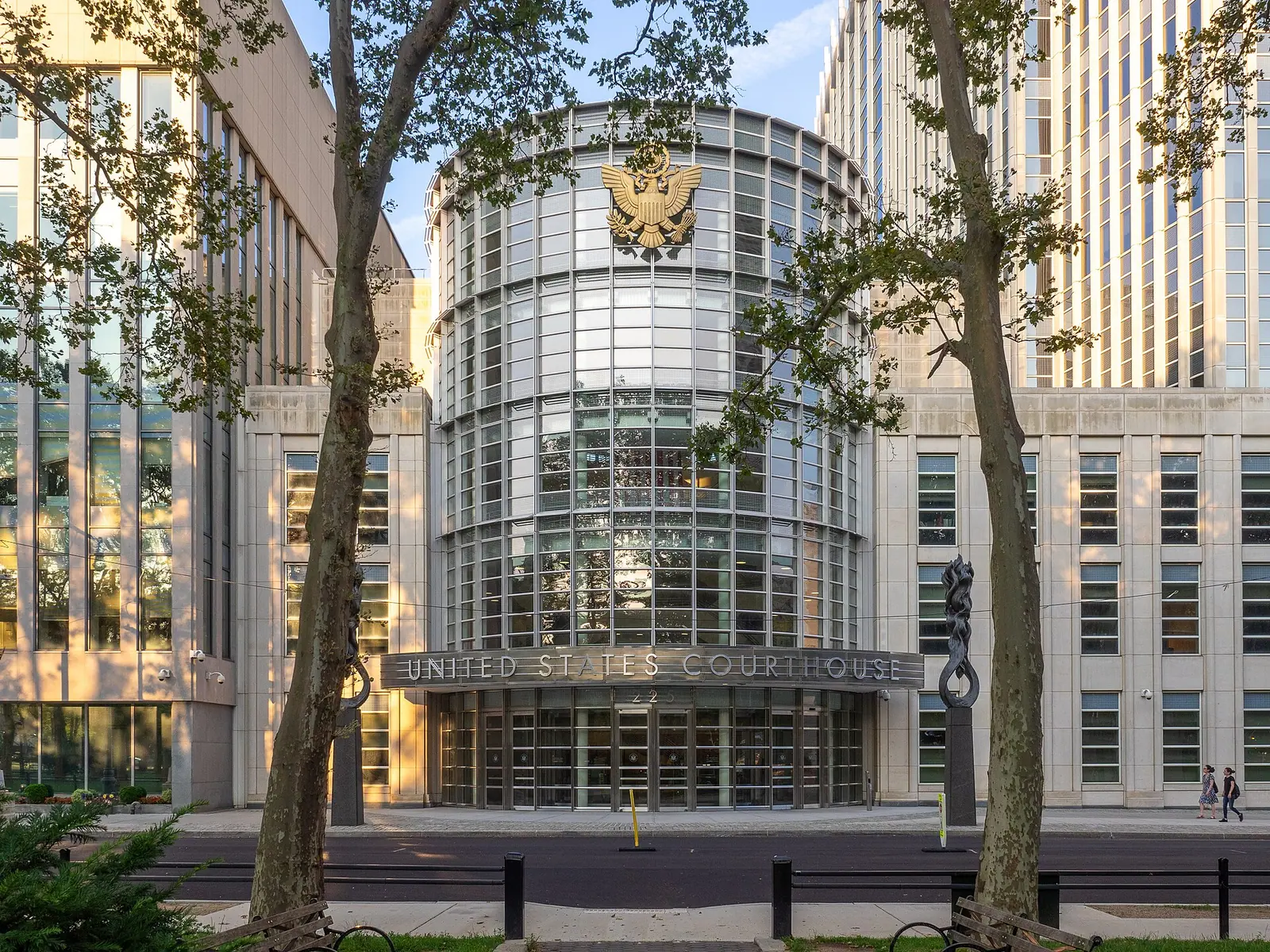
What happened
Huawei was convicted by a federal jury in Brooklyn on Tuesday, Nov. 24, on 10 of the 12 counts it faced, including conspiracy to steal trade secrets, bank fraud and wire fraud tied to its business in Iran. Jurors acquitted the Chinese company of racketeering conspiracy, the most serious charge, and of conspiring to obstruct justice. Huawei says it will fight the convictions.
Key takeaways
- The trial ran more than two months. Prosecutors called more than 60 witnesses and the defense called 15, Reuters reported.
- Jurors saw a video that prosecutors said showed a Huawei employee slipping a piece of a T-Mobile phone-testing robot into his backpack.
- Meng Wanzhou, the founder's daughter whose 2018 arrest in Canada started the case, did not testify. A statement from her 2021 deal with prosecutors was shown to jurors.
In this article
Last updated: Tuesday, Nov. 24, 2026, 4:20 p.m. ET. We'll update this story if the court sets a sentencing date or Huawei files new motions.
Huawei has been convicted in the US criminal case that has hung over the Chinese telecom company since 2018. A federal jury in Brooklyn found Huawei guilty on Tuesday on 10 of the 12 counts it faced, including conspiracy to steal trade secrets and bank fraud, Reuters reported.
The jury did not give prosecutors everything. It acquitted Huawei of racketeering conspiracy, the charge that cast the company as a criminal enterprise, and of conspiring to obstruct justice. The Associated Press noted that racketeering charges are usually aimed at organized crime and drug cases.
Read also: Judge dismisses the case against two ex-FBI officials in the Hunter Biden probe · A judge tosses the DOJ suit over two Dan Sullivans on Alaska's ballot · Brooklyn building collapse in Flatbush kills 8, including 2 children
Jurors came back with the verdict around 3 p.m. ET, a day after they sent a note asking about the obstruction count, according to courtroom reporting by Inner City Press.
What Huawei was convicted of
The guilty verdicts cover several conspiracy counts, including bank fraud, wire fraud, money laundering, defrauding the United States and stealing trade secrets, plus standalone bank and wire fraud counts, NBC News reported. The South China Morning Post said the convictions also include evading sanctions.
Huawei was tried alongside three affiliated companies. The two counts that failed were the first and last in the indictment: Count 1, racketeering, and Count 12, obstruction.
The Iran banking case
The oldest part of the case is about money. Prosecutors said Huawei misled HSBC, Standard Chartered and BNP Paribas about its business in Iran so it could keep moving dollars through the US banking system despite sanctions.
Prosecutor Meredith Arfa told jurors that news coverage set off the trouble. "After the media started questioning Huawei's operations in Iran, so did Huawei's banks," she said in her closing argument, according to Reuters. Reuters' own reporting in 2012 and 2013 on Huawei's Iran business came up during the trial.
The trade secrets case
Prosecutors added the trade secrets charges in 2020. At trial, they tried to show Huawei took router source code from Cisco Systems, antenna technology from Quintel, and access to a CNEX circuit board through a professor it hired.
Two pieces of evidence were unusually concrete. Jurors watched a video that prosecutors said showed a Huawei employee putting part of a T-Mobile phone-testing robot into his backpack. They also heard about a Huawei engineer who slipped into a Fujitsu booth at a trade show to photograph a device, Reuters reported.
NBC News said prosecutors also accused the company of helping Iran spy on its own citizens.
Why the jury cleared Huawei of racketeering
Jurors don't explain their votes, so the acquittal can only be read against the arguments they heard. The racketeering count asked them to find that Huawei operated as a criminal enterprise over roughly 20 years.
Huawei's lawyer, Brian Heberlig, attacked that framing head-on. He told jurors prosecutors had "cherry-picked" a handful of unrelated incidents and stitched them into a decades-long conspiracy. He said the company grew through "hard work, innovation, and investment in research and development," and the BBC reported he pointed to operations in 170 countries and more than 200,000 employees.
The defense also argued that HSBC and the other banks knew about Huawei's Iran work and were competing for its business anyway.
What Huawei says about the verdict
Huawei welcomed the racketeering acquittal and rejected the rest. In a statement, the company said the remaining charges are "without legal or factual merit" and that it would "thoroughly review the relevant verdicts and take all necessary legal actions to defend our rights and interests," NBC News reported.
The company told the BBC the acquittal "confirms that these allegations lack factual basis and vindicates our consistent position over the past eight years."
How the Huawei trial got here
The case first surfaced in December 2018, when Canada detained Meng Wanzhou, Huawei's chief financial officer and the daughter of founder Ren Zhengfei, on a US warrant. She was accused of misleading an HSBC banker about the company's Iran business. The arrest set off a diplomatic fight among Washington, Ottawa and Beijing.
Meng fought extradition for nearly three years before reaching a deferred prosecution agreement. She flew home to China, and the charges against her were dropped. She did not testify at this trial, but prosecutors showed jurors a statement attached to her agreement in which she acknowledged the company illegally did business in Iran, Reuters reported. The HSBC banker she met in 2013 did take the stand.
The Justice Department filed the indictment in January 2019, the South China Morning Post noted. That same year, Washington put Huawei on a trade blacklist that limits its access to US technology. Jury selection began Sept. 8 before US District Judge Ann Donnelly, who told prospective jurors that "China and the Communist Party … are not on trial," Inner City Press reported.
The trial ran more than two months. Prosecutors called more than 60 witnesses and the defense called 15.
US scrutiny of Chinese tech ties hasn't stopped at Huawei. Last week a short seller hit AMD over firmware links to a blacklisted Chinese firm, which we covered in AMD stock drops 8% after a short seller ties its firmware to a blacklisted Chinese firm.
What the Huawei verdict means now
Huawei can't go to prison. Penalties for a convicted company usually come as fines and court-supervised probation, and Judge Donnelly will decide them. No sentencing date had been reported as of Tuesday afternoon.
The practical hit to the business may be limited. Experts have said the case hasn't undercut Huawei's growth, since it diversified after the 2019 blacklist and became a central player in China's push into artificial intelligence, Reuters reported.
What we still don't know
- When Judge Donnelly will sentence Huawei and how large any fine might be.
- Whether Huawei will file post-trial motions before taking the case to a federal appeals court.
- How China's government will respond officially to the verdict.
More court coverage is in our news section.
Frequently asked questions
- Was Huawei found guilty?
- Yes, on most counts. A federal jury in Brooklyn convicted Huawei on Nov. 24, 2026, on 10 of 12 counts, including conspiracy to steal trade secrets, bank fraud, wire fraud and related conspiracy charges. It found the company not guilty of racketeering conspiracy and of conspiring to obstruct justice.
- What was Huawei accused of in the Brooklyn trial?
- Prosecutors said Huawei lied to banks such as HSBC about its business in Iran so it could move money despite US sanctions, and conspired for about two decades to take technology from US companies, including Cisco router code and parts of a T-Mobile testing robot. They also said it helped Iran surveil its own citizens.
- Why was Huawei acquitted of racketeering?
- Jurors didn't explain their verdict. The racketeering count required them to find Huawei ran as a criminal enterprise. Huawei's lawyer, Brian Heberlig, argued prosecutors had cherry-picked a handful of unrelated incidents to build a 20-year conspiracy story, and the jury didn't accept that charge.
- What happens to Huawei after the verdict?
- Judge Ann Donnelly will handle sentencing, and no date had been reported by Tuesday afternoon. A company can't be sent to prison, so penalties for a corporate defendant usually mean fines or probation. Huawei says it will review the verdicts and take all necessary legal action, which points to an appeal.
Sources
- China's Huawei convicted in sprawling US criminal trial over Iran business (Reuters, via StreetInsider) · Reuters, Nov. 24, 2026
- Chinese tech giant Huawei is guilty of conspiracy to steal trade secrets, US jury finds · Associated Press, Nov. 24, 2026
- Chinese tech company Huawei convicted on federal charges · NBC News, Nov. 24, 2026
- Huawei found guilty of stealing trade secrets but acquitted of racketeering · BBC News, Nov. 24, 2026
- Huawei guilty on 10 of 12 counts after 2-month battle in US courtroom · South China Morning Post, Nov. 24, 2026
- Huawei Guilty on 10 of 12 Counts As EDNY Spox Targets Press · Inner City Press, Nov. 24, 2026
Tags
- #Huawei
- #Huawei convicted
- #Huawei trial verdict
- #Huawei trial Brooklyn
- #trade secrets
- #Iran sanctions
- #Meng Wanzhou
- #Justice Department
- #China
About the author
Founder and editor
Marcia Reid is the founder and editor of TrendCanopy, where she reviews and edits every story.
Spotted an error? Read our corrections policy or contact us. Last reviewed November 24, 2026.
Related stories
Trending now
News ·
Kilmar Abrego Garcia leaves the US for Spain under a deal to avoid deportationNews ·
FAA lifts O'Hare ground stop, but a radar outage keeps Chicago flights delayedTech ·
CIA breach exposed unclassified data on an open-source intelligence network, reports sayMoney ·
Trump administration readies new tariffs on China, the EU and 14 other economiesTech ·
TikTok down for tens of thousands of US users as videos and profiles fail to load