DNC plans 12 Democratic debates starting in June, with a dark money pledge to qualify
The party will hold five debates in 2027 and seven in 2028, cap the field at 20 and shut out candidates who won't disavow super PAC ads. Here's how it works.
What happened
The Democratic National Committee announced on Monday, Nov. 23, that it will hold 12 debates for the 2028 presidential primary: five in 2027, starting in June, and seven in 2028, ending in March. To get on stage, candidates must meet polling and grassroots fundraising thresholds and sign a pledge to publicly denounce super PAC and dark money ads that help them or attack a rival.
Key takeaways
- No more than 20 candidates can qualify for any one debate. A big field would be split across two nights, with candidates assigned at random.
- Exact dates, host cities, media partners and the qualifying thresholds for the first two debates are due in January.
- The DNC weighed opening the debates in April or May, but at least three potential campaigns pushed back, The Washington Post reported.
- Campaigns also can't sign joint fundraising deals with party committees until one candidate becomes the presumptive nominee.
In this article
Last updated Nov. 23, 2026, 2:25 p.m. ET.
Nobody has formally entered the race yet, but the Democratic Party now has a debate schedule for it. The Democratic National Committee said Monday morning that it will hold 12 debates for the 2028 presidential nomination, opening in June 2027 and wrapping up in March 2028, according to NBC News and the Associated Press.
Most of the plan copies 2020, the last time the party had an open primary. The new piece is a pledge. Any candidate who wants a podium has to agree to publicly denounce super PAC and "dark money" advertising that helps them or tears down a Democratic opponent.
Read also: Trump to give Rudy Giuliani the Presidential Medal of Freedom at the White House · Jimmy Gomez to resign after House Ethics panel finds evidence of sexual misconduct · Trump tells the Army to hold off on the Iowa lead azide detonation, for now
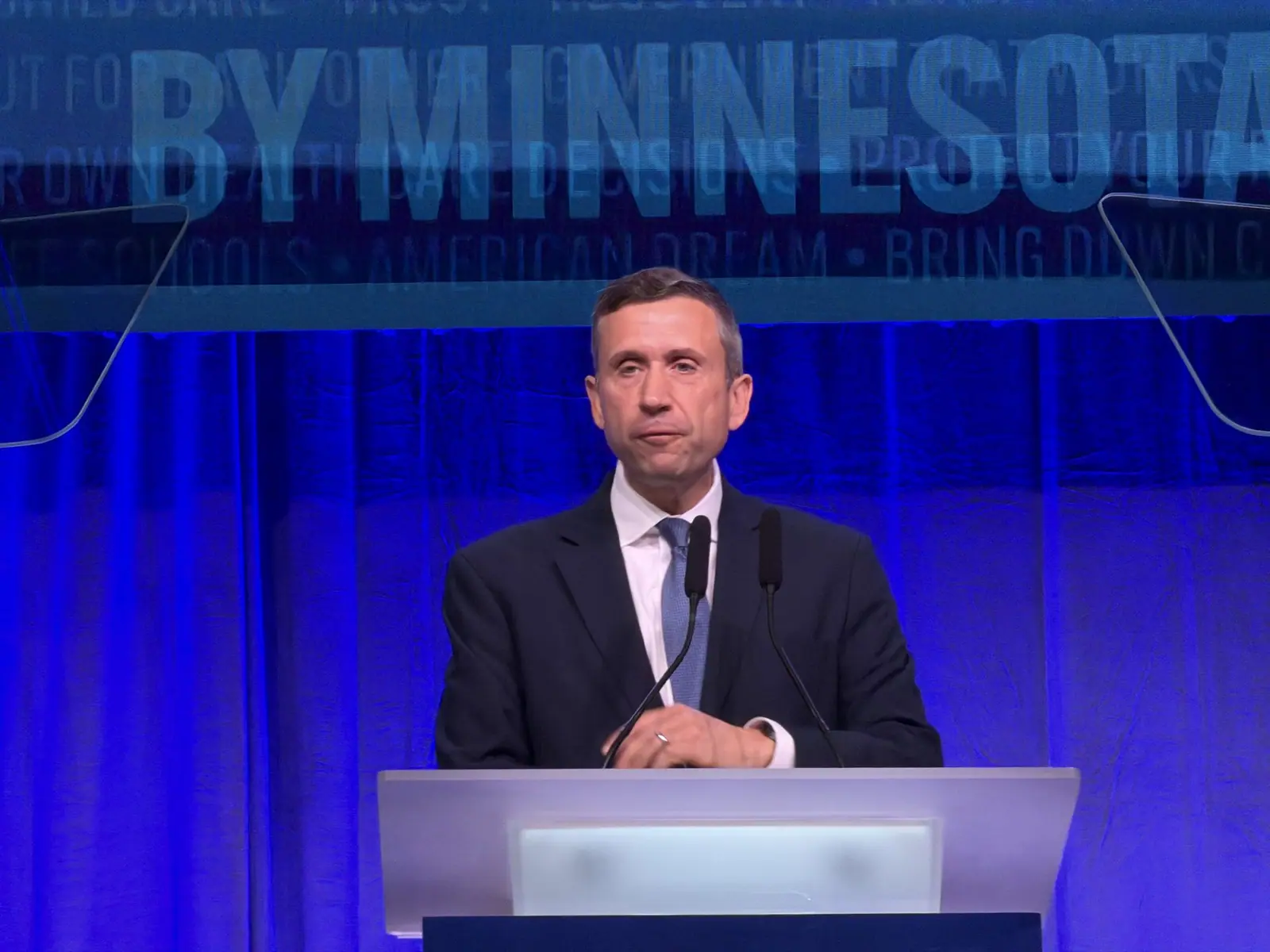
"Democrats are on offense after our historic victories in the midterms," DNC Chair Ken Martin said in a statement quoted by NBC News. He said the process would "keep our party united" and strengthen the eventual nominee.
The 2028 Democratic debates schedule so far
Five debates will happen in 2027 and seven in 2028. The first two are set for June and July 2027, NewsNation reported via The Hill, and six of the seven 2028 debates are expected in early-voting states. The last one is planned for March 2028.
That's all the party has locked in. Specific dates, host cities and TV partners for the opening pair are due in January, the DNC said.
The 2028 debates line up with the early calendar Democrats approved in August. South Carolina votes first on Jan. 22, 2028, followed by Nevada on Feb. 1, New Hampshire on Feb. 8, New Mexico on Feb. 15, Michigan on Feb. 22 and Virginia on Feb. 29, according to the DNC's early-window page. Iowa is not in the early window.
The June start wasn't the only option. The party considered opening as early as April or May, a timeline some campaigns and networks liked, but at least three potential campaigns objected, The Washington Post reported, citing four people involved in the talks.
Who can make the debate stage
Expect a crowd. The DNC capped each debate at 20 candidates. If more than one stage's worth qualify, the debate will be split over two consecutive nights, with candidates drawn at random "in a manner that will ensure parity across both nights," NBC News reported. NewsNation said the party will make sure frontrunners are divided between the two nights.
Qualifying will rest on polling and grassroots fundraising, as it did in 2020. Martin said the exact thresholds would come later, CBS News reported. NewsNation added that the plan explicitly brings digital creators and influencers into the debates, though the party hasn't said how.
Candidates also have to promise to follow the approved calendar. Anyone who competes in a state that tries to jump the line risks losing delegates won in every early state, and NBC News said that penalty is now harder to undo than in past cycles.
Minyon Moore, a longtime DNC adviser, will lead debate planning with Roger Lau, the party's executive director.
How the dark money pledge works
The DNC admits it can't stop outside groups from spending. What it can do is control the stage. Under the Fair Campaign Practices Pledge, a candidate must denounce TV, radio, digital, billboard or mail ads paid for by a super PAC or a 501(c)(4) nonprofit when those ads promote the candidate or attack a Democratic rival.
A few details matter more than the headline rule:
- Only campaigns can report ads. A designated representative of a campaign that has signed the pledge files the complaint, and the DNC rules on it before each qualifying period.
- Attack ads put everyone on the hook. If an outside group runs an ad against one candidate, all of that candidate's opponents must denounce it, per the DNC's primary page.
- One denunciation per group is enough. A candidate only has to disavow a given organization once, even if its spending continues.
- Missing the deadline costs a debate. A candidate who doesn't denounce reported spending by the qualifying deadline sits out that debate and every later one until they do.
The DNC says it will post a public tracker of complaints, rulings and denunciations. CBS News noted that because rivals can file against each other before each qualifying window, compliance fights could become a regular part of the race.
The pledge does not cover the general election.
The party money rules may matter more
CBS News argued that the bigger change is about party money, not super PACs. Campaigns can't sign joint fundraising agreements with any Democratic Party committee until one candidate is the presumptive nominee. They also can't ask state or local parties to run ads for them.
Break that rule and the penalty is steep. A campaign that approves party ad spending must repay the full amount before it can debate again. One that signs a joint fundraising deal has to end it and refund every contribution raised under it.
That rule has a history. Hillary Clinton's campaign signed a joint fundraising agreement with the DNC in 2015, long before she clinched the nomination, CBS News noted. The party says the new limits are meant to keep its committees neutral.
The DNC said the dark money effort is backed by Sens. Elizabeth Warren, Bernie Sanders and Andy Kim, Reps. Greg Casar and Jason Crow, and former DNC Chair Jaime Harrison, CBS News reported.
How this compares with 2020
Democrats also held 12 debates last time, starting in June 2019. NBC News, MSNBC and Telemundo hosted the first round in Miami, two nights of 10 candidates each, and most announced candidates made the stage then.
The field this time is still unofficial. Former Vice President Kamala Harris led the RealClearPolling national average at 16.5%, with Georgia Sen. Jon Ossoff at 15% and Rep. Alexandria Ocasio-Cortez and Pete Buttigieg at 14% each, Newsweek reported. An Emerson College poll taken Nov. 14 to 16 put Ossoff narrowly ahead. Several of the people in those surveys haven't said they're running.
The announcement follows a strong midterm for the party, which we covered in Virginia Foxx concedes to Chuck Hubbard after a recount leaves her 330 votes short and House Democrats pick Hakeem Jeffries for speaker, putting him in line to make history.
What to watch in January
The next DNC announcement should answer the questions campaigns care about most: the polling bar, the donor count, and which networks get the first two debates. Those numbers will decide whether lesser-known Democrats who are thinking about a run can realistically reach the June stage.
Frequently asked questions
- When is the first 2028 Democratic debate?
- The first 2028 Democratic primary debate is planned for June 2027, with a second in July. The DNC has not named exact dates, cities or TV partners yet and says it will announce those details in January 2027. Three more debates follow later in 2027 and seven in 2028.
- How many Democratic debates will there be for 2028?
- There will be 12 DNC-sanctioned debates, the same number Democrats held in the 2020 cycle. Five take place in 2027 and seven in 2028, and the final one is planned for March 2028. Six of the 2028 debates are expected in early-voting states, NewsNation reported.
- How do candidates qualify for the Democratic debates?
- Candidates will need to hit polling and grassroots fundraising thresholds that the DNC hasn't published yet. They also have to sign the party's Fair Campaign Practices Pledge, which covers dark money, party spending and joint fundraising, and agree to follow the approved primary calendar.
- What is the DNC dark money pledge?
- It's a promise to publicly denounce super PAC or 501(c)(4) ads on TV, radio, digital, billboards or mail that boost the candidate or attack a Democratic rival. The DNC can't ban that spending, but a candidate who won't denounce reported ads by the deadline is barred from the debate.
Sources
- 2028 Democratic Primary Process · Democratic National Committee, Nov. 23, 2026
- Presidential Primary Fair Campaign Practices Pledge · Democratic National Committee, Nov. 2026
- Democratic National Committee sets broad rules for the party's 2028 presidential debates · NBC News, Nov. 23, 2026
- Democrats plan 12 debates for their 2028 presidential primary, with the first in June · Associated Press, Nov. 23, 2026
- Democrats announce plans for 12 debates starting in June for 2028 race · CBS News, Nov. 23, 2026
- Democrats to open 2028 primary debates in June after pushback against earlier start · The Washington Post, Nov. 23, 2026
- Democratic presidential debates to feature new dark money pledge requirement · NewsNation via The Hill, Nov. 23, 2026
- DNC Announces 2028 Primary Debates: Who's Leading the Polls? · Newsweek, Nov. 23, 2026
- Early Window States · Democratic National Committee, Aug. 2026
Tags
- #Democratic debates 2028
- #DNC debates
- #2028 presidential primary
- #dark money pledge
- #Ken Martin
- #Democratic National Committee
- #2028 election
About the author
Founder and editor
Marcia Reid is the founder and editor of TrendCanopy, where she reviews and edits every story.
Spotted an error? Read our corrections policy or contact us. Last reviewed November 23, 2026.
Related stories

Trending now
Sports ·
Cubs agree to a six-year, $120 million deal with Japanese slugger Teruaki SatoTech ·
FAA investigates an Amazon drone crash onto a Michigan garage after a shampoo deliveryNews ·
Two men arrested after Anmer Hall break-in at Prince William and Kate's Norfolk homeMoney ·
Sanofi agrees to buy Insmed for $41 billion in pharma's biggest deal since 2023Entertainment ·
Steven Spielberg will direct his first Western, starring Cillian Murphy and Jessie Buckley