Army plans Iowa lead azide detonation without its EPA permit, citing an emergency
A late Saturday court filing says the Army will blow up 68 drums of degraded lead azide in Middletown, Iowa, by Nov. 24 even though a court froze its permit.
What happened
The Army told a federal court late Saturday that it will carry out the Iowa lead azide detonation at the Iowa Army Ammunition Plant in Middletown by Tuesday, Nov. 24. An appeals court has frozen the EPA permit for the blast, so the Army says it will rely on a separate emergency exemption for military explosives instead. It says colder weather could set the material off on its own.
Key takeaways
- The stockpile is about 5 tons of lead azide in 68 plastic drums inside two earth-covered bunkers. An April inspection found crystals in 58 of the drums, according to an Army colonel's sworn declaration.
- The environmental groups that sued, the Iowa Environmental Council and the Sierra Club's Iowa chapter, filed new expert declarations on Sunday challenging the Army's claim that waiting is too risky.
- Army air modeling shows lead dust could reach Mercer County, Illinois, and Illinois health officials are telling residents in the path to stay indoors for 24 to 48 hours.
- The Army hired a Georgia company in March to neutralize the explosive chemically, then canceled that contract about two months later, The New York Times reported.
In this article
The U.S. Army intends to blow up nearly 5 tons of deteriorating lead azide at its ammunition plant in Middletown, Iowa, by Tuesday, Nov. 24, even though a federal appeals court has frozen the environmental permit that was supposed to allow it.
The Justice Department laid out the plan in a court filing late Saturday. "The Army must perform a controlled detonation to protect the public from the more significant threat from an uncontrolled explosion, and the Army intends to act by November 24, 2026," the filing said, as quoted by Reuters. The Army didn't answer Reuters' question Sunday about exact timing.
That leaves people in southeast Iowa and western Illinois waiting to learn which day they should keep their windows shut.
Read also: Peoria lifts its evacuation after a bomb is found at a BioUrja ethanol plant · The Navy says the USS Doris Miller won't be renamed after talk of naming it for Trump · Trump says he fired cyber director Sean Cairncross as Pentagon CIO Kirsten Davies takes over
How the Army plans to get around the court pause
The 8th U.S. Circuit Court of Appeals put the Environmental Protection Agency's emergency permit for the blast on hold after the Iowa Environmental Council and the Sierra Club's Iowa chapter sued. The groups, represented by Earthjustice, say the Army and EPA brushed aside safer options.
The Army's answer is that it doesn't need the permit. Federal attorneys pointed to a separate emergency exemption in the Resource Conservation and Recovery Act rules, which lets the military act immediately on an imminent explosives threat without the usual hazardous waste permit, WQAD reported. In the government's reading, the court froze the EPA's permit, not the Army's own emergency authority.
Two things about the filing matter. It's a notice of what the Army plans to do, not a ruling that approves it. And the Army says it will still follow the permit's safety and dust-control steps even though the permit itself is suspended, CBS News reported.
The plaintiffs answered on Sunday. They asked to add three declarations from experts and local governments that question the Army's claim that delay is dangerous, along with concerns about public notice and health effects, according to CBS.
Why the Army says the Iowa lead azide can't wait
Lead azide is a very sensitive explosive used in the detonators of military ammunition. Heat, shock or friction can set it off.
At the Iowa Army Ammunition Plant, the material sits in 68 plastic drums inside two earth-covered bunkers. In a sworn declaration, Col. Aaron Teller, commander of the 71st Ordnance Group, said it has formed needle-shaped crystals that are especially touchy. An April inspection found crystals in 58 of the 68 drums.
The drums hold the explosive in a water and ethanol mix meant to keep it stable. The Army says they've been too dangerous to open since September 2025, so nobody has been able to top up that liquid.
Weather is the Army's main argument for speed. Teller said temperatures in Middletown swung between 24 and 70 degrees over the past week, and forecasts call for lows under 30. "There is an immediate risk that the lead azide at the facility will spontaneously explode," the filing says.
There's also a detail that makes delay harder. The heavy metal blast doors on the bunkers were taken off to prepare for the original Friday detonation and replaced with temporary insulated plywood. The Army says the old doors can't go back on.
"The real choice, in other words, is not between a detonation and no detonation," the government wrote. "It is between a planned and mitigated detonation and an unplanned and unmitigated explosion."
The lead dust plume and who's in its path
The worry for neighbors isn't the bang. It's the lead.
The blast is expected to throw a plume of lead particles that can settle on soil, playgrounds, cars and buildings. Army air models released earlier in the week included parts of Mercer County, Illinois, according to the Illinois EPA. Illinois officials also said the Army hadn't shared how it would monitor the dust. The groups suing argue the plume could carry 100 miles or more north of the site in some conditions, Reuters reported.
Illinois Gov. JB Pritzker spoke with the acting Army secretary to press for more information, 25News Now reported. U.S. Rep. Darin LaHood, an Illinois Republican, wrote on Facebook that families "deserve timely information, transparent safety plans, and a meaningful opportunity to understand the risks before the Army moves forward."
To limit the spread, the Army plans to ring the bunkers with sand-filled barriers about two stories high and use water mist, Iowa Public Radio reported. Areas right next to the plant will be temporarily evacuated, and all of them are in Iowa.
What residents are being told to do
Health departments in both states are giving the same basic advice, per the Iowa HHS fact sheet:
- Stay inside on detonation day, and keep windows and doors closed for 24 to 48 hours afterward.
- Set furnaces and building air systems to recirculate. A HEPA air cleaner helps.
- After the Army says the airborne period is over, wet-clean playground equipment, toys, windowsills and cars with soap and water. Don't dry sweep.
- Wash hands before eating and take shoes off at the door.
- Avoid driving through the plume area, and use your car's recirculate setting if you must.
Lead exposure often has no immediate symptoms. A blood lead test is the only way to check, so anyone worried should call a doctor. Young children and pregnant women face the most risk.
The Army has said it will update its plume maps six hours before the blast and every hour after that until it happens, on its installation notifications page. Fort Madison told residents it was informed the detonation would most likely come Monday, Nov. 23, or Tuesday, Nov. 24, in a city update.
The safer option the Army dropped
The Army hasn't fully explained why it let the drums deteriorate this far. It has said it learned of the recrystallization in March.
That same month it hired MuniRem Environmental, a Georgia company that uses a sulfur-based solution to neutralize explosives, The New York Times reported Saturday. About two months later, the Army canceled the contract. MuniRem's chief executive told the Times that then-Army Secretary Dan Driscoll made the final call to detonate, and an Army contracting officer wrote that the decision "was not based on deficiencies" in the company's plan.
In a letter to Iowa Gov. Kim Reynolds, the EPA said the Army, FBI and ATF concluded that moving the drums or even lifting their lids could set off an explosion, Iowa Public Radio reported. A joint statement from the Army, EPA and the Department of Health and Human Services said officials had been "meticulously planning" since March.
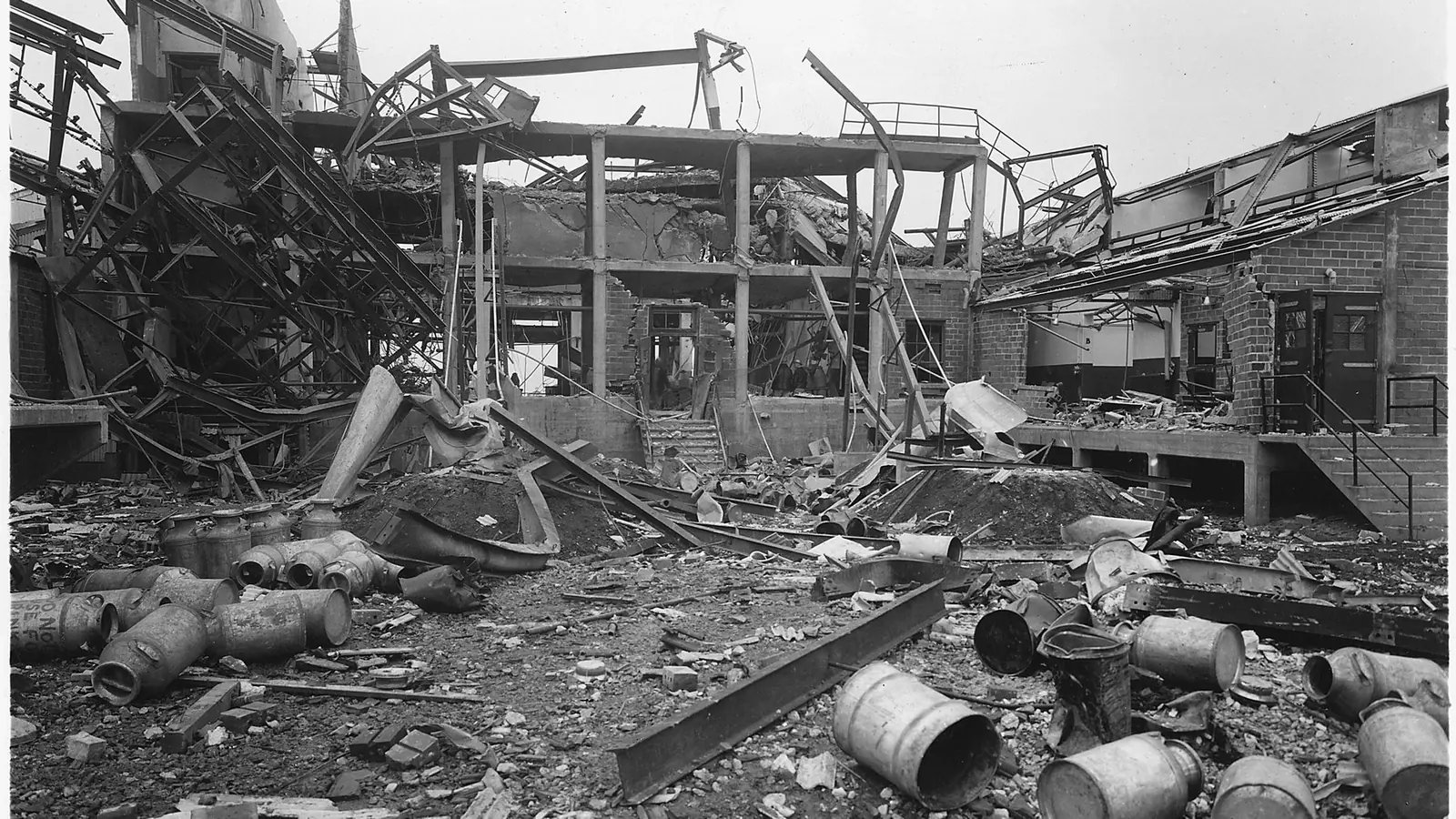
The plant has a history with this kind of risk. Built in 1941 as the Iowa Ordnance Plant, it had major accidental explosions in December 1941 and March 1942, shown in National Archives photos like the one above.
If the 8th Circuit acts on the plaintiffs' new filing before Tuesday, that could change the timeline again. Until then, people downwind of Middletown are watching the forecast and the Army's map page. Anyone driving through the area for the holiday can check AAA expects 81.5 million Thanksgiving travelers, ending a three-year record streak for the busiest times on the road, and our news section will follow the court fight.
Frequently asked questions
- When is the Iowa lead azide detonation?
- The Army has said only that it will act no later than Tuesday, Nov. 24, 2026. It has not announced an exact day or time. The city of Fort Madison said it was told the blast would most likely happen Monday, Nov. 23, or Tuesday. Iowa's health department had listed Monday at about noon.
- Can the Army ignore the court order in Iowa?
- The Army argues the 8th Circuit's stay froze only the EPA emergency permit, not its own authority under a federal hazardous waste rule that lets the military act right away on an imminent explosives threat. Its filing is a notice of what it plans to do, not a court ruling approving it. The plaintiffs are contesting it.
- How far could the lead dust from Iowa travel?
- It depends on wind and weather. The Army's models have covered parts of southeast Iowa and Mercer County, Illinois. The groups suing say the plume could travel 100 miles or more under some conditions. The Army says it will post updated plume maps six hours before the blast and hourly after that.
- What should people near Middletown, Iowa, do?
- Iowa and Illinois health officials advise staying indoors on detonation day and keeping windows and doors closed for 24 to 48 hours. Set heating to recirculate, use a HEPA air cleaner if you have one, and wet-wipe outdoor surfaces with soap and water afterward. Areas right next to the plant will be evacuated.
- What is lead azide?
- Lead azide is a highly sensitive explosive used in detonators for military ammunition. It can go off from heat, shock or friction. At the Iowa plant it is stored in a water and ethanol mix, but the Army says the drums have been too dangerous to open and top up since September 2025.
Sources
- Iowa detonation of lead will proceed under emergency powers, Army says, bypassing court order · Reuters, via Investing.com, Nov. 22, 2026
- U.S. Army plans to carry out detonation at Iowa plant despite indefinite pause, court records say · CBS News, Nov. 22, 2026
- US Army plans to detonate nearly 5 tons of lead azide in Iowa no later than Tuesday · WQAD, via KENS 5, Nov. 22, 2026
- US Army to detonate tonnes of unstable explosives in Iowa despite court order · BBC News, Nov. 22, 2026
- Army plans lead azide detonation in Iowa by Nov. 24 despite court halt · The Hill, Nov. 22, 2026
- Illinois leaders warn detonation may come soon despite court-ordered delay · 25News Now (WEEK), Nov. 22, 2026
- Report shows the Army canceled a chemical treatment contract before opting to detonate toxic explosives in Iowa · Iowa Public Radio, Nov. 21, 2026
- Iowa Army Ammunition Plant - Detonation of Lead Azide · City of Fort Madison, Iowa, Nov. 21, 2026
- Planned lead azide detonation fact sheet · Iowa Department of Health and Human Services, Nov. 2026
- Illinois Officials Monitoring Planned Detonation at Middletown, Iowa Army Ammunition Plant · Illinois EPA and Illinois Department of Public Health, Nov. 18, 2026
Tags
- #Iowa lead azide detonation
- #Iowa Army Ammunition Plant
- #Middletown Iowa
- #lead azide
- #lead dust plume
- #8th Circuit
- #EPA
- #Illinois
About the author
Founder and editor
Marcia Reid is the founder and editor of TrendCanopy, where she reviews and edits every story.
Spotted an error? Read our corrections policy or contact us. Last reviewed November 22, 2026.
Related stories




Trending now
Sports ·
Tarik Skubal agrees to a record $450 million, nine-year contract with the MetsNews ·
Alabama gas pipeline explosion near Ward shuts a major line, with no injuries reportedSports ·
TCU fires Sonny Dykes four years after he took the Horned Frogs to the title gameNews ·
Virginia Foxx concedes to Chuck Hubbard after a recount leaves her 330 votes shortTech ·
Delta outage delays more than 1,000 flights as Thanksgiving travel begins