California high surf warning brings 30-foot waves, with more due midweek
A California high surf warning brought 25- to 35-foot waves and pier closures. Where it hit, when it ends and why another big swell may arrive Wednesday.
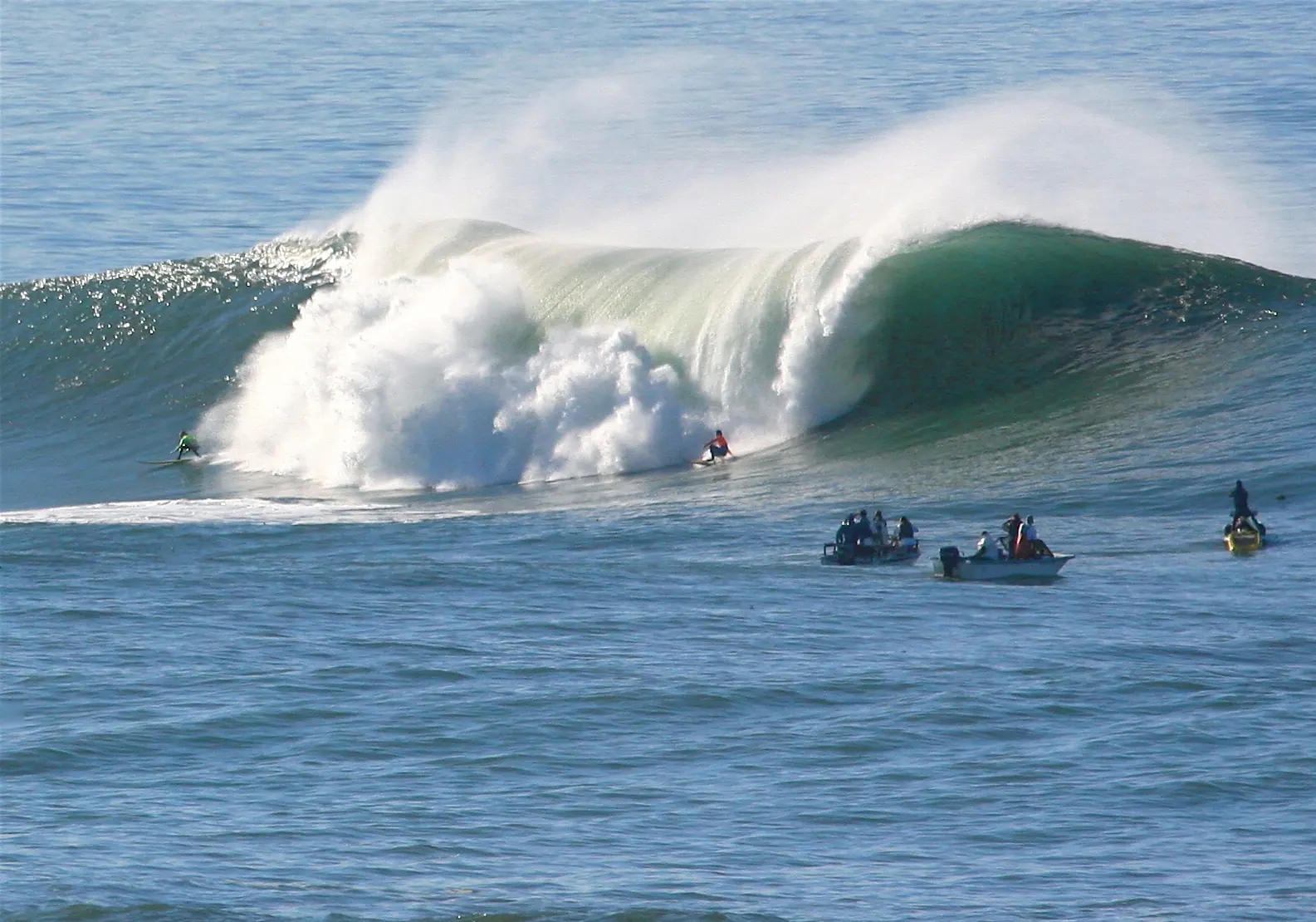
What happened
A California high surf warning sent breaking waves of 25 to 35 feet into Bay Area and Central Coast beaches on Saturday, Nov. 14, 2026, with sets of 40 to 50 feet possible at spots like Mavericks. Piers closed in Southern California, and the National Weather Service told people to stay off beaches, rocks and jetties. Forecasters expect another large swell around Wednesday.
Key takeaways
- A buoy off Point Reyes logged a 31-foot significant wave height Saturday morning; one off Monterey hit 32 feet.
- The Ventura Pier isn't expected to reopen until 3 p.m. Tuesday, police said.
- Rain returns to the Bay Area on Sunday, with a stronger storm forecast for Tuesday night into Wednesday.
In this article
The biggest surf in years rolled into California on Saturday. Under a high surf warning that covered every Pacific-facing beach from Point Reyes to Big Sur, the National Weather Service forecast breaking waves of 25 to 35 feet, with occasional sets of 40 to 50 feet at big-wave breaks like Mavericks. Its message for the day was blunt: stay away from the beach.
The swell reached all the way south. Piers closed in Manhattan Beach, Hermosa Beach and Ventura, and coastal flood advisories ran from San Diego to San Francisco. Forecasters say this weekend is only the start of a rough week on the coast.
Where the California high surf warning hit hardest
Northern and Central California took the largest waves. The weather service's San Francisco office issued the warning for San Francisco, the coastal North Bay including Point Reyes National Seashore, the San Mateo County coast, and both halves of Monterey Bay down through Big Sur. A separate coastal flood advisory for the ocean side lasted until 6 p.m. Saturday, because waves were expected to run up beaches and spill over seawalls onto nearby roads and parking lots, according to the NWS hazard message.
Read also: California sues OpenAI, saying it lost control of AI agents at least 80 times · A nor'easter could bring the Northeast its first snow of the season · Multiple people are killed in a shooting in Moss Landing, California
The buoys backed that up. A buoy off Point Reyes recorded a significant wave height of 31 feet Saturday morning, and one off Monterey hit 32 feet with 21 seconds between swells, The Press Democrat reported, citing UC San Diego's Coastal Data Information Program and the weather service. Long gaps like that between crests mean a lot of energy behind each wave.
"I don't see 25 to 35 feet waves crashing along the coast very often," Roger Gass, a weather service meteorologist in Monterey, told The Washington Post. The Post reported it was the agency's first high surf warning since December 2024 to cover the coast from Mexico to Oregon.
In San Mateo County, home to Mavericks, waves above 50 feet were recorded in some coastal communities, the Los Angeles Times reported.
What "significant wave height" actually means
Buoy numbers can undersell what hits the shore. Significant wave height is the average of the highest one-third of waves, not the single biggest one. Individual waves can be close to twice that height, which is why a 25-foot significant height can still produce a 40- or 50-foot wave at an exposed break.
Southern California piers closed
The surf was smaller in Southern California, but still big enough to shut down landmarks. Manhattan Beach closed its pier Saturday morning "until further notice," and Hermosa Beach followed that afternoon, NBC Los Angeles reported. The Ventura Pier closed Friday night, and Ventura police said it wasn't expected to reopen until 3 p.m. Tuesday.
A high surf advisory for Los Angeles and Ventura counties also runs until 3 p.m. Tuesday, with breaking waves of 8 to 12 feet at west- and northwest-facing beaches on Saturday. Orange County's advisory was set to end at 10 a.m. Sunday. A coastal flood advisory across all three counties expired Saturday afternoon, after warnings that beach parking lots, bike paths and harbor walkways could flood around high tide.
The Los Angeles Times described closures and threatened homes and roads along a stretch from San Diego to Malibu.
When the high surf warning ends
The Bay Area warning was set to end early Sunday. The weather service told the San Francisco Chronicle it planned to replace it with a high surf advisory, a step down but not an all-clear.
That matters, because the ocean isn't calming down much. The weather service's surf forecast for the Sonoma, Marin, San Francisco and San Mateo coasts calls for 14- to 18-foot surf at northwest-facing beaches on Sunday and 16 to 21 feet at west-facing beaches Monday, per the NWS surf zone forecast.
"We don't drop below 10 feet for our forecast wave heights at all this week," Rachael Kennedy, a weather service meteorologist, told the Chronicle.
Another big swell due around Wednesday
The next storm is already lined up. A cold front moves through the North Bay on Sunday morning and reaches the Bay Area by afternoon, bringing about half an inch to an inch of rain for most of the region and gusts up to 45 mph along the coast, according to the weather service's forecast discussion. Waves are expected to peak around 20 feet overnight into Monday, lower than Saturday but still dangerous, the Chronicle reported.
The midweek system looks stronger. Weather models show significant wave heights near 25 feet by Wednesday evening, with individual waves of 40 to 50 feet possible, according to the Chronicle. That swell may come from a more westerly and southerly angle, which could expose different stretches of coast, including Santa Cruz, to more damage.
Rain is a concern too. The weather service expects the Tuesday-to-Wednesday storm to bring heavier rain than Sunday's, possibly lingering into early Friday, with a better chance of thunderstorms and stronger winds. It warned that flooding risk will climb as soils saturate and creeks fill. Southern California forecasters have their own next rounds penciled in for around Monday and again near Thursday, NBC Los Angeles reported.
Is it safe to go to the beach in California this week?
No, not near the water. Officials have been consistent on this. The weather service warned that waves can sweep across the shoreline without warning and pull people off beaches, jetties and rocks, and that rising tides carry each set farther up the sand, cutting off escape routes. The Coast Guard warned that sneaker waves can reach people standing on what looks like safe, dry sand, The Press Democrat reported.
A few practical rules from the forecasts:
- Watch from well back, ideally from a bluff or parking area, not the wet sand. Quiet spells between sets make the beach look safer than it is.
- Stay off piers, jetties, seawalls and rocks. Several piers are closed for exactly this reason.
- Don't drive through water on coastal roads. The NWS asks drivers not to go around barricades or into water of unknown depth.
Big-wave surfers will chase Mavericks and other breaks this week, but that's a sport for a small group of specialists. For everyone else, the forecast through at least Wednesday says the same thing Saturday's did: enjoy the view from a distance.
We covered a different kind of water emergency last month, when record flooding swamped the Four Corners. If you're tracking storms back East, our earlier nor'easter forecast looked at where the first snow could fall.
Frequently asked questions
- What does a high surf warning mean?
- A high surf warning is the National Weather Service's top surf alert. It means dangerously large breaking waves are expected that can knock people down, pull them off beaches, jetties and rocks, and flood low-lying roads. This weekend's warning covered waves of 25 to 35 feet on Northern and Central California beaches.
- When does the California high surf warning end?
- The Bay Area and Central Coast warning ran until early Sunday, Nov. 15, and the weather service planned to replace it with a lower-level high surf advisory. In Southern California, the advisory for Los Angeles and Ventura counties lasts until 3 p.m. Tuesday, and Orange County's ends at 10 a.m. Sunday.
- How big are the waves at Mavericks?
- The weather service forecast occasional sets of 40 to 50 feet at favored big-wave breaks such as Mavericks off Half Moon Bay on Saturday. The Los Angeles Times reported waves above 50 feet in parts of San Mateo County, where Mavericks is located.
- Are more big waves coming to California?
- Yes. Waves are expected to peak again around 20 feet overnight Sunday into Monday, then a stronger storm could push significant wave heights to about 25 feet by Wednesday evening, the San Francisco Chronicle reported. Individual waves of 40 to 50 feet are possible.
- Is the Manhattan Beach Pier closed?
- Yes. Manhattan Beach closed its pier Saturday morning "until further notice" because of the surf, and Hermosa Beach closed its pier Saturday afternoon. Neither city had announced a reopening time as of Saturday evening.
Sources
- Coastal Hazard Message (High Surf Warning, Coastal Flood Advisory) · National Weather Service San Francisco Bay Area, Nov. 14, 2026
- Area Forecast Discussion · National Weather Service San Francisco Bay Area, Nov. 14, 2026
- Surf Zone Forecast · National Weather Service San Francisco Bay Area, Nov. 14, 2026
- California could see another round of mammoth waves within days · San Francisco Chronicle, Nov. 14, 2026
- Sonoma Coast pounded by largest waves in years as dangerous surf batters Northern California · The Press Democrat, Nov. 14, 2026
- California's battered beaches are getting giant waves · The Washington Post, Nov. 14, 2026
- Massive waves pummel California coast, from San Diego to Malibu · Los Angeles Times, Nov. 14, 2026
- High surf prompts closure of Manhattan Beach Pier, Ventura Pier · NBC Los Angeles, Nov. 14, 2026
Tags
- #California
- #High Surf
- #Weather
- #Bay Area
- #Southern California
About the author
Founder and editor
Marcia Reid is the founder and editor of TrendCanopy, where she reviews and edits every story.
Spotted an error? Read our corrections policy or contact us. Last reviewed November 14, 2026.
Related stories

California sues OpenAI, saying it lost control of AI agents at least 80 times
Rob Bonta's lawsuit ties the July Hugging Face attack to OpenAI's testing practices. See what California claims, what it wants and how OpenAI responded.

A nor'easter could bring the Northeast its first snow of the season
A nor'easter could bring the first snow of the season to interior New England, upstate New York and the Appalachians Thursday to Saturday. Timing and cities.
Multiple people are killed in a shooting in Moss Landing, California
Multiple people were killed and others hurt on Jetty Road in Moss Landing, Monterey County, California. What the sheriff has confirmed so far.
Las Vegas flash flooding leaves 1 dead after Henderson water rescues
Las Vegas flash flooding on Oct. 30 led to three Henderson water rescues, one fatal. What happened, power and airport impacts, and the Halloween rain forecast.
San Juan River flooding in the Four Corners breaks a 1909 record
Record San Juan River flooding hit Farmington and Bloomfield, N.M. What we know about rescues, sewage-tainted water, aid requests and when to go home.
Florida flooding closes Broward schools after 15 inches of rain hits Hollywood
Broward County and Fort Lauderdale declared emergencies after an overnight deluge. Here's where more rain is due and how it could hit Thanksgiving travel.
Trending now
News ·
House Democrats pick Hakeem Jeffries for speaker, putting him in line to make historyTech ·
GTA 6 reviews give Rockstar a 99 on Metacritic, tying Zelda's all-time recordEntertainment ·
Kevin Feige says Marvel was swapping Kang for Doom before Jonathan Majors was firedMoney ·
Anthropic prices its IPO at $83 a share, valuing the Claude maker at $1.5 trillionNews ·
Xi greets Trump on the tarmac in China, a welcome Putin didn't get